Orchid Environmental Factors Explained: The Importance of Ventilation
Orchid Environmental Factors: Ventilation
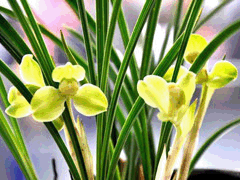 Orchidsare mostly ventilated on all sides in their natural environment. Epiphytic orchids, also called air plants, even have their roots exposed to the air; terrestrial orchids also mostly grow in places rich in humus and gravel, where the air circulates as well. Qu Jinze said in "Linghai Lanyan": "Ventilation is the foremost task in growing orchids." He also said: "Orchids value ventilation, and shading should avoid being too dense." This is the wisdom born of his experience in growing orchids. This is even more true in the north. Because growing orchids in a greenhouse already affects ventilation, and if they are further shaded, the impact is even greater, often leading to poor results. Ventilation is primarily about supplyingorchidswith fresh air; the carbon dioxide and other free components contained in the air are all essential toorchidmetabolism. The stomata distributed on the lower surface of the leaves absorb carbon dioxide and other nutrients contained in the air. The roots of some epiphytic orchids, such as Phalaenopsis, Cattleya and Vanda, can also absorb nutrients from the air. Therefore, constantly renewing the air is very important for orchid growth. At the same time, ventilation can also expel stale air, including harmful gases, regulate and lower the temperature, and inhibit the breeding and spread ofpests and diseases. In addition, carbon dioxide is heavier than air, so a gentle breeze is also needed to make it flow, so that it can reach the leaves of the orchids throughout the greenhouse.
There are two aspects to ventilation work. The first is to maintain ventilation for the orchids themselves, including ventilation of the substrate around the roots and ventilation between the orchid plants; the second refers to the ventilation of thegreenhousewhere orchids arecultivated. However, when orchids are grown outdoors in the south, there is generally no ventilation problem, unless the entire orchid site is chosen in a stuffy, unventilated hollow.
Greenhouse ventilation mainly uses exhaust fans, supplemented by opening windows for air. Even in the most developed countries, orchid greenhouses with air-conditioning are not found everywhere. As far as the author knows, most small and medium-sized orchid farms use plastic sheds and simple greenhouses to grow orchids, and ventilation mainly relies on exhaust fans. Exhaust fans come in different power sizes; some are mounted close to the shed roof, and some are close to the ground, but none blow directly at the orchids; instead, they blow air horizontally, with very good results. In particular, roof fans can quickly blow away hot air and prevent the room temperature from getting too high. The main taboo of ventilation is to prevent too much dry air from blowing in from outside, causing the greenhouse humidity to drop, or causing a drastic change in indoor temperature due to too great a temperature difference between inside and outside, thereby affecting orchid growth. Therefore,growersshould make reasonable adjustments according to the local temperature, humidity and other climatic conditions at the time, as well as the orchid species. (Chen Xinqi, Ji Zhanhe)