What are the pest and disease control methods for net houses and greenhouses?
Biological control of pests in crops grown in net houses, do you know about it? What are the reasons pests occur in net houses? What are the reasons pest control is difficult in net houses? What are the advantages of biological control in net houses? Let's take a look together below. Let's find out. From past experience we know that biological control can effectively control greenhouse whitefly, and this successful example has been affirmed, spurring researchers to strive toward biological control. However, protected horticulture covers a fairly broad range of aspects, including horticultural breeding, cultivation management and pest and disease control; it is suggested that research working groups be formed according to the types of crops cultivated, so that team spirit can be brought into play and the current pest problems of protected horticulture can be solved.
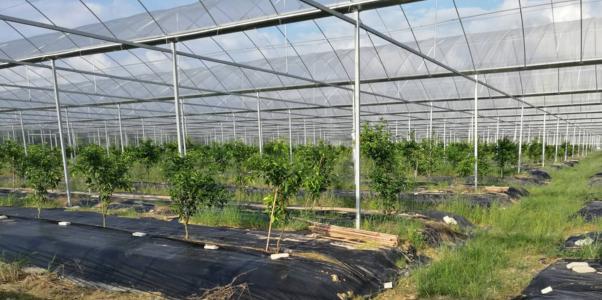
Reasons pests occur in net houses
A net house is surrounded by fine netting, which can block large insects from entering, but because people go in and out and move potted seedlings and the like, small insects can slip in through the gaps, or be brought into the net house on the seedlings. If insects that enter by chance are not eliminated in time, they can multiply in large numbers. Especially after the crop is harvested, if the net house is not thoroughly disinfected, some pests pupate in the soil or hide in the cracks of the structure, and even overwinter on weeds. The temperature inside a net house is higher than outside, and the temperature difference is small, so pests grow quickly. There is no strong wind or rain inside a net house, so the mating behavior of male and female pests is not disturbed, and the reproduction rate therefore increases greatly. In a mild climate environment, a single crop can simultaneously provide for the growth and development of several kinds of pests, which can rapidly reproduce for several generations in a short period.
Types of net house pests and their damaging habits
Common pests in net houses include aphids, whiteflies and mites, and these pests often gather on the underside of crop leaves, or hide near the young tender heart leaves. The larvae of leafminers tunnel into the leaf mesophyll to feed; the larvae of the yellow-striped flea beetle gnaw the roots of cruciferous vegetables underground; thrips damage young leaves, tender shoots and young fruit, and some flower-visiting thrips live inside flowers feeding on the contents of pollen grains, causing flowers to wither early, or causing crops to flower but not set fruit.
Reasons pest control in net houses is difficult
Once pests occur in crops grown in net houses, even if insecticides are applied, it is hard to achieve complete control after one spraying, because the pests are tiny and hide on the underside of leaves, and insecticide sprayed mostly lands on the leaves and then has difficulty reaching the pests. For example, red spider mites can spin threads between the leaf veins, and they hide beneath the threads; the control effect on mites is also due to this reason.
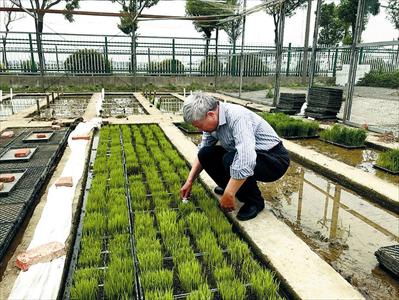
Reasonable cultivation management of net house crops can reduce pest occurrence
The culture soil or medium for crops grown in net houses should first undergo disinfection treatment before planting, which can reduce the occurrence of soil pests; if the soil organic matter content is too high, it may attract adult scarab beetles to come and lay eggs, leading to scarab beetle larvae damaging the crop roots. Hanging yellow sticky paper inside the net house can effectively control whiteflies and aphids.
Production, storage and transport of natural enemies
1.Mass production of natural enemies: at present about 15 manufacturers mass-produce natural enemies to supply greenhouse biological control. The types of natural enemies mass-produced include aphelinid wasps, predatory mites and parasitoid wasps of leafminers. The method by which manufacturers produce natural enemies is mostly to mass-rear host insects on host plants, and then use the host insects to rear the natural enemies. Although rearing natural enemies on artificial media has been tested, there are still some difficulties awaiting breakthroughs.
2.Storage and transport of natural enemies: natural enemies are mostly stored short-term at low temperature in the pupal stage, at a storage temperature of about 4°C to 15°C. Trials on liquid low-temperature preservation are underway. After production, natural enemies are delivered to buyers by mail within 48 hours; during transport, attention should be paid to maintaining humidity and providing food. The food includes honey and trapped insects. If transport conditions are poor, it will lead to the death of natural enemies, so the packaging and transport methods are very important.
Release methods for natural enemies
Natural enemies lay eggs and parasitize on host egg cards; when the eggs develop to the pupal stage, shortly before emergence, the egg cards are placed separately inside the net; this is the general release method for parasitoid wasps. Predatory mites are placed in the net house in whole batches together with the host plants. Leafminer parasitoid wasps are released as adults, with the natural enemies placed directly on the plants by hand. When releasing natural enemies of whiteflies and leafminers, one should accurately know the instar at which the host insect is parasitized in order to obtain effective results.
Advantages of biological control in net houses
1.
If insecticides are sprayed during the young plant stage or the flowering and pollination stage, there will be phytotoxicity; at this time releasing natural enemies to control pests is most ideal.
2.
Releasing natural enemies once in a net house can last for a long period, whereas if insecticides are used, spraying must be repeated at intervals, and during the crop harvest period spraying is simply not possible, and during the crop harvest period spraying is simply not possible; releasing natural enemies is most ideal.
3.
The whiteflies, red spider mites and leafminers commonly seen in net houses have already developed strong resistance to insecticides, making control by insecticide application difficult.
4.
Crops grown inside the net, such as tomatoes, eggplants and cucumbers, are harvested once every 2-3 days during the harvest period. If insecticides are applied, insecticide residues will remain on the fruit; releasing natural enemies at this time avoids this concern.
5.
Applying insecticides requires spraying once every three weeks, whereas biological control can continue after a single release; therefore, judging from cultivation costs, implementing biological control is cheaper.
Successful examples of biological control in net houses and greenhouses at home and abroad
Using traditional insecticides to control pests in net houses or greenhouses can no longer meet actual needs, and biological control is considered a feasible and important control method. At present there are successful examples in Europe, such as the United Kingdom and the Netherlands, and natural enemies are already being mass-produced commercially for use in biological control.
(1) In the United Kingdom as early as 1926, when tomatoes, cucumbers and sweet peppers were grown in greenhouses, the greenhouse whitefly Trialeurodes vaporario rum (Westood) occurred, and it was biologically controlled with a parasitoid wasp (Encarsia formosa). At present the Netherlands releases this parasitoid wasp in large numbers to control whiteflies on flowers.
(2) In greenhouses growing tomatoes, cucumbers, sweet peppers and chrysanthemums, when red spider mite (Tetranychus urticae) occurs, predatory mites (P (Phytoseiulus persimilis) are released in large numbers for control.
(3) In greenhouses growing sweet peppers and chrysanthemums, when green peach aphid (Myzus persicae) occurs, aphelinid wasps (Aphidius matricariae) are released for control. In the Netherlands the greenhouse area using natural enemies to control pests has already reached 1,000 hectares, in the United Kingdom about 300 hectares, and other regions such as Denmark, Sweden, Finland and Ireland all have commercial mass production of natural enemies for use in biological control.
(4) In this province, papaya is grown in net houses to avoid aphids transmitting papaya ringspot virus; red spider mite damage easily occurs inside the net house, and green lacewings are mass-reared and released in the papaya orchard to control red spider mites, achieving good results.
Applying selective insecticides such as insect growth regulators and microbial insecticides such as Bacillus thuringiensis (Bacillusthur ingiensis); these two types of insecticides must be taken into the digestive tract through the chewing mouthparts of insects to kill the pests, while natural enemies generally
have piercing-sucking mouthparts, and these two types of selective insecticides do not harm natural enemies.