How to manage perennial invasive weeds? An introduction to practical control methods
Weed control: no matter what crop you grow, weed problems will always exist, so how do you manage weeds? Do you know how? If not, then let's find out together. The interference of weeds with the normal growth of crops differs from the damage caused by pathogens and insects and other pests (p
Weed control: no matter what crop you grow, weed problems will always exist, so how do you manage weeds? Do you know how? If not, then let's find out together.
The interference of weeds with the normal growth of crops differs from the damage caused by pathogens and insects and other pests, which often cause sudden and significant damage and can even mean no harvest at all when proper preventive measures have not been taken. Therefore, monitoring the rise and fall of pest populations in the field is a necessary means of achieving the economic control threshold; the presence of weeds, however, is synchronized with the crop, and their impact on the crop is gradual and continuous. Because the amount of weed seeds contained in the soil seed bank is inherently very high, and although the species and quantity of weeds occurring in the field change with climate, the type of crop cultivated, the degree of land preparation and tillage, soil moisture content, and the type and frequency of herbicide use, many weed seeds usually begin to germinate at the same time as sowing, sharing all the natural and man-made resources available in the field with the crop until they complete their life cycle and achieve the goal of racial perpetuation.
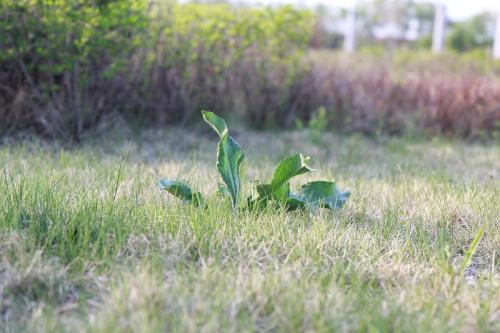
By virtue of their high seed production and long dormancy period, weeds have a very strong reproductive capacity and easily spread rapidly to other areas through irrigation water, the medium of crop seedlings, animal carriers and other factors; vegetative reproductive stems may even spread throughout an entire area because they are cut apart by agricultural machinery during land preparation. In view of the innate talent of weeds for rapid spread and strong competitiveness, the impact they bring in agricultural production systems mainly occurs in the growth suppression before the crop has formed a canopy, and in the seed drop after weeds flower and set seed, which increases the seed content in the soil. Therefore, control focuses on the early growth period of the crop; even the weed management of the previous crop or of fallow fields will affect the control effect.
Weed control in organic cultivation
The main philosophy of organic farming management is to try to give full play to the inherent potential of farmland soil and the natural world. However, in pursuit of high yields and lower production costs, modern agricultural management adopts a single-crop cultivation system and applies large amounts of chemical fertilizers and pesticides, which over time leads to declining soil vitality, changes in the natural ecology, reduced diversity of seed sources, and the hidden worry of deteriorating environmental quality. The impact of herbicides on soil texture is especially greater than that of other types of agricultural chemicals. However, management that conforms to the philosophy of organic cultivation is by no means a complete return to the ascetic farming methods of our ancestors, but rather a combination of existing high technology to rationally produce safe agricultural products.
From the occurrence and competitive characteristics of weeds, it is not difficult to understand that weed control is a difficult problem to overcome in the implementation system of organic cultivation, because weed seeds already exist in the soil in large quantities. In order to obtain the benefit of high yields, humans spare no effort in using large amounts of chemicals to wipe them out completely, and in the short term it seems that significant results are obtained; little do they realize that over the long term this changes the original ecological balance of the natural world, and more effort must be spent to make up for the deficiencies created.
Therefore, there is an urgent need to establish the concept of "weed management" to replace the traditional "eradication", that is, to strike a balance between crop yield and quality and the survival of weeds. During the sensitive growth period of the crop, by combining field operations and the rational application of chemicals with short residual periods, weeds are controlled or utilized continuously over the long term so that their occurrence remains within an acceptable range. In this way, not only can a better growing space be provided for the crop, but chemicals will not be abused to pollute the environment, and the principle of meeting the economic control threshold can also be achieved.
Currently commonly used non-pesticide weed control techniques include rotation between paddy fields and dry fields in conjunction with the cropping system, or covering the field surface with rice straw or plastic sheeting to suppress weed germination, both of which can reduce the occurrence of weeds on the field surface and the amount of seeds in the soil. Even maintaining low-growing creeping weeds as a cover crop in orchards can, in addition to reducing soil moisture evaporation, also reduce weed competitiveness under proper management. Cleaning and maintaining the area around the field and the irrigation ditches can reduce the introduction of harmful seeds and vegetative reproductive bodies. For perennial weeds with high damage potential and difficult control, effective control should be carried out as soon as they are discovered, which can slow their rate of spread.
In fact, in well-managed fields, the amount of weed seeds in the soil decreases year by year, and the degree of weed damage decreases accordingly. Control operations become simpler and more controllable, and compared with relying entirely on the application of chemicals, it is safer and free from the worries of resistant weeds emerging and soil fertility declining.
The ultimate goal of promoting organic agriculture is to achieve sustainable agricultural management. Therefore, when facing plants that humans deem "weeds", on the premise of avoiding the massive production and invasion of seeds, various control techniques should be used rationally to prevent weed seeds or vegetative reproductive bodies from being contaminated through pathways such as crop seed sources, fertilizers, agricultural machinery and irrigation water, and to suppress the growth of weeds that have already occurred on the field surface. The most important thing is to truly grasp the level of control and eliminate the notion of "not leaving a single blade of grass", so that the implementation of organic cultivation is surely just around the corner.
The continuous occurrence of weeds in crop cultivation systems, along with their rapid spread and excessively strong competitiveness, brings no small impact to agricultural production. From the proverb "wild grass can never be fully removed; it grows again when the spring wind blows", one can deeply appreciate the helplessness of early farmers in weeding. It is just that at present farmers in the Taiwan region of China almost rely mainly on herbicides to control weeds, while neglecting how to combine other non-chemical integrated control techniques, especially preventive measures covering seed quarantine, so as to reduce the invasion and spread of weeds. Only by combining the cultivation management system and the application of chemicals and other integrated control techniques can a management strategy that saves time and labor and meets economic benefits be achieved.