The Importance of Ecological Environmental Management and Protection as Seen from the Distribution of Weeds on Non-Cultivated Land
Weed Ecology and Distribution: Weeds can be seen everywhere, and there are also a great many weeds in the land we cultivate. So how should you go about managing weeds? Just buy herbicides? That is not ecological. If you want ecological and environmentally friendly methods, then you had best understand their ecology and distribution. Let us take a look below.
The species and quantity of weeds occurring on the field surface generally vary greatly under different climates, crop species and field management methods; for example, the main weeds composing paddy and dry fields have completely different weed flora because the degree of irrigation affects soil moisture content; even the weed flora of orchards and vegetable fields, both of which are dry fields, differs markedly because of factors such as the length of the crop growth period, plant architecture and competitiveness; in addition, the seasonal distribution of winter-growing and summer-growing weeds forms regionally specific weed flora. In this province, before land preparation for the first crop of rice, the fields are winter crop fields or fallow fields, and under low temperatures a large number of winter-growing dry-field weeds occur on the field surface, such as Chenopodium ficifolium, Polygonum lapathifolium, Cardamine parviflora and so on, while under the high temperatures of the second crop they are mostly grasses such as barnyardgrass and volunteer rice; whether or not land preparation is carried out also has a fairly significant effect on the field-surface weed flora. For example, in winter crop fields, after the rice harvest, dryland-type weeds successively grow on the field surface. Without land preparation, these weeds continue to grow larger, but after land preparation, these already sprouted weeds are turned under, and at the same time weed seeds in the soil seed bank are turned up to the soil surface and begin to sprout and grow under suitable conditions; therefore, the amount of weeds in generally unplowed fields is lower, almost half that of plowed fields, but under unplowed conditions the weeds grow rapidly, and the rate of increase in fresh weed weight is faster than in plowed fields.
Most of the main weeds commonly found in rice paddies are emergent aquatic plants, that is, their roots are anchored in the soil and most of their aboveground stems and leaves protrude above the water surface. In the Taiwan region, species such as Echinochloa crusgalli, Scirpus juncoides, Cyperus difformis, Monochoria vaginalis, wgnin timo tndo (Sagittaria trifolia), Ammannia baccifera, Lindernia pyxidaria, Rotala indica, Sphenochola zeylanica and Scirpus planiculmis are common main weeds of paddy fields. Other floating weeds such as Lemna paucicostata, Salvinia natans and Azolla pinnata were also once common in rice paddies before the heavy use of herbicides, but at present they mostly occur in wild rice stem or water caltrop fields with deeper flooding.
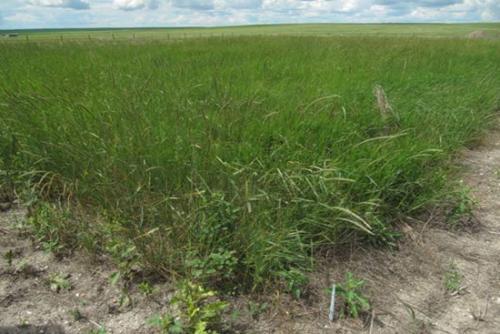
Some hygrophilous plants, such as Echinochloa colona, Leptochloa chinensis, Paspalum distichum, Cyperus iria, Lindernia ciliata and Alternanthera sessilis, have also gradually become important weed species in paddy fields because land preparation for paddy fields has become more extensive, flooding or water retention management is poor, or they spread from field ridges into the field area. In the Taiwan region, the temperature differs greatly between the early stages of the first and second rice crops, and the weed distribution also differs between crop seasons; for example, wild arrowhead mostly occurs in the first crop, while Monochoria vaginalis, Rotala indica, Sphenochola zeylanica and Echinochloa colona are more numerous in the second crop.
In addition, differences in climate and management intensity between north and south also lead to localized regional occurrence of weeds; for example, wild arrowhead is concentrated in the Taoyuan-Hsinchu-Miaoli area, Sagittaria pygmaea is distributed around the Yuanli and Dajia area, Ammannia baccifera and Sphenochola zeylanica occur more in the central and southern areas, and Scirpus planiculmis is mainly found in the central coastal saline paddy fields. However, in recent years, with the prevalence of contracted rice cultivation, agricultural machinery and tools or rice seedlings contaminated with weed seeds or vegetative stems accelerate the spread of highly reproductive weeds, and at the same time, under control with the same type of herbicides, the differences in weed flora between regions tend to become less obvious; for example, Scirpus planiculmis has expanded to the Taitung area, and Sphenochola zeylanica is also commonly found in northern field areas. Temperature differences also affect the uniformity of weed sprouting and growth; under the high temperatures of the second crop, sprouting is fast and uniform. According to the experimental results of Jiang Muyan (1983): the vegetative growth rate at 30 days after land preparation, such as plant height and biomass, is about equivalent to that at 60 days after land preparation in the first crop.
The weeds that commonly occur in vegetable fields under the dry and cold winter climate are mainly broadleaf weeds, including Chenopodium ficifolium, Gnaphalium purpureum, Hemistepta lyrata, Polygonum lapathifolium, Polygonum plebeium, Rorippa atrovirens, Stellaria media and Cardamine parviflora, most of which are small to medium-sized annual grasses. If it is a winter crop field after the second crop, there will also be some hygrophilous paddy field weeds, such as Cyperus difformis and Fimbristylis miliacea.
The vegetable species cultivated in the Taiwan region include root, stem, leaf, gourd and fruit vegetables, and they are characterized by many species and small areas. Because various vegetables differ in growing season, length of growth period and management, the distribution of weed flora differs markedly; in high-temperature and humid summer vegetable fields, the weeds are mainly grasses such as Eleusine indica, barnyardgrass and Digitaria sanguinalis; in addition there are broadleaf weeds such as Amaranthus viridis, Erigeron canadensis and Portulaca oleracea, as well as Cyperus iria of the Cyperaceae; according to a survey by the Weed Research Laboratory of the Taiwan Agricultural Chemicals and Toxic Substances Research Institute, weeds in summer high-coldland vegetable fields include Poa annua, Senecio vulgaris, Sonchus oleraceus, Erigeron sumtrensis, Solanum nigrum, Cardamine parviflora, Bromus catharticus, Malva neglecta and Erechtites valerianifolia, among which Poa annua and Stellaria media are the most common, while cruciferous weeds such as Cardamine parviflora become the dominant group during the fallow period.
Among the more widely cultivated leafy vegetables, because there are many kinds, the growth periods of short-term and long-term leafy vegetables differ greatly; short-term ones take only 19-20 days in summer and about 30-45 days in winter, but heading leafy vegetables such as cabbage, heading Chinese cabbage, heading lettuce and common cabbage have growth periods as long as more than 3 months, so the species and quantity of weeds occurring on the field surface also differ between the two; long growth periods make perennial weeds more likely to appear, such as Alternanthera sessilis and Cyperus rotundus; short-term leafy vegetables, because their growth period is short and the soil is plowed frequently after harvest, are less suitable for perennial grasses to complete their life cycle. Because fruit trees are perennial crops, whether deciduous or evergreen, their growth periods are very long, and weed management is also extensive. Under the high-temperature and humid climate of this province, the weed flora in orchards is quite complex, and many perennial grasses are among them. However, in some sloped orchards at higher elevations, in order to achieve the benefits of soil and water conservation, increased sources of organic matter and changes in biological flora, a sod-culture method using creeping dwarf weeds is selected and retained, which relatively suppresses the species of weeds occurring in the orchard.
In summary, the paddy field environment is very uniform, the species of weeds occurring are not as complex as in dry fields, and changes in weed flora are also not great. The weed species occurring in upland crop fields are mainly influenced by temperature and rainfall; in paddy field conditions, besides temperature, the main factor is the difference in oxygen supply caused by flooding depth, but the use of herbicides is also an important influence on changes in weed flora, because when the same type of herbicide is frequently used, under the selection pressure of the agent, sensitive weeds decrease and tolerant weeds increase, becoming the dominant group in a phenomenon of weed flora transition; long-term repeated application of the same herbicide may cause, within sensitive populations, the occurrence of resistant biotype plants due to gene mutation. For example, the upland weed Erigeron sumtrensis has been confirmed to develop resistance to paraquat, so often near crop fields where paraquat is the main control agent, one can find the scene of only large and small Erigeron sumtrensis scattered across the fields.
The Importance of Protecting the Ecological Environment: If we want a beautiful homeland, we must pay attention to the importance of protecting the ecological environment.