How to grow cucumbers? A detailed guide to the planting time and methods of cucumbers
Fertilizer Management Techniques for Organic Cultivation of Small Cucumbers
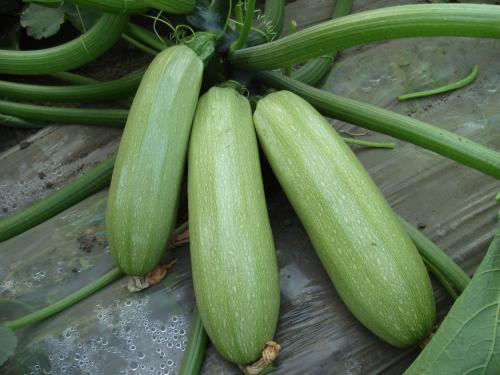
Cucumber is a vining plant of the genus Cucumis in the gourd family. The cultivated area in Taiwan, China is about 3,000 hectares or more, divided into two main categories: large cucumbers and small cucumbers. Small cucumbers, also called baby cucumbers or flower cucumbers, have a cultivated area of over 100 hectares in each of Yilan and Hualien counties, making them a major fruiting vegetable in those areas. Small cucumbers have a particularly high potassium requirement, and its effect on yield is greater than that of other important nutrients such as calcium, nitrogen, phosphorus and magnesium. However, in organic cultivation, providing organic potassium materials is often a challenge, and in the past it could only be supplemented with a few hard-to-obtain materials such as plant ash.
On the other hand, Taiwan, China produces more than 500,000 metric tons of rice husk waste every year. Rice husks are rich in nutrients such as silicon and potassium, but because the material is hard and loose in texture, and the surface has hydrophobic fine hairs, it is not suitable for direct application to soil. At our station's composting facility, rice husk compost made by mixing rice husks with chicken manure, soybean meal and rice bran was applied to the soil as a base fertilizer for crop cultivation, and it was found to effectively increase the availability of several nutrients such as phosphorus and potassium in the soil, with an accumulation effect observed with continuous application. It is suitable for producing fruiting vegetables such as small cucumbers. Originally, there was very little literature on fertilizer trials for small cucumbers both domestically and abroad, let alone recommendations for organic fertilizers. The results of the trials can not only provide a reference for organic cultivation, but can also be used for fertilizer management in conventional cultivation.
Preparation of rice husk compost
First, in a composting facility that provides shelter from wind and rain, mix unmilled rice husks, rice bran (or soybean meal) and chicken manure uniformly at a volume ratio of 4:1:1, add water to about 60%, pile to a height of about 1 to 1.5 m, turn the pile once a week, and it can be used after two months. The unmilled rice husks are a material that is not easily completely decomposed; their function is to support the structure of the compost, maintain its aeration and provide space and a carbon source for microbial growth, while chicken manure and rice bran are the main sources of other nutrients such as nitrogen and phosphorus. The finished compost consists of a mixture of incompletely decomposed rice husks, residual microbial mycelium and their metabolites, and its percentage content of nitrogen - phosphoric anhydride - potassium oxide - organic matter is approximately 1.9-4.0-2.4-68.
During the composting process, attention must be paid to regulating aeration. Although unmilled rice husks are the main material supporting the compost and already have the property of maintaining air permeability, the pile should still be turned appropriately. The weekly turning not only mixes the inner and outer layers of the compost evenly, but also accelerates composting and improves compost quality.
Water management is also an important factor in the success or failure of composting. Excessive drying should be avoided as it affects the progress of composting, and too much water can cause nutrient loss. The degree of compost maturity can be judged by changes in temperature, color and odor. After the materials are mixed evenly and piled, if the moisture is appropriate, heating should begin within one to two days, and the internal maximum temperature can even reach 70°C, after which it gradually declines. After each turning, the temperature will rise again, until the temperature changes moderate, which means that most of the compost material has already matured. When the compost changes from a bright yellow to a dull dark brown and gives off an earthy smell rather than a sour fermented odor, it can be considered fully matured compost.
Field application methods and effects of compost
In addition to providing nutrients, applying compost also has the important function of improving soil physical properties. Applying large amounts of compost must be thoroughly mixed with the soil. Test results show that broadcasting large amounts of compost on the soil surface as a top dressing without mixing it into the soil has almost zero effect on increasing crop yield, and also wastes the labor cost of top dressing. Therefore, compost should be applied once before planting together with mechanical broadcasting, and mixed thoroughly with the topsoil using a cultivator. About 30 metric tons per hectare is sufficient to maintain growth requirements. This not only eliminates the labor of applying top dressing, but its residual effect can also last for more than half a year or even longer.
If the next crop is tomato, then only nitrogen-rich materials such as soybean meal or rice bran need to be supplemented as top dressing to promote crop growth. It was found in the trials that small cucumbers cultivated with organic fertilizers not only flower and set fruit earlier, but also have an extended harvest period, thereby increasing total yield.
When nitrogen fertilizer is excessive, vegetative growth is stronger and reproductive growth is delayed, and it also inhibits female flower differentiation, and may even favor the occurrence of pests and diseases, thereby affecting yield. Generally, cucumber growers still apply a lot of nitrogen fertilizer in the later stage of cultivation to maintain the growth of small cucumbers, in order to extend the harvest time, but the results of this trial show that the extended time is not enough to offset the yield reduction caused by excess nitrogen. Also, because nitrogen metabolism in the plant is vigorous, it tends to accumulate more alkaloids and affect sugar conversion, resulting in a more bitter taste; while organically cultivated small cucumbers, because the nitrogen in the compost used is released slowly and evenly, have a sweeter and more delicious product.
Conclusion
In the constant pursuit of increasing crop yields, we consume large amounts of energy and mineral resources to make pesticides and fertilizers, and put them into the environment in large quantities, which instead causes serious pollution problems and harms human health. Crops produced with long-term use of chemical fertilizers and pesticides may maintain high yields for a period of time, but may also sacrifice product quality as a result, losing their original flavor, or even deteriorating in taste. Millions of metric tons of agricultural waste and more than ten million metric tons of livestock waste are produced every year, and their final disposal is also an important environmental protection issue. If they can be made into organic fertilizers and returned to the soil, it can not only cultivate soil fertility, but also reduce the impact of waste on the environment, and can further save the energy needed to manufacture chemical fertilizers. Moreover, organic small cucumbers produced using compost can be said to be both delicious and safe healthy vegetables and fruits, and everyone can eat more of them.