How to Cultivate Lettuce: A Detailed Guide to Cultivation Time and Environmental Requirements
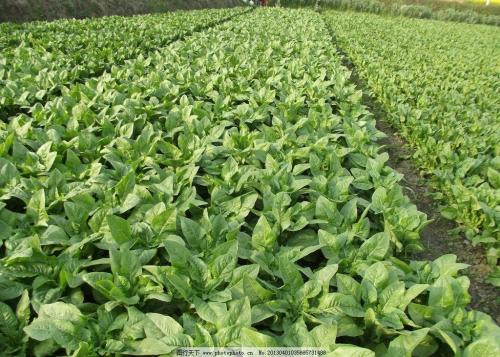
Leaf Lettuce Cultivation and Management Lettuce is a very popular vegetable, and the forms and colors of cultivated varieties are quite diverse. Common cultivated varieties are divided by form into leaf, plucking, upright, curly-leaf, heading and stem types. Leaf, upright and curly-leaf lettuces are also called non-heading lettuce.
Leaf Lettuce Cultivation and Management
Lettuce is a very popular vegetable, and the forms and colors of cultivated varieties are quite diverse. Common cultivated varieties are divided by form into leaf, plucking, upright, curly-leaf, heading and stem types. Leaf, upright and curly-leaf lettuces are also called non-heading lettuce. The colors include green and purple series; the green series is further divided into variations such as light green, yellow-green and dark green; the purple series also has variations such as light purple and dark purple; there are also other color series such as purple-green mottling.
Local varieties of non-heading lettuce (leaf lettuce) are customarily mainly stir-fried, and have a bitter taste when eaten raw. Upright and curly-leaf lettuces are mostly eaten raw. At present, the common varieties for raw eating are mostly introduced from Japan and Europe and America, and are very popular lettuce salads among consumers.
The sap of lettuce stems and leaves is milky white and contains inulin (Inulin); it tastes bitter, and the bitterness is stronger in produce grown during high-temperature periods, while the quality of produce grown during low-temperature periods is better. In addition, there are also varieties that are not bitter; for example, the semi-heading variety Dahu 659 is a non-bitter variety, but its head is not easy to form during high-temperature summer periods.
I. Variety Characteristics:
1. Leaf varieties:
Leaf varieties are very common local varieties in Taiwan, China; the leaves are loose and do not form heads, and the leaves are thin. They are generally called leaf lettuce. The main edible part is the tender leaves, and the whole plant is customarily harvested. Because it has wide adaptability to climate and soil, is relatively tolerant of pests and diseases, is easy to cultivate, and has a short growth period, its growth duration varies with temperature and is about 25-50 days, and it can be cultivated year-round in Taiwan, China. It is mainly stir-fried, and has a bitter taste when eaten raw. Common local varieties are divided by leaf shape into round-leaf and pointed-leaf types. Round-leaf varieties include green, yellow and white, while pointed-leaf varieties are divided into large pointed and small pointed.
2. Plucking varieties:
Plucking varieties are local varieties; while growing, mature young leaves are plucked for eating, so the plant grows taller and taller. Common leaf shapes include pointed-leaf and lobed-leaf types, and the colors include green and purple-green mottling. Because the sap of its stems and leaves is milky white, strongly bitter, and contains inulin (Inulin), it is not widespread. However, there is a group of varieties that are not bitter, locally also called sweet vegetable, and they are gradually becoming popular among consumers.
3. Upright varieties:
Upright varieties have upright leaves and thick leaves, generally do not form heads or form a rolled cylindrical heart, and at first glance look very similar to the local round-leaf green lettuce varieties. Most of the currently cultivated varieties are introduced from Japan or Europe and America, and the suitable cultivation period in this province is October to March. They are mainly eaten raw, and the main edible part is the tender leaves.
4. Curly-leaf varieties:
Curly-leaf varieties have deeply lobed leaves, wrinkled leaf surfaces, thin leaves, and an open, spreading leaf shape, and do not form heads. The colors include green and purple series. They are mainly eaten raw, and the main edible part is the tender leaves; they are generally also called lettuce. Because their colors and lobed-leaf forms are richly varied and their appearance is attractive, they are very popular among consumers. The suitable cultivation period in this province is October to March. When cultivated during high-temperature periods, the stems and leaves have a stronger bitter taste.
5. Heading varieties:
The head is round or oblate. Varieties with tightly formed heads have a longer growth period of about 3.5 months, while varieties with loosely formed heads, also called semi-heading varieties, have a growth period of about 2.5 months. There are two kinds of leaf surface: wrinkled and smooth. The suitable cultivation period in this province is October to March. Heads do not form during high-temperature periods. A large day-night temperature difference is favorable for heading. The suitable temperature for heading is 17-18°C; above 21°C the head is not easy to form.
6. Stem-type varieties:
Leaf shapes include pointed-leaf and round-leaf. Leaf colors include green, dark green and purplish red. Leaves are smooth or wrinkled, and leaf margins are entire or notched. The stem is enlarged; the color of the stem epidermis includes green, light green and purplish red, and the color of the stem flesh includes white and light green. There are white-stem and green-stem types. The suitable cultivation period in this province is October to March. A large day-night temperature difference is favorable for stem enlargement.
II. Seed Characteristics:
The suitable temperature for lettuce seed germination is 15-20°C. Under high-temperature environments, germination is poor and the seeds easily enter dormancy; above 30°C germination is impeded.
After soaking, seeds will break dormancy under low-temperature conditions. Soaking seeds in running water for 10-12 hours, then at a low temperature of 4-6°C for about 3-5 days, will break dormancy. After dormancy is broken, seeds can still germinate under high-temperature environments, but if they are only soaked without low-temperature dormancy breaking, they will likewise enter dormancy. Fresh seeds are more sensitive to high temperature than older mature seeds. Seeds with broken dormancy should be shade-dried and sown before the radicle breaks through the seed coat. Seeds with broken dormancy must not be rubbed with force, otherwise the endosperm and roots will lose germination ability due to mechanical injury.
III. Suitable Growing Temperature:
Lettuce is a temperature-sensitive vegetable; at an appropriate seedling age it can be induced by high temperature to differentiate flower buds, and warm long days promote bolting and flowering. The suitable growing temperature is 12-20°C; growth is vigorous at 24°C; above 24°C it easily bolts as a small plant. Heading varieties are not easy to form heads above 21°C, and excessively high temperatures easily cause necrosis and rot of the heart-leaf tissue.
Leaf lettuce is a cool-season crop; autumn, winter and spring in Taiwan, China are its suitable cultivation periods, and the two local leaf lettuce varieties can be cultivated year-round, except that they easily bolt during high-temperature periods. Heading and stem varieties are not suitable for cultivation during high-temperature periods; during high-temperature periods, heads of heading varieties are not easy to form, and stems of stem varieties are not easy to enlarge. Upright and curly-leaf varieties easily bolt as small plants during high-temperature periods and also have a stronger bitter taste.
IV. Soil Conditions:
⟦NL>⟧
Although lettuce has wide adaptability to soil, because its root mass is relatively small and distributed only in the topsoil, well-drained, fertile organic sandy loam is best, and attention should be paid to keeping the soil moist during the growth period. A pH value of 5.5-6.5 is suitable.
V. Cultivation and Management Methods for Non-heading Lettuce:
1.
Seed pretreatment: Non-heading lettuce seeds have difficulty germinating under high-temperature environments and easily enter dormancy. Before sowing, pre-treating the seeds by soaking in water and low temperature can smoothly break dormancy and promote uniform germination. A simple pretreatment method for lettuce is to soak the seeds in running water for about 10-12 hours, keep the seeds moist and refrigerate them at 4-6°C for 3-5 days, which breaks dormancy; then take them out and place them in a cool place to shade-dry before sowing. Seeds with broken dormancy must be sown immediately, lest they lose germination ability.
2.
Sowing: The growth period of non-heading lettuce is short, about 25-50 days, and traditional cultivation methods all use direct sowing. However, because lettuce seeds are small, sowing density is not easy to control. Therefore, although the traditional direct sowing method is simple and easy, because the sowing density is uneven, thinning must be carried out in the early growth stage, which increases labor. In fields with more weeds, weeding must be carried out at least once during the growth period, otherwise growth will be impeded. At present, a hand-pulled seeder can be used to assist sowing to improve the problem of uneven sowing density and reduce thinning work. Using the seedling-raising and transplanting method can reduce thinning and weeding work, but increases seedling-raising and transplanting work; however, it can make the product uniform and attractive and improve product quality, yield and value. Therefore, it is recommended that the seedling-raising and transplanting method can be used in fields with more weeds.
3.
Plug tray seedling transplanting method: Use small-cell 288-cell plug trays for seedling raising; at the 3-4 true-leaf seedling stage, when the root system is fully developed, they can be transplanted to the field.
Note:
(1)
The germination site must be cool and avoid direct sunlight; preferably there should be a germination room. During germination, the medium must maintain moisture, otherwise the seeds will lose germination ability due to dehydration.
(2)
When germination is complete and the primary root of the seed protrudes, immediately move it to the seedling room for management. Do not wait until the cotyledons emerge before moving it to the seedling room, otherwise weak, leggy seedlings will form and in severe cases die.
(3)
For transplanting row and plant spacing, the row and plant spacing for local lettuce varieties and upright varieties is 15X15 cm, and for curly-leaf varieties 20X20 cm.
Related Articles
- How can a modern agricultural industry consortium achieve 1+1+1 greater than 3
- Vietnam's Persistent Heavy Rain Devastates Agriculture: Northern Region Flooded, Durian Trees Die Off en Masse in Central Highlands
- Aichi Prefecture, Japan, releases two new heat-tolerant grape varieties, Amethyst and Ruby, with market launch expected in 2031
- Blueberry New Variety Rights Dispute Escalates: Noposion and Meiming Agriculture Sue Each Other for Hundreds of Millions Combined
- When is the best time to plant and buy Phalaenopsis orchids in northern China?
- Raspberry Balcony Growing Tips: How Big a Pot Do You Need for Container Growing?
- When does the high-incidence period for Phalaenopsis pests and diseases occur, and what should be noted for prevention and control?
- Do All Plants Go Dormant in Summer? Five Heat-Loving, Easy-Care Plants That Bloom More the Hotter It Gets