US Public Health Group: Multiple Quaker and Kellogg's Breakfast Cereals and Oats Contain Cancer-Causing Herbicide
A US public health group says its latest research found that a range of breakfast cereals, oatmeals and snack bars popular among American children have tested positive for excessive levels of the cancer-causing herbicide "glyphosate," with well-known brands among those affected. The UK's "Guardian"
A US public health group says its latest research found that a range of breakfast cereals, oatmeals and snack bars popular among American children have tested positive for excessive levels of the cancer-causing herbicide "glyphosate," with well-known brands among those affected.
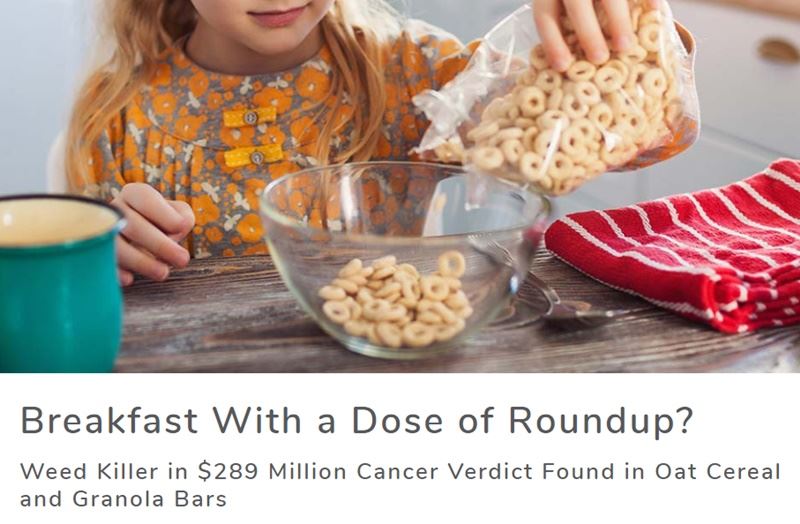
The UK's "Guardian" reported that the public health group the Environmental Working Group (EWG) found glyphosate in 43 of 45 oat product samples. Glyphosate is the main ingredient in the widely popular herbicide brand "Roundup."
According to data published on the EWG website, a total of 45 conventional samples and 16 organic samples were tested. Of the 16 organic samples, 5 tested positive for glyphosate, but none exceeded the 160 ppb health standard set by the EWG; however, of the 45 conventional samples, 43 tested positive for glyphosate, and 31 exceeded the limit.
The EWG said some of the products that exceeded the limit came from Quaker, Kellogg's and General Mills, the company that makes Cheerios.
Spokespeople for General Mills and Kellogg's both said their foods are very safe and meet the strict food safety standards set by the US Environmental Protection Agency (EPA); Quaker also said the safety and quality of its products are enough to put consumers at ease.
However, the EWG said the manufacturers are all following outdated federal standards, that most of the tested products exceeded the limit, and that stricter safety standards for glyphosate levels must be established.
EWG president Ken Cook said: "No one wants to eat herbicides for breakfast, and people should not have to." Cook said they would urge the US Environmental Protection Agency to restrict the use of glyphosate on food crops, but that companies should take action on their own initiative, because the "lawlessness" of the Trump administration's oversight mechanism is worrying.
Before the EWG published its research, a court in San Francisco had ordered Monsanto the previous week to compensate a 46-year-old former gardener, after a jury found that his cancer was caused by Monsanto's Roundup herbicide and that Monsanto had failed to warn him of the risks of exposure to the herbicide.
The Guardian noted that in April this year, internal emails from the US Food and Drug Administration (FDA) showed that scientists had found glyphosate in the vast majority of everyday foods and had also found it very difficult to find foods free of glyphosate. The FDA has so far issued no formal statement on this, but there is no indication that the claims are related to products outside the United States.