Symptoms and Control Methods of Root Rot in Vanilla
Vanilla Root Rot
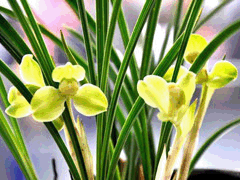 This disease often occurs on vanilla, and causes little or no harm to other types oforchids. In the early stages of the disease, the underground roots first turn brown and die, and the aerial roots follow. Because the roots are severely damaged, they mostly die before touching the soil or after contact with it; the stems and leaves become weak and turn pale greenish-yellow, and the stems shrivel as water and nutrients are exhausted. Finally, the plant wilts, turning light brown until it completely dries up. Generally, inorchidssymptoms of the disease do not appear before seed set, which indicates that seed set may weaken the plant and aggravate the condition.
The disease was identified as Fusarium batatatis var. vanilliae. The pathogen is not spread through water; it is a soil-borne disease. Factors that may aggravate the condition include the following: (1) excessive pollination and excessive seed set per plant; (2) a dry environment; (3) deficiency of certain important nutrients (such as phosphorus); (4) low pH of the growing medium; (5) excessive light. For control of this disease, the best approach is to breed resistant varieties; among different vanillas, some have already been found to be resistant or tolerant. To reduce the incidence of the disease, the following should be done: (1) place the plants in an environment favorable to their healthy growth, such as moderate shading and enhanced mulching, especially at the beginning of and during the dry season; (2) carry out moderate or light pollination; (3) irrigate theorchidswhen possible. (Liu Zhongjian)