What are the requirements for the growing environment of Lianban Orchid
The growing environment of Lianban Orchid
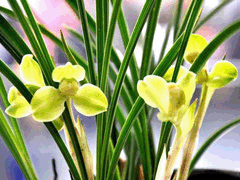 LianbanOrchid belongs to the Chinese terrestrial orchid category, and has relatively strict requirements for ventilation, light, sunlight and growing location.LianbanOrchid likes wind but fears evil wind and cold wind, likes cool shade but fears cold shade, likes morning light but fears strong sunlight. Therefore, to growLianbanOrchid and cultivate large, robust orchid plants, you must choose a suitable growing location, and firmly grasp the Lianban Orchid's needs for wind and sunlight when selecting the growing location.
The northwest wind is often a snow wind, not only cold but also strong, and is very unsuitable fororchidgrowth. Lianban Orchid is an ornamental plant with long leaves and many flowers, and is also a relatively delicate perennialCymbidium, unable to withstand the invasion of severe cold, and even less able to withstand the swaying of strong winds and gales. Although Lianban Orchid is a cold-tolerantCymbidium, the minimum temperature cannot be below zero both day and night, otherwise it will freeze and damage the orchid roots and orchid seedlings, seriously affecting growth. Therefore, the growing location for Lianban Orchid must be chosen as a sunny place with a slight breeze, which is conducive to promoting its growth. For homeorchid growing, when choosing the location to place the orchid pots, an east-facing or south-facing balcony or eaves platform is the most ideal.
For growing Lianban Orchid, locations facing north with a southern orientation or facing east with a western orientation are relatively ideal, allowing the orchid clump to absorb sufficient light. Sunlight is an indispensable element fororchidgrowth. Orchid leaves manufacture nutrients through photosynthesis. Morning sunlight or dappled light is most beneficial toorchidgrowth. Dappled light is when most of the sunlight is blocked by something, so that sunlight leaks through the gaps of the blocking object. Because of the changes of the fourseasonsof the year, the length and intensity of sunlight differ. In winter, the sunlight is weak and the climate is cold, and direct sunlight on the orchid clump will not cause problems. In spring, the climate turns warm and the sunlight intensity increases somewhat. In the early spring season, Lianban Orchid can withstand sunlight exposure and does not need shading. In summer and autumn, the sunlight is long and strong, and Lianban Orchid cannot withstand direct exposure, so it must be blocked with bamboo blinds or similar items, generally blocking 70-80% of the sunlight to form dappled light. During this stage, Lianban Orchid can only absorb morning light, and just over two hours of sunlight is enough to meet its growth needs. Entering autumn, in addition to blocking the midday sunlight, take the morning sunlight, and at night also place the orchid pots in the open air to receive dew, promoting the growth of autumn shoots and the sprouting of spring buds. It should be noted that exposure to evening sunlight should be avoided, otherwise it easily scorches the orchid leaves.
The growing of Lianban Orchid also requires attention to good ventilation conditions. Orchidaceae plants with aerial roots and terrestrial roots require high humidity and good ventilation in their growing environment. Ventilation and air permeability allow the fleshy root fungi to normally absorb oxygen and manufacture nutrients, otherwise it will cause the orchid roots to rot and die. Ventilation also promotes the metabolism of orchid leaves and regulates the temperature and humidity of the environment. Ventilation and air permeability in thecultivationof Lianban Orchid are not only beneficial to the growth of orchid leaves, but also indispensable to the growth of orchid roots. For homeorchid growing, in addition to the ventilation of the growing environment, attention should also be paid to the ventilation between orchid pots, and the ventilation between plants within a pot. For this reason, be careful not to place the orchid pots too densely, and do not plant too many plants in a pot. At the same time, strengthen routine management, trim and remove withered, old and dead basal leaves and orchid leaves in a timely manner, and maintain ventilation and air permeability between orchid plants. If the orchid plants are not ventilated, it affects the respiration of the orchid seedlings, causing the orchid plants to be unhealthy and lacking resistance, with all kinds of diseases breeding, pests adding to it, and infection with black spot disease. Therefore, ventilation is also an indispensable means of preventing and controllingpests and diseases.
The selection of the growing location for Lianban Orchid should also pay attention to avoiding dust, smoke and oil fumes. Orchids are evergreen plants with a very strong adsorption capacity, and most fear dust, smoke and oil fumes. In particular, Lianban Orchid plants are tall, with long and wide leaves, and a large contact area with nature, so their adsorption capacity is stronger, and they are most easily contaminated with dust and oil fumes. The stomata of the leaves become clogged, the orchid leaves cannot breathe normally, and as a result the leaf tissue is damaged, the leaf cells are killed, and finally the orchid leaves wither and die. To grow Lianban Orchid well, you should keep the orchid leaves clean and beautiful at all times, remove dead branches and fallen leaves at intervals, wash away the dust on the leaf surface, and keep it smooth and clean with unobstructed stomata, which helps the growth of the orchid plants and increases the beauty and elegance of the orchid clump. (Zhao Qin, Wang Zehuai, Li Xinhua)