New EU Organic Product Certification Regulation Rejects Hydroponic Growing
On June 14, 2018, the European Commission published (EU) 2018/848, the new regulation on organic products and organic product labelling, which will take effect on January 1, 2021, at which point (EC) No 834/2007 will be repealed.
On June 14, 2018, the European Commission published (EU) 2018/848, the new regulation on organic products and organic product labelling, which will take effect on January 1, 2021, at which point (EC) No 834/2007 will be repealed.
The main contents of this regulation include: general principles of organic production; specific principles applicable to agricultural activities and aquaculture; specific principles applicable to organic food processing; prohibition of the use of genetically modified organisms; principles of processed food production; principles of wine production; principles of yeast production used as food or feed; collection, packaging, transport and storage of products; mandatory labelling information; the EU organic production logo; relevant provisions on the export of organic products; imports of organic and in-process products; information on competent authorities, control authorities and control bodies; derogations, authorisations and reporting, etc.
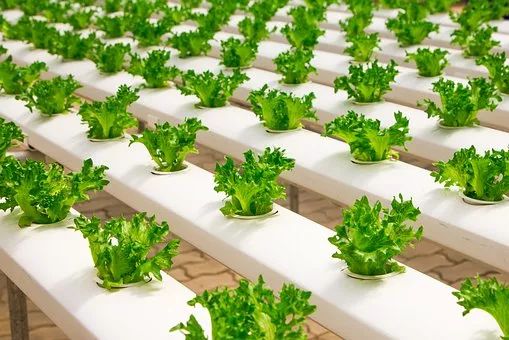
Rejection of “hydroponics”
The new regulation requires that organic crops (except crops that naturally grow in water) should be grown in soil. Hydroponic production, however, is an unnatural growing method in which plants root only in a nutrient solution or in an inert medium to which a nutrient solution is added.
However, the following organic products may be produced by hydroponics:
(1) the production of sprouted seeds;
(2) the production of ornamental plants and herbs sold to consumers in pots;
(3) in order to promote organic production during the early growth stages of plants, growing seedlings or transplants in containers should also be allowed.
Avoiding Contamination by Chemically Synthesised Inputs
The new regulation introduces preventive and precautionary measures into the control of contamination of organic products by pesticides or fertilisers, and its requirements regarding contamination by pesticides or synthetic fertilisers are more uniform.
The new regulation stipulates that farmers and other operators in the food supply chain will be obliged to take a series of new measures to avoid contamination; if unauthorised pesticides or fertilisers are suspected, the final product should not carry the organic label until further investigation; if the contamination is intentional or the operator has failed to take precautionary measures, the product will lose its organic status.
Strengthening the Official Control Mechanism
The new regulation establishes a new risk-based inspection mechanism that applies throughout the entire organic supply chain. This inspection mechanism requires the competent authorities of EU member states to inspect businesses once a year; if a production enterprise/retailer passes inspection for three consecutive years, inspections will be changed to once every two years.
Phasing Out “Equivalence Certification”
To prevent fraud involving EU organic products, the EU will adopt stricter measures to prevent this. The new regulation stipulates that organic products imported from third countries must comply with EU organic product standards, and points out that products from third countries recognised under (EC) No 834/2007 through “equivalence” will be gradually phased out. Of course, this phase-out measure will have a 5-year transition period, ending on December 31, 2025.
The currently effective organic product regulation (EC) No 834/2007 stipulates that certification of EU organic products includes “equivalence certification” and “full certification”. The standards for “equivalence certification” will be implemented with reference to the standards of the Codex Alimentarius (CAC/GL 32-1999); products with “full certification” mean that they fully comply with EU laws and regulations on organic food. At the same time, the operating methods for “full certification” are also exactly the same as those for EU organic product certification.