Symptoms of orchid crown rot and its prevention and control methods
Orchid crown rot
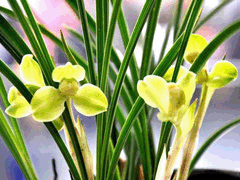 1. Damage: Crown rot, also known as black rot, has not yet been systematically reported in China, but it occurs frequently in Singapore, Thailand, the United States and other places, and has become a devastatingorchiddisease. In China, it was recently found onCymbidium sinensein Shenzhen.orchidAll genera can in fact be susceptible to crown rot, but Cattleya, Dendrobium, Epidendrum, Phalaenopsis and Vanda are more susceptible, while Arachnis, Renanthera and Arantheras are more resistant.
2. Symptoms:orchidThe initial symptom of crown rot is generally a dark brown discoloration at the base of young leaves near the new shoot. When the disease is severe, the diseased leaves droop easily and extend outward, and the infected base shows a dark purplish brown color. The infection spreads rapidly, causing the leaves to turn black and rot, and these diseased leaves are very easy to pull out. On young Dendrobium plants, the diseased leaf areas are usually regular in shape, olive green to dark greenish brown, with water-soaked margins and may also show blister-like areas, and the infected leaves eventually fall off. In a dry environment, the diseased leaves are sunken and often dark in color, ranging from brown to black, and similar symptoms also appear on the young leaves of older plants. On Vanda, the diseased leaf areas are water-soaked when humid, brown to tan, and turn yellow as time goes on. The infection can spread rapidly downward to the stem, pseudobulbs and roots. Pseudobulbs and stems readily rot through infection of the leaves and roots, and occasionally direct rot also occurs. In many varieties, the rot of older pseudobulbs or stems is usually brown to black, and the advancing diseased area is irregular; by contrast, young and succulent stems and pseudobulbs havesoft rotand black necrosis, like symptoms caused by bacteria. In China, on the "Qihei" variety ofCymbidium sinenseit usually affects young shoots; symptoms first appear at the tips of the leaves of the tillering young shoots, appearing dark brown, then gradually spread downward, and in severe cases every leaf of the sprouting young shoot is infected.
3. Pathogen: The pathogen of orchid crown rot has been identified as Phytophthora palmivora. Synonyms include: P. faberi, P. theobromae, P. omnivorum var. arecae, P. arecae, P. fici, P. carica, P. carica and P. meadii. The sporangia have a prominent papilla at the apex, are obpyriform, with a short stalk, 40-60 X 25-35 Pm; chlamydospores are 32-42 Um in diameter; oogonia are amphigynous; oospores are 22-24 um in diameter. Sporangia and chlamydospores are produced quickly (within two weeks) and abundantly on ordinary culture media, while oogonia are rarely seen and often not produced. The optimum temperature for mycelial growth is 25-27.5 degrees.
4. Disease characteristics: Orchid crown rot can infect plants at all age stages. Its pathogen produces large numbers of spores in diseased tissues. The spores are initially spread by splashing water or contaminated potting medium. Chlamydospores are produced on infected host tissues and overwinter in them, becoming the primary infection source for the disease in the following year. This disease is most common during the rainy season or during prolonged wet weather.
5. Prevention and control methods:
(1) Strengthen quarantine measures. Because orchid crown rot has so far not become widespread in China, but is very prevalent in some places abroad, quarantine should be strengthened for imported orchids, especially species susceptible to the disease, and the disease should be listed as a quarantine target.
(2) The pathogen of orchid crown rot has a wide host range. In addition to orchids, it is very common on papaya, cacao trees, ivy, palms and other ornamental plants, so this will inevitably bring serious problems of cross-infection by these pathogens, that is, pathogens parasitic on other hosts can also become infection sources for orchid crown rot. Therefore, in prevention and control, other hosts of this pathogen (such as weeds, etc.) should be removed to prevent the pathogen from parasitizing them, and orchids should be planted separately from other ornamental plants that this pathogen can parasitize.
(3) Manual control: Frequently remove diseased leaves and fallen leaves to reduce the primary infection source of the disease. If infection occurs at the base of young leaves and is not deep below where new leaves are growing, these diseased leaves should be cut off, and the cut should be as low as possible so that the diseased tissue can be removed. However, if the terminal bud is also infected, the infected leaves must be pulled out, leaving only healthy leaves on the plant. When watering, try not to let water splash; it is better to water around the edge of the pot rather than spray overhead, and in open ground shade must also be provided to avoid direct rain.
(4) Biological control: Some Difolatan plus a few drops of water can be poured into the base between the leaves to cover the wound, which can prevent further infection. In cases of heavier infection, the uninfected top portion can be cut off 5-8 cm away from the infected leaf, then Difolatan can be sprayed heavily, and the plant can be replanted a little farther away from healthy plants. Repeating the Difolatan spray once every week can increase its chance of survival. If the disease is already very severe, the plant can be soaked in a 1:2000 solution of 8-hydroxyquinoline sulfate or sodium o-phenylphenate. Soak the plant, pot and other tools in the above solution for 60 minutes. If the rot continues to develop, the soaking can be repeated within 3-7 days. (Liu Zhongjian)