Vanda cultivation fears cold and avoids soil planting, care needs attention
Vanda cultivation fears cold and avoids soil planting
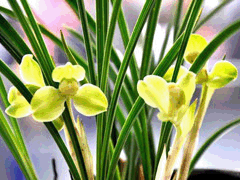 Vanda is drought-tolerant and fond of sunlight, high temperatures, and the humid environment of tropical regions, but it is very afraid of cold. Compared with Cattleya, Oncidium, and Cymbidium, its cold resistance is poorer. Grown indoors or on a balcony at above 20°C, with 25°C being optimal, and relative humidity of 80%.
If the room temperature drops to 10-15°C, the plant enters a state of forced dormancy, and over time the leaves gradually turn yellow and wither.
If the room temperature drops further to below 5°C, it and some tropical orchids (such as autumn Dendrobium, etc.) will quickly freeze to death.
In tropical regions, Vanda is grown in wooden baskets, with its roots entirely exposed to the air. If in a northern greenhouse, a porous clay pot can be used, along with a mixture of crushed brick, crushed charcoal, and osmunda fiber. Use as little sphagnum moss as possible, and never use soil for planting.
During the growing period, Vanda needs fertilizing; you can spray a one-thousandth solution of chemical fertilizer containing 11 elements, and alternately use diluted antibacterial agents and insecticides once every other month for preventionPests and diseases. (Huang Zehua)