Fertilizing Four-Season Orchids Is a Big Subject: Mastering the Right Method Matters
The Knowledge of Fertilizing Four-Season Orchids
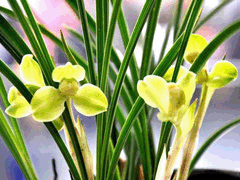 Four-SeasonOrchidThe nutrients required are the same as those of other plants. Besides the carbohydrates produced through photosynthesis, nitrogen, phosphorus, potassium, sulfur, magnesium, calcium and other trace elements are all indispensable.
"Nitrogen" mainly promotes the growth of leaves and buds and makes leaf color deeper. When nitrogen fertilizer is excessive, the plant tends to grow leggy and mature later, and its disease resistance is also weaker; when nitrogen fertilizer is insufficient, new shoots grow slowly and are thin and pointed, and the leaves of mature plants are yellower and thinner.
"Phosphorus" is one of the main components of the plant body. The cell division of orchid plants, the firmness of roots, stems and leaves, and the differentiation of flowers and buds all require phosphorus. If an orchid plant lacks phosphorus, both the flowering rate and the germination rate are not high, and the growth of roots, stems and leaves is also hindered.
"Potassium" is also one of the main elements for the growth of orchid plants. But potassium is not a tissue component within the body; it exists only in the cell fluid in a free state. The role of potassium is to dissolve nutrients and transport them to each cell tissue. If nitrogen or phosphorus is not matched by potassium, nitrogen is useless nitrogen; phosphorus is useless phosphorus. When potassium is sufficient, the orchid plant's pseudobulbs are large, the root system is vigorous, drought tolerance, cold resistance and disease resistance can all increase, and the flower color is also more vivid and lasting.
The role of "calcium" is opposite to that of potassium. Calcium fixes nutrients to facilitate uptake by each tissue. When potassium is excessive and calcium is insufficient, the tissue at the leaf base tends to soften and droop, especially most obviously in the Cymbidium ensifolium series; when calcium is excessive, new shoots easily stop growing. Calcium dissolves in acid and easily combines with alkali. When the water quality is neutral or slightly alkaline, the absorption rate of phosphorus and calcium fertilizers becomes higher, while nitrogen fertilizer tends toward slight acidity. Therefore, before the plant reaches five parts water, it is advisable to apply more nitrogen and potassium fertilizer; after five parts wood, it is advisable to apply more phosphorus and calcium fertilizer.
"Magnesium" is the main component of chlorophyll. If magnesium is lacking, the leaf color easily turns yellow.
"Sulfur" is the main component of the waxy layer on the leaf surface of orchid plants. Rainwater contains a large amount of sulfur. Orchid plants cultivated in open-air rain-exposed places have a more glossy leaf surface precisely because rainwater contains sulfur.
The roles of other trace elements are similar to the functions of the elements mentioned above, and their effects on orchid plants are not obvious.
Four-SeasonOrchidhas a strong propagation rate and a high flowering rate, and is extremely suitable for natural-environmentcultivation. Without rain-shelter facilities, fertilizer loss is more serious. For base fertilizer, directly use Changhuansheng solid fertilizer; for topdressing, use Sugaishing liquid fertilizer.
Long-acting solid fertilizers are divided into two types: organic fertilizers and chemical fertilizers. Organic fertilizer refers to the generally traditional rice bran, soybean cake, bone meal, phosphate rock powder, seabird guano, plant ash or seaweed powder, plus fertilizer thoroughly decomposed by microbial fermentation, namely what is called microbial organic fertilizer on the market. Its advantages are that it does not stink and ferments quickly, shortening the time by 3 to 4 times compared with traditional natural fermentation. To avoidpests and diseasesoccurring together, use as few animal-based organic materials as possible, such as chicken manure and decaying meat. When applying, place it level with the pot surface to prevent fermentation inside the pot from generating heat and damaging the roots.
Long-acting chemical fertilizers are generally commercially available compound fertilizers, such as Magic Fertilizer and Hi-Control. Using the principle that resin gel releases nutrients when heated, the fertilizer is slowly released, with a duration ranging from 90 days to one year. Its advantages are that it is odorless and tasteless and convenient to use. Its disadvantage is that trace elements are relatively lacking.
Fast-acting organic liquid fertilizer refers to the latest biotechnology refined vinegar liquid and microbial organic liquid fertilizer. Its raw materials are made by using syrup, soybean milk, eggs, milk and similar high-protein and carbohydrate materials plus a variety of beneficial microbial bacteria to ferment and decompose to produce enzymes and amino acids, and then mixing with plant-burned and extracted wood vinegar essence. According to crop needs, rice bran (nitrogen), phosphate rock powder (phosphorus), seaweed essence (potassium) and shell powder (calcium, magnesium, iron) can be added. It is relatively complicated to make, but extremely convenient to use. It can be directly diluted with water and sprayed, and can also inhibitpests and diseases, and has obvious effects on making flower color vivid, thickening leaf quality and promoting root growth.
Fast-acting chemical fertilizers include Huabao, Peter's Fertilizer, Yifeidan, urea and the like. There are two types, liquid and powder. Their advantage is that the effect is fast; correspondingly, their loss is also fast.
For the application method of solid fertilizer, place it at the pot surface or one inch below the pot surface. If it is evenly mixed into the soil, then after days and months accumulate, the uneven distribution above and below easily damages the roots.
For the application method of liquid fertilizer, it is best to choose early morning, because most liquid fertilizers are fast-acting fertilizers and, without photosynthesis, are not absorbed and used by the plant. Do not water first before fertilizing, otherwise more will be lost than absorbed. (Liu Qingyong)