What are the pest control methods for Cymbidium ensifolium?
Pest Control for Cymbidium ensifolium
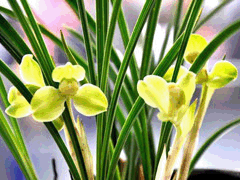 CymbidiumensifoliumPests are more serious than on other orchid plants, because its flowering period is concentrated in summer and autumn, when it is hot and dry, and the fragrant flowers often attract many insects that gnaw on the petals and sap. Among these, thrips are the most serious, occurring throughout the year. The larvae are peach-pink, while the adults are black, about 2mm long, and jump like fleas. Damage is mainly to the flowers, causing brown spots on the petals; in severe cases, the buds fail to open and die. Thrips like to hide at the base of the petals and in the leaf sheaths of new shoots; when there are no flowers, they hide in the gaps between pseudobulbs and damage the tender shoots. Damage is first found when the new shoots open, initially as white spots resembling virus disease symptoms, turning brown as the plant matures, and even causing the leaves to wrinkle and twist. These wounds often allow other pathogens and viruses to invade.
Next are scale insects and aphids, which can cause damage at the leaf base, on the leaves, and on the flower stalks, and live in symbiosis with ants. They specifically suck the plant's sap, causing yellow spots on the leaves, which wither and drop early, and they occur almost year-round. Next are leaf beetles, which specifically target flower buds; their bodies are golden yellow, with a body length of 12-18um. When the flower buds in the orchid garden have been completely gnawed away, this insect is no longer found.
The control methods for the above pests are the same. In severe cases, besides removing the flowers, apply pesticide once a week for two consecutive times. For control agents, choose any one of naled, carbosulfan, dimethoate, chlorpyrifos, malathion, permethrin, etc., and mix the dose according to the instructions.
Pests that harm the roots and stems include nematodes. Soft-bodied animals such as slugs and snails, among which burrowing nematodes are the most serious, not only cause root rot but also destroy the growing point of the pseudobulb so thoroughly that no shoots grow. Soft-bodied animals such as slugs and snails gnaw on new shoots and tender buds. Such animals all share a common feature: their skin secretes oil to help them glide and breathe. Using degreasing detergents, soapy water, dishwashing liquid, or natural remedies such as soybean powder and tea seed meal can all achieve good results. Soybean powder and tea seed meal need to be soaked and dissolved in edible vinegar or sugar-vinegar solution; take the liquid, dilute it 200 times, and drench or soak with it. For chemical agents, polyethylene and Wanqiang can be used for treatment; their toxicity is strong, so caution is required when using them.
For pest control, besides active pesticide killing, passive repellence is also a good strategy. For example, hanging green, blue, or yellow sticky boards or sticky tape can reduce damage from thrips and flying insects. Spreading lime on the ground or fitting plastic bottles over the supports of the planting bed can prevent slugs and snails from entering. Sugar-vinegar solution can eliminate red spider mites. Natural organic substances with pungent odors, such as water-vinegar solution, alcohol, garlic juice, chili juice, neem oil, camphor oil, and citronella oil, are also very effective at repelling insects.
Pest control does not mean exterminating them all; after killing one batch, a new batch will still invade from outside. Long-term human exposure to a pesticide environment is extremely harmful to health. The use of organic pesticides and physical control is gradually becoming the mainstream of modern agricultural technology, and there are still many good methods waiting to be developed. The above methods are based on the author's long-term experience and are for readers' reference only. (Liu Qingyong)