Great Barrier Reef Increasingly Eroded: Australia Deploys Over 300 Million Yuan for Protection
The Great Barrier Reef is the world's largest and longest coral reef group, and also an ideal diving paradise for many diving enthusiasts. But regrettably, as global warming continues to intensify, seawater temperatures are also gradually rising, and in recent years more and more coral reefs of the World Heritage-listed Great Barrier Reef have been
The Great Barrier Reef is the world's largest and longest coral reef group, and also an ideal diving paradise for many diving enthusiasts. But regrettably, as global warming continues to intensify, seawater temperatures are also gradually rising, and in recent years more and more coral reefs of the World Heritage-listed Great Barrier Reef have been bleaching. On January 22, the Australian government announced it would deploy 60 million Australian dollars (equivalent to over 300 million yuan) to conserve the Great Barrier Reef.
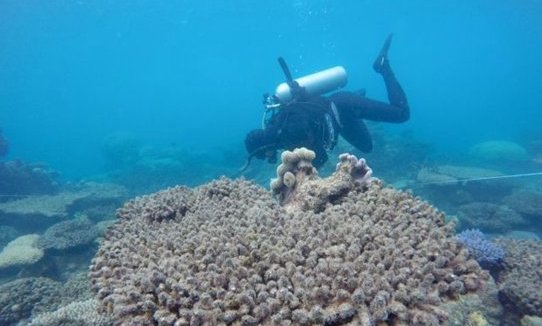
In recent years the coral of Australia's World Heritage-listed Great Barrier Reef has been eroded by crown-of-thorns starfish, and on January 22 Australian Prime Minister Turnbull announced the allocation of 60 million Australian dollars (about 307 million yuan) for conservation, to suppress the damage the starfish cause to the Great Barrier Reef.
In a statement on January 22, Australian Prime Minister Turnbull said that half of the funds allocated by the government will be used to encourage farmers to reduce dumping waste into the ocean, to prevent pollutants from worsening the ecological crisis of the Great Barrier Reef. In addition, the government will add patrol boats and divers to eliminate the starfish, and part of the allocation will be used to rebuild the Great Barrier Reef research fund, as well as to establish warning systems and regulations to prevent coral bleaching.
In recent years the coral of Australia's World Heritage-listed Great Barrier Reef has been eroded by crown-of-thorns starfish, whose numbers have surged and which eat large amounts of coral, leaving many corals severely bleached.
It is reported that the Australian Marine Park Tourism Operators Association has already gathered 25 divers to go to sea and dive underwater to poison these “coral killers” with poison needles.