Understanding and Prevention of Four-Season Orchid Virus Disease
Understanding and Prevention of Four-Season Orchid Virus Disease
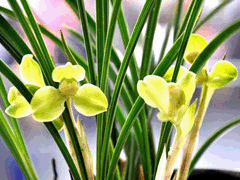 CultivationFour-SeasonOrchidThe most puzzling thing for orchid enthusiasts who grow old varieties is why virus disease is always impossible to guard against completely. Is it because old varieties have been propagated vegetatively for too long and have lost disease resistance? Or is it because the virus has already lurked within the plant without showing symptoms? The author once had a painful experience: 8 years ago, I spent 240,000 Taiwan dollars to buy one thousand seedlings of TianxiangCultivation, and as a result, all the first-generation new shoots that grew out had virus disease. Unwilling to give up, I bought another one thousand Tianxiang seedlings from elsewhere as a remedy, but the first-generation new shoots still had 3O% virus disease. Every time I repotted and every time I culled, 5-1O% were still eliminated each year. At present there are already more than one hundred thousand seedlings. Only when they bloomed this year did I notice that a few flower stalks did not grow tall. On closer observation, I found that the leaves had slight flaws, seemingly diseased yet not diseased. It turned out that a small portion had already been infected with virus disease, but the symptoms were not obvious so they had not been culled. During flowering, it spread through insects, or was caused by hand contamination during division. Because these old varieties have been circulating for a long time, the chances of infection are greater than for new varieties, and because prevention measures were not thorough enough, virus disease could not be completely eradicated.
According to expert research, viruses can only parasitize living cells of organisms, obtaining energy and materials from the host cells, and can reproduce when inoculated into living cells. Once a plant becomes a virus host, the virus is transported throughout the plant body along the vessels and sieve tubes within the vascular bundles. Viruses can lose their infectivity after 10 minutes at a high temperature of 65°C-7O°C, and can also lose infectivity after 10 days of drying. They are highly infectious and can resist drying, cold, and general chemicals. Although virus particles are tiny, they are still giant molecules themselves. They cannot enter the plant body through the stomata on leaves when blown by wind, nor can they enter the body through the roots along with water absorption. They need other help and can only succeed by invading through wounds.
The modes of virus transmission are transmission from the previous generation or wound transmission. The prevention methods are:
1. When dividing plants or pruning roots and leaves, knives and scissors must be boiled in hot water for disinfection before and after use.
2. When dividing plants or repotting, healthy plants should as much as possible not be washed with water. If they are washed with water, they must absolutely not be stacked on top of one another, to prevent the virus from invading wounds through water droplets.
3. Pay attention to insect transmission, especially thrips, which not only gnaw on flower centers but also pierce and suck tender shoots, and spread very quickly. During the flowering period, apply insecticide once every two weeks; during the new shoot period, apply insecticide at least once a month.
4. It is best to discard used medium rather than reuse it. Planting pots must be washed with water and sun-dried before they can be reused.
5. Absolutely do not treat pesticides by soaking, because chemical pesticides cannot kill viruses, and instead the virus spreads from one plant to another through the pesticide solution.
6. Plants should not be placed too densely, to avoid rubbing against each other. Maintain good ventilation. Pesticides, fertilizers, and sunlight must not be excessive, to reduce infection caused by plant weakening or injury.
7. If diseased plants are found, immediately isolate and destroy them. (Liu Qingyong)