A Detailed Introduction to the Whitefly Pest on Orchids
Orchid Pests - Whitefly
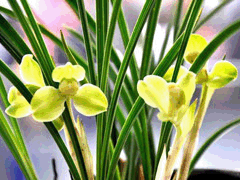 Whitefly, Trialeurodes vaporariorum Westwood, belongs to the order Homoptera, family Aleyrodidae. It was introduced into China in the 1970s along with foreign nursery stock and fruit, and has since spread throughout the country. It damagesorchids, fuchsia, dahlia, hibiscus, chrysanthemum, Chinese rose, peony and more than 200 species of plants in 16 families. Adults and nymphs pierce the leaf flesh with their mouthparts on the underside of leaves to suck sap, causing leaves to curl, lose chlorophyll and turn yellow, and even dry up. In addition, whiteflies excrete large amounts of honeydew, which contaminates stems and leaves and causes sooty mould, producing a layer of black mildew on the leaves that affects flowering and ornamental value.
Morphological characteristics:
Adult: body length 1.0-1.2mm, body pale yellow or pale green, covered with white powdery wax, compound eyes red, antennae short and filamentous, wings membranous, with one wing vein on each of the forewings and hindwings.
Egg: oblong-oval, 0.2-0.25mm, with a short egg stalk, pale yellow when first laid, later turning black.
Nymph: body flat, oval, yellow-green, body length about 0.5mm.
Pupa: oval, raised, pale yellow.
Pupal case: flat, oblong-oval, pale yellow, semi-transparent, with the entire dorsal surface of the pupal case covered with white flocculent waxy filaments.
Occurrence pattern:
Greenhouses are the main overwintering site for whiteflies, where they can also continue to reproduce and cause damage in winter. After spring of the following year, they gradually migrate and spread from the overwintering sites to sunny seedbeds and open-field flowers. Adult density increases rapidly in July-August, and damage is severe in August-September. After late October, as temperatures drop, the population gradually decreases and begins to move to greenhouses to continue reproducing and causing damage. In greenhouses they occur continuously throughout the year, with 10-12 generations per year. Generational overlap is pronounced, and various stages can be seen at the same time. Both adults and nymphs prefer the upper tender leaves, resting and feeding on the underside of leaves and laying eggs there. Females mostly lay eggs on the upper tender leaves. The distribution of the various stages on the plant follows a certain pattern: the uppermost tender leaves have the most adults and newly laid pale yellow eggs, the slightly lower leaves mostly have first-instar nymphs, further down are middle and older nymphs, and the lowest leaves have the most pupae. Adults are generally not very active, but when temperatures are high and sunlight is abundant, they can be seen flying among the plants. Adults have a strong taxis toward yellow but avoid white and silver-gray. Adults reproduce both sexually and by parthenogenesis, but the offspring of parthenogenesis are entirely male. After hatching, nymphs fix themselves on the underside of leaves and pierce and suck to cause damage. The insect spreads with the wind and through the introduction and transport of host plants.
Control methods:
1. White trapping and repellence. Taking advantage of the strong taxis of whitefly adults toward yellow, hanging white or silver-white plastic strips at the doors, windows and vents of greenhouses can repel adults from entering, and hanging or inserting small yellow boards coated with sticky oil beside flower plants can have an obvious trapping and killing effect.
2. Chemical control: Chemical control should be applied at the stage when infestation occurs in spots and patches. The pesticides include 40% dimethoate emulsifiable concentrate,
50% malathion emulsifiable concentrate, 80% dichlorvos emulsifiable concentrate, 20% dicofol emulsifiable concentrate, sprayed as a 1000-fold solution. Application is better at the 1st-2nd instar nymph stage. When spraying, pay attention to concentrating on the plants and on places where insect density is high on the underside of upper leaves.
3. Pay attention to the hygiene of the orchid nursery or greenhouse, promptly clear weeds and dead branches and fallen leaves, and also pay attention to quarantine.OrchidPests - Whitefly
Liu Zhongjian
Whitefly, Trialeurodes vaporariorum Westwood, belongs to the order Homoptera, family Aleyrodidae. It was introduced into China in the 1970s along with foreign nursery stock and fruit, and has since spread throughout the country. It damagesorchids, fuchsia, dahlia, hibiscus, chrysanthemum, Chinese rose, peony and more than 200 species of plants in 16 families. Adults and nymphs pierce the leaf flesh with their mouthparts on the underside of leaves to suck sap, causing leaves to curl, lose chlorophyll and turn yellow, and even dry up. In addition, whiteflies excrete large amounts of honeydew, which contaminates stems and leaves and causes sooty mould, producing a layer of black mildew on the leaves that affects flowering and ornamental value.
Morphological characteristics:
Adult: body length 1.0-1.2mm, body pale yellow or pale green, covered with white powdery wax, compound eyes red, antennae short and filamentous, wings membranous, with one wing vein on each of the forewings and hindwings.
Egg: oblong-oval, 0.2-0.25mm, with a short egg stalk, pale yellow when first laid, later turning black.
Nymph: body flat, oval, yellow-green, body length about 0.5mm.
Pupa: oval, raised, pale yellow.
Pupal case: flat, oblong-oval, pale yellow, semi-transparent, with the entire dorsal surface of the pupal case covered with white flocculent waxy filaments.
Occurrence pattern:
Greenhouses are the main overwintering site for whiteflies, where they can also continue to reproduce and cause damage in winter. After spring of the following year, they gradually migrate and spread from the overwintering sites to sunny seedbeds and open-field flowers. Adult density increases rapidly in July-August, and damage is severe in August-September. After late October, as temperatures drop, the population gradually decreases and begins to move to greenhouses to continue reproducing and causing damage. In greenhouses they occur continuously throughout the year, with 10-12 generations per year. Generational overlap is pronounced, and various stages can be seen at the same time. Both adults and nymphs prefer the upper tender leaves, resting and feeding on the underside of leaves and laying eggs there. Females mostly lay eggs on the upper tender leaves. The distribution of the various stages on the plant follows a certain pattern: the uppermost tender leaves have the most adults and newly laid pale yellow eggs, the slightly lower leaves mostly have first-instar nymphs, further down are middle and older nymphs, and the lowest leaves have the most pupae. Adults are generally not very active, but when temperatures are high and sunlight is abundant, they can be seen flying among the plants. Adults have a strong taxis toward yellow but avoid white and silver-gray. Adults reproduce both sexually and by parthenogenesis, but the offspring of parthenogenesis are entirely male. After hatching, nymphs fix themselves on the underside of leaves and pierce and suck to cause damage. The insect spreads with the wind and through the introduction and transport of host plants.
Control methods:
1. White trapping and repellence. Taking advantage of the strong taxis of whitefly adults toward yellow, hanging white or silver-white plastic strips at the doors, windows and vents of greenhouses can repel adults from entering, and hanging or inserting small yellow boards coated with sticky oil beside flower plants can have an obvious trapping and killing effect.
2. Chemical control: Chemical control should be applied at the stage when infestation occurs in spots and patches. The pesticides include 40% dimethoate emulsifiable concentrate,
50% malathion emulsifiable concentrate, 80% dichlorvos emulsifiable concentrate, 20% dicofol emulsifiable concentrate, sprayed as a 1000-fold solution. Application is better at the 1st-2nd instar nymph stage. When spraying, pay attention to concentrating on the plants and on places where insect density is high on the underside of upper leaves.
3. Pay attention to the hygiene of the orchid nursery or greenhouse, promptly clear weeds and dead branches and fallen leaves, and also pay attention to quarantine.
Liu Zhongjian