How to prevent and control anthracnose? These methods you need to master
About preventing and controlling anthracnose
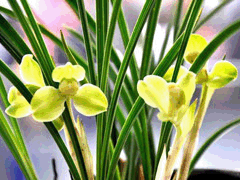 As everyone knowsCymbidium goeringiiDafugui and Longzi are extremely susceptible to anthracnose, and it is very difficult to prevent and control; only by alternately spraying agricultural fungicides once a week can it be effective.
In 1995, when the author's orchid room had not yet been built, the whole winterorchidswere overwintered in the room. Because they were indoors, no agricultural fungicides such as carbendazim were sprayed, and as a result, before winter was even over, Dafugui and Longzi had already been infected with anthracnose. The diseased parts were cut off immediately, but before long, anthracnose occurred again, and became more and more severe.
I hurriedly used carbendazim and thiophanate-methyl alternately twice a week, and finally managed to bring anthracnose under control.
Anthracnose was controlled, but my wife and I felt discomfort in our throats and some difficulty breathing, and our child cried day and night and broke out in many measles-like rashes. The three of us went to the hospital for treatment, and only then did we learn that it was caused by pesticide contamination in the room.
orchidsmust be grown, but environmental pollution and the health of family members cannot be ignored either. What was to be done? Starting in the spring of 1996, I stopped using agricultural fungicides and tried using human-use penicillin, streptomycin and gentamicin. Each vial of injection is normally diluted 2000-2500 times, 1000 times in susceptible seasons, and 500 times for diseased plants, or the three agents are mixed
and sprayed alternately, once a week, throughout the yearfour seasonswithout interruption, and attention was paid to ventilation and light transmission. During use, the liquid must be sprayed thoroughly and completely: leaf surfaces, leaf undersides, pot surfaces, orchid racks and walkways must all be sprayed. Each season it is best to also spray a 1500-2000 times dilution of medical aspirin, to induce the plants to produce resistance proteins and enhance their resistance. As a result, of the several hundred pots oforchidsI cultivate, not one suffered from root rot, anthracnose or southern blight.
Therefore, through these years of cultivation, the author believes that human-use penicillin, streptomycin and gentamicin are no less effective against anthracnose, southern blight and root rot than agricultural fungicides, and that gentamicin is more effective against southern blight than agricultural fungicides such as carbendazim.
Applying human-use antibiotics does not pollute the air and does no harm whatsoever to human health, and the medicines are not expensive either. People are happy and orchids are healthy, so why not do it?
Chuzhou Public Security Bureau, Huai'an City, Jiangsu Province
Contact phone: 0571-5912438 5914498
Wang Jun