What are the effects of orchid greenhouse humidity on orchid growth?
The effect of orchid greenhouse humidity on orchids
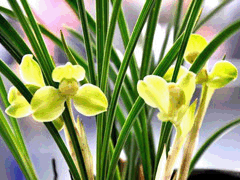 CultivationOrchids, besides paying attention to sunlight, potting medium and fertilizer, you also need to pay attention to humidity. Someorchid growersonly pay attention to the moisture of the potting medium in the orchid pot, while ignoring the relative humidity of the air inside the orchid greenhouse.
In fact, humidity inside the greenhouse isan important part of orchidcare. Through exploration and practice over the past few years, I have found that it hasan enormous effect on orchidgrowth and propagation.
1. Orchids originally grow in mountain forests, where the surrounding environment has relatively high humidity, generally between 75% and 90%. After orchids are collected from the mountains, especially when planted on a balcony or rooftop, if no humidifying measures are taken, the humidity inside the greenhouse is mostly below 40%. On a clear summer day, when the temperature reaches as high as above 35°C, or in winter when the weather is dry, the humidity is below 50%. Therefore, in addition to keeping the moisture of the potting medium at 70%-90% of the maximum water-holding capacity of the medium, and not lower than 50%, effective methods should also be adopted according to local conditions to raise the humidity inside the greenhouse so as to meet suitable requirements. The so-called "suitable" means being close to the environmental humidity of the orchids' original growing site, that is, about 75% is appropriate.
2. In recent years, I have used a semi-enclosed automatically humidified orchid greenhouse, with an openable galvanized iron sheet roof, foam board insulation in the middle, glass windows and doors around the sides, and in summer an electric fan, an automatic spray humidifier, a thermometer, a hygrometer and an automatic control system. This method can save manpower, can keep the humidity inside the greenhouse at a suitable level at all times, and can also play a certain role in cooling, but the cost required is relatively high, though the effect is very good.
3. Humidifying the orchid greenhouse: You can also cover the roof and surrounding sides with transparent plastic boards (film), but leave ventilation windows in appropriate positions. Inside the greenhouse, also install supply and exhaust fans, water spray nozzles, a thermometer and a hygrometer. For the humidifying method, do not use an automatic sprayer; instead, set up a water pool, water basins, or place water-absorbing sponges on the ground inside the greenhouse, and wet the ground with water; or install water spray nozzles near the air inlet, use a fan to blow toward them, and blow the water vapor up to achieve the purpose of humidification. If the atmospheric humidity reaches a suitable level, you can open the ventilation windows to let the greenhouse ventilate naturally without turning on the fan. If the atmospheric humidity does not reach a suitable level, then close the ventilation windows, turn on the fan, and spray a large amount of water onto the orchid plants, the ground inside the greenhouse, and the surroundings. After about a few minutes, the air temperature inside the greenhouse drops and the humidity rises. At this point, turn off the water spray nozzles and let the fan continue blowing, so that the moisture circulates inside the greenhouse and the humidity inside the greenhouse is maintained. This method also works very well. I made measurements in my own orchid greenhouse, and the results showed that when the temperature was 30°C and the humidity was 50%, after a large amount of spraying, the temperature inside the greenhouse immediately dropped to 26°C and the humidity increased to 75%. Some orchid friends worry that spraying water on orchid plants under the scorching sun and high temperature will cause orchids to become diseased, but this is not the case. As long as there is ventilation, spraying water on orchid plants at high temperature is like giving orchids a "leaf wash," and is just right for orchids.
4. Regarding the effect of humidity on orchid growth, some orchid friends say that wherever the orchid greenhouse temperature reaches about 75%, the orchids all grow relatively well. I have had the same feeling through practice. But when the orchid greenhouse was set up on a sixth-floor platform, before humidifying measures were taken, because the atmosphere was dry in winter and the temperature was high in summer, the humidity inside the greenhouse was often between 40% and 50%, which could not adapt to the humidity requirements of orchids, and therefore the orchids grew poorly: the germination rate was low, black spots appeared on the leaf surface, and the leaf tips were scorched. Since changing the orchid greenhouse into a semi-enclosed humidified orchid greenhouse, orchid growth has undergone great changes:
1. High germination rate. Most current-year orchid heads sprout two shoots, and separated parent-generation heads also sprout.
2. Fewer black spots appear on the leaf surface, and fewer leaf tips are scorched. More flowers bloom, the leaf color is emerald green, and the plants are full of vitality.
The above views may not necessarily be correct, and I am willing to discuss them together with all orchid friends. If there is anything inappropriate, please criticize and correct it. I would be extremely grateful. (Zheng Pufa)
Address: Room 602, Unit 1, No. 51 Jiaojiang Huayuan Xincun, Taizhou City, Zhejiang
Postal code: 318000
Telephone: 13806599671