Detailed Explanation of the Differences and Connections Between Photosynthesis and Photorespiration
Photosynthesis and Photorespiration
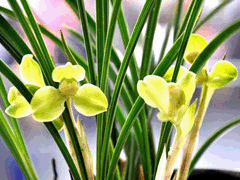 1. Structure: AnatomyCymbidium sinenseLeaf structure,Cymbidium sinenseThe leaf surface is covered with a relatively thick cuticle and wax layer, stomata are distributed on the underside of the leaf, with a stomatal density of 100-130 per mm-2, and the stomata are covered with circular or elliptical stomatal plugs, with a circular opening in the center of each stomatal plug. These characteristics are related to reducing the transpiration rate to some extent. The cross-sectional structure is similar to that of general C3 plants; the mesophyll cells show no differentiation into spongy tissue and palisade tissue, there are no chloroplasts in the bundle sheath cells, and between the mesophyll within the upper and lower epidermis there are clusters of thick-walled, lignified subepidermal fiber bundles that have a supporting function. The leaf chloroplast grana are relatively well developed, with more osmiophilic granules and no starch grains.
2. Quantum yield of photosynthesis: The quantum yield of functional leaves is about 0.082 (quantum requirement 12). The photosynthetic light compensation point is only 5 uEm-2s-1, and the light saturation point is approximately 200 uEm-2s-1. Within the light intensity range of 100 uEm-2s-1, the increase in photosynthetic O2 release rate is linear. The quantum yield of three-year-old leaves is only about 0.005, indicating that the leaves have already shown senescence. The results for the light saturation point haveorchidcultivationpractical application value, as the light intensity at the light saturation point is 10-15% of the light intensity at noon in summer.
3. The activities of several enzymes related to photosynthesis and photosynthetic pathways in leaves, glycolate metabolism, and the chlorophyll a/b ratio;Cymbidium sinenseThe leaves have relatively high ribulose-1,5-bisphosphate carboxylase (RuBPC) activity, while the activities of phosphoenolpyruvate carboxylase (PEPCase) and pyruvate phosphate dikinase (PPDK) are very low, and glycolate oxidase activity is also relatively high in the leaves. Treating leaves with a-HPMS under light led to a significant increase in glycolate content. Determination of chlorophyll content showed that the chlorophyll a/b ratio in the leaves remained basically stable at around 2.7. These results indicate that Cymbidium sinense is a plant with the C3 photosynthetic pathway.
4. The photosynthetic rate of Cymbidium sinense leaves and the effect of temperature: The photosynthetic rate of Cymbidium sinense leaves is very low; the photosynthetic rate of functional leaves is generally around 2.6 umolco2m-2s-1 (2.2-3.0 umolco2m-2s-1), whereas the photosynthetic rate of general plants is between 5.0-50 umolco2m-2s-1. The optimum temperature for photosynthesis of one-year-old functional leaves is around 25 degrees C. The photosynthetic rate of three-year-old leaves decreases as temperature rises. Their patterns of change have their own characteristics.
5. The effect of temperature on the CO2 compensation point and the CO2 release rate under light in CO2-free air: The CO2 compensation point of Cymbidium sinense leaves is between 105 and 220 ppm (general C3 plants are between 35 and 90 ppm). In CO2-free air, the leaves have a relatively high CO2 release rate under light, and it increases with rising temperature. (Ye Qingsheng, Pan Ruichi)