Summary of Key Technical Points for Crop Pest and Disease Control
Overview of Pest and Disease Control
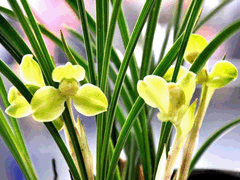 Growing OrchidsWhen the location is suitable and care is proper, the plants grow vigorously and pests and diseases naturally occur less; otherwise, they are prone to occurPests and diseases.
To preventpests and diseases, first of all, avoid buying diseased plants; second, strengthen care; third, regularly spray pesticides for pest and disease control. By implementing the principle of giving priority to prevention, with prevention being more important than cure, the impact of pests and diseases is reduced,growing orchidsand success is assured.
Common diseases
1. Black spot disease: black spots appear on the leaf surface and gradually expand, causing the leaves to dry up. In most cases, it is caused by excessive moisture and poor ventilation. Move the plant to a ventilated place and spray with a fungicide.
2. Rot disease, caused by Pythium ultimum, usually harms seedlings. Spray with copper sulfate or other fungicides.
3. Bacterial brown rot, mainly occurring on new leaves and new pseudobulbs. In the early stage of the disease, water-soaked spots first appear on their leaves or pseudobulbs, initially light brown, gradually turning dark brown, with a wrinkled surface and moist halo patterns along the edges. The disease develops quickly: if infected in the morning, the affected area may turn yellow-white by evening, and the next day the whole plant is endangered. The affected parts must be thoroughly cut off and burned. Then disinfect with mercury bichloride solution and stop watering for four or five days.
4. Viral disease, called Bailasi disease in Hong Kong, China and Taiwan, China. The main types areorchidleaf mosaic virus (Cymbidium mosaic) and Cymbidium diamond mottle virus. It is usually a disease transmitted by a type of aphid and spreads very quickly. Once discovered, it must be thoroughly eliminated and the surrounding area disinfected. Pay attention to controlling aphids at ordinary times.
Common insect pests
1. Scale insects, commonly including Diaspis boisduvalii Sigmoret, Ferrisiana virgats Cookerell, and Lepidoaghes machili Maskell. They can be killed by spraying dimethoate or dichlorvos during the larval stage. The Swiss-made Nuvacvom 60 works very well.
2. Mites and spiders, which are small soft-bodied animals, round, with milky-white eggs, laying 1-2 eggs per day, hatching in 5 days, and developing into adults after 1 week. They can be controlled with dicofol, 1605, malathion and other pesticides, with good results.
3. Thrips (Thrips), which harm orchid leaves by sucking epidermal tissue, causing small white spots on the leaf surface. A common species is Anaphothvips Qrchidii Moulton. Control with lindane and 1605.
4. Aphids, because they are virus transmission vectors, must be observed and controlled at all times. Common species include Ceratapis Laniae Boisduval, Myxus Persicae Sulzer (green peach aphid), M. Circumslexus Buckton (lily aphid), and Aphis gossypii Glover (cotton aphid). They can be controlled with TE-PP, 1605, malathion, lindane, etc. (He Qingzheng)