Introduction to Orchid Diseases: Understanding Common Orchid Diseases in One Article
Introduction to Orchid Diseases
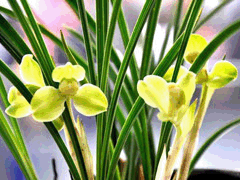 Orchidsfavor warm, humid conditions and cool shade. Such an environment is equally suitable for certain diseases, especially the growth of fungal diseases, if attention is not paid. This will lead to serious consequences. Below is aOrchidbrief introduction to each common disease, for reference only.
I. Fungal Diseases
(I) Root Rot
The roots of diseased plants turn brown, the root cortex rots and falls off, losing the ability to absorb. The branches and leaves show malnutrition, insufficient water supply, weak and flaccid stems and leaves, stunted growth, yellowing, and withering. If the disease progresses upward, it will cause neck rot and rot at the leaf base, ultimately leading to death. Infected seedlings are prone to collapsing and dying. There are four types of pathogenic fungi.
1. Fusarium Root Rot
(1) Fusarium batatatls var. vanilllae Tucker
(2) F. oxysporiun Schlecht. f. sp. Cattlevae Foster
2. Rhizoctonia Blight Rhizoctonia solani Kuehn
3. Southern Blight Sclerotiuln rolfsii (Sacc.) West
(II) Black Rot
The symptoms are similar to root rot, with root rot and neck rot appearing. The disease can spread to the leaves, causing heart rot, and the disease progresses rapidly.
1. Phytophthora Black Rot phytophthora cactorum (Lebg. cohn) Schroet
2. Pythium Black Rot Pythium ultimum Trow
(III) Leaf Diseases
Various types of lesions appear on leaves. The lesions merge into blotches, causing the leaves to wither.
1. Anthracnose:
Wavy dark brown lesions appear at leaf tips or leaf margins. The lesions expand into large spots with concentric rings, on which small black dots of acervuli appear. In severe cases, the disease can also infect sepals and petals. It begins in April and becomes epidemic in July-August.
(1) Colletotrichum Anthracnose Colletotrichum orchidearuum Allesh
(2) Short-spined Colletotrichum Anthracnose C. orchidearum f. cymbidii allesh
(3) Ring Colletotrichum Anthracnose C: Gloeosqorioides penz C. cinctum (Berk. & Curt.) sion C. gI000SpOOioides Penz
2. Cylindrosporium Leaf Spot Cylindrosporium phalaenopeis Swada, also known as black spot. The lesions are round to elliptical dark brown spots, mostly occurring at the leaf base, leaf margin or leaf tip. The center of the spot is grayish-brown, bearing dark brown warty small bodies, which are acervuli. At 15-20C, rainy and humid conditions favor the disease, which becomes epidemic from January to April.
3. Cercospora Leaf Spot: The lesion shape is variable, brown to brown round or irregular spots, slightly sunken, with dark lesion margins, sometimes with a yellow halo outside. Some occur on the underside of leaves.
(1). Cercospora Epipatidis C. Massalollgs
(2). C. PCristeriae Btlrnett
(3). C. Dendrobii Burney
(4). C. angraeci Feuill & Roum.
(5). C. cypripedii Ellis & Dearmess
(6). C. odontoglossi Pril. g. Dclac
(7). C. sPP.
4. Septoria Leaf Spot Septoria elenoPhompides Cash g. Watson
5. Phyllostictina Leaf Spot Phollostictina Pyrifomis Cash & Watsom
6. Diplodia Leaf Blight Diplodia laeliocattleytae Sibilla
7. Sooty Blotch Gloeodes pomigena (Schw) Colby. A gluey bright-spored fungus, often occurring together with fly-speck and growing on the surface.
Itsharm to orchidsis minor.
8. Fly-speck Disease Microthyriella rubi Petr. Fly-speck fungus, needle-head-like small patches interweaving on both sides of the leaves into a black covering, saprophytic on the leaf surface.
9. Sooty Mold Capnodium citri Bcrk. & Desm. Citrus sooty mold fungus, saprophytic on insect honeydew.
10. Rust: Spore masses on the underside of leaves, with yellow-green discoloration spots on the corresponding part of the upper surface.
(1). SrhenosPora kevorkialnii Lhlder orange-brown teleutospore masses.
(2). S. Mera Cumm. brown teleutospore masses,
(3). S. Saphena Cumm. rusty-brown teleutospore masses.
(4). S. epidendri P. Hemm. orange-yellow teleutospore masses,
(5). Uredo behnickiana P. Henn orange-yellow uredospore masses;
(6). U. nigropuncta P. Henn. black uredospore masses,
(7). U. Oncidii P. Henn orange-yellow uredospore masses.
11. Other Fungal Diseases:
(1). Alternaria sP.
(2). Cladosporiun SP.
(3). Helminthosporiunm sP.
(4). Gloeosporium sP.
12. Snow Mold Ptychogaster sp. A layer of white mold-like mycelium saprophytic on orchid media made from fern and fir bark.
13. Petal Diseases:
(1). Botrytis Blight Botrytis cinerea Pers. Botrytis mold.
(2). Rust-colored Spot Curvularia eragostidis (Heen) Meyer Curvularia mold.
II. Bacterial Diseases
1. Brown Spot Pseudomonas cattleyae (povarino) Savulescu Pseudomonas bacterium, infecting orchid leaves to form brown blotches, with bacterial ooze visible in wet weather.
2.Soft RotDisease Etwinia Carotovora (Jones) Helland Erwinia bacterium causes the soft fleshy
tissuesoft rotof pseudobulbs and rhizomes, with a foul odor. Above-ground leaves lose their luster. When the disease is severe, the leaves droop and die.
3. Brown Rot E. cyvipedii (Hori) Bcrg et al Erwinia bacterium, damaging the middle of the leaf to form round to oval water-soaked yellow spots, later turning brown. If it invades the leaf growing point, the above-ground part shrinks and dies.
III. Viral Diseases
The same virus can show different symptoms on different Cymbidium species, such as mosaic, mottling, necrosis, ringspot, deformation, witches' broom, stunting or latent infection, and can also have compound symptoms. It is transmitted through sap, tools or insect vectors. Wild orchids are rarely reported as infected.
1. Cymbidium Mosaic Virus Disease CyMV Cymbidium Mosaic Virus, in GuangzhouJianlan (Cymbidium ensifolium)andMolan (Cymbidium sinense)mosaic symptoms are seen, as well as clear striped spots and necrotic streaks. It is transmitted through sap or the green peach aphid. The virus particles are filamentous, 475-490*13nm, similar to potato virus X particles.
2. Orchid Color-breaking Virus Disease, TMV-O strain, also known as Odontoglossum Ringspot Virus, transmitted by sap and aphids, particles rod-shaped 300*18nm.
3. Orchid Fleck Virus Disease Orchid fleck V.
Reported in Japan, mottling, necrosis, transmitted by sap, particles short rod-shaped 15O*40um. nm=10-7cm
IV. Nematodes:
Yellow bud blight nematode Aphelenchoides ritzcma-bosi (Schwartz) Steiner &.Buhrer, a foliar nematode, also damaging Asteraceae plants and weeds.
V. Parasitic Plants: Damaging terrestrial orchids
(1) Cassytha filiformis L. of the Lauraceae family
(2) Cuscuta gronovii Willid. dodder
VI. Physiological Disorders
Due to high temperature and low humidity, waterlogging, water shortage, sunscald, excessive fertilizer, nutrient deficiency, phytotoxicity, air pollution and water source pollution, etc., physiological disorders of orchids can be caused, showing mosaic, mottling, yellowing, spots, blotches, necrosis, shrinkage, distortion.........and other symptoms similar to various infectious diseases. They are often difficult to distinguish, and the cause can only be clarified through pathological analysis.
1. Nutrient Deficiency: For example, under normal circumstances, plants with severe nutrient deficiency will show the following: The typical symptoms of calcium, zinc, copper, magnesium and sodium deficiency are yellowing and necrosis. The symptoms of nitrogen, phosphorus, iron, magnesium, molybdenum and sulfur deficiency are leaf discoloration, similar to the symptoms of viral diseases. Potassium deficiency causes brown blotches on both leaf margins.
2. Fertilizer Damage
(1) With long-term use of sulfate and chloride fertilizers, the soil and roots are damaged by the accumulation of these compounds, affecting the absorption function.
(2) When organic fertilizers are not fully decomposed, fertilizers such as urea and ammonium sulfate produce gases such as ammonia (NH3), nitrous acid (NO2) and sulfurous acid (SO3), causing poisoning by ammonia, sulfur dioxide and nitrogen dioxide gases. The leaves first show symptoms such as black spots, wilting and death.
3. Phytotoxicity: Dark brown and necrotic spots, and death in severe cases.
(1) Copper agents and lime sulfur mixture easily cause phytotoxicity under high temperature conditions;
(2) Emulsifiable concentrates and surfactants in pesticides can produce burn spots at the drip accumulation sites after application;
(3) Drift of herbicides or other growth regulators used in surrounding farmland entering the flower garden causes damage.
4. Environmental Pollution
(1) Air pollution: Exhaust gases emitted by automobiles, coal smoke, natural gas and oil refineries contain hydrogen sulfide, sulfur dioxide, hydrogen fluoride, ethylene and plasticizers in large plastics (polyethylene and polyvinyl chloride) such as n-butyl ester, diisobutyl phthalate, and dioctyl adipate, all of which can cause toxicity.
Ethylene and vaporized diisobutyl ester at 0.1 to lPPM in a greenhouse will cause symptoms such as withered leaves, petal drop, flower drop and drooping leaves.
(2) Water source pollution: Factory three wastes, water sources polluted by metals, non-metals, organic substances, pesticides and radioactive substances. Irrigation water is also aroute of transmission for pests and diseases. Therefore, the artificial irrigation water for flowercultivationmust be a clean water source free of acids, alkalis, heavy metals and pest and disease pollution, and it is best to use it after filtration. (Liu Chaozhen)