What are the comprehensive key points of crop water management
Comprehensive key points of water management
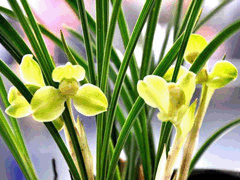 Managing water for orchids involves great knowledge; it is hard to master all at once. One must understand the physiology of orchid growth and have considerable practical experience before grasping its key points. People often ask me how many times a day orchids should be watered, and this is very difficult to answer.
Water management must take the following factors into account: season, sunlight, temperature, humidity, orchid pot, substrate, orchid plant, and environment, among others. These combined factors determine how long one watering can sustain an orchid pot, and because these factors and their changes vary from place to place and time to time, they are extremely intricate and complex. One can only rely on practical experience and an understanding oforchidphysiology to provide water appropriately. Ancient orchid books say: "The proper way of irrigation has no fixed method," and there is reason in this. Only through long-term observation can water management be carried out correctly. Even so, through the long-term practice of predecessors, the following points are common issues and represent relatively mature experience.
1.OrchidWater is best when it is rainwater or snowmelt, river water is second. Well water is next, containing minerals. Alkaline water is not suitable. When tap water must be used, it should be left for one or two days until the chlorine it contains has volatilized before use.
2. In hot seasons, watering should be done in the evening after the sun has set, to avoid leaf surface moisture being scorched by sunlight and to prevent high-temperature water from damaging the tender lower parts of new shoots.
3. In cold seasons, watering should be done during the daytime, to avoid water in the pot freezing orchid roots at night. Especially avoid water accumulating in the orchid's heart, which can easily cause young plants to rot.
4. When orchid leaves have disease spots, keep the leaf surface dry to prevent the spread of pathogens.
5. If using traditionalcultivationsubstrate, it is best to adopt the "dry-wet alternation" watering method, that is, water only when the surface soil is completely dry, and when watering, water thoroughly until water comes out of the bottom of the pot. Avoid half-dry, half-wet conditions. This alternating dry and wet water management is very beneficial to orchid root growth. In winter, if there is no heat-preservation facility, it is advisable to water less.