Orchid chlorosis is a physiological disease
Orchid physiological diseases - chlorosis
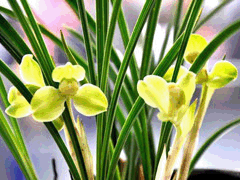 Chlorosis, also known as lime-induced chlorosis, commonly occurs in most acid-soil-loving flowering plants such asorchids.
Symptoms: The leaves of affected plants first turn yellow, then develop milky white spots, and eventually turn entirely yellow-white, with the symptoms being most obvious on new leaves. In severe cases, the leaf tissue necroses and turns brown, affecting normal photosynthesis. If not treated promptly, it can progress until the entire plant dies.
Cause: This disease is a physiological disorder. In most areas of northern China, the soil and water contain relatively high levels of alkaline salts. The divalent iron ions normally available to plants are converted into insoluble trivalent iron ions in alkaline soil, making them unavailable for plant uptake, causing physiological iron deficiency and leading to chlorosis. This situation mostly occurs when southern flowers are grown in the north.
Prevention and treatment:
(1) Plant in acidic soil and regularly spray the leaves with a 0.1%-0.2% ferrous sulfate solution.
(2) Spray with snow water or rainwater.
(3) Apply alum fertilizer water or fermented rice-washing water year-round.
In theorchidofcultivation, besides iron deficiency, the lack of certain other elements can also cause similar physiological diseases. Based on the different symptom characteristics, one should determine which element is deficient, carry out diagnostic treatment, and apply the appropriate remedy by properly applying fertilizer containing that element to achieve the goal of prevention and treatment. The deficiency symptoms are briefly described as follows:
(1) Potassium deficiency: Can cause the leaf margins at the ends and the leaf tips to turn yellow and then brown. The leaf edge often shows irregular long streaks that gradually merge into line segments. The order of onset is old leaves first, then new leaves.
(2) Magnesium deficiency: Old leaves progressively turn yellow, the leaf tips of middle-aged leaves turn yellow and gradually wither, and the leaf margins of middle-aged leaves often have line-segment-shaped yellow-red spots that gradually merge into linear markings (commonly known as copper gong green).
(3) Manganese deficiency: Often presents sunburn-like patches, with visible spots within the patches.
(4) Zinc deficiency: The middle section of the lower leaves shows light-colored rust-like spots. (Liu Zhongjian)