How Beginners Can Distinguish Water Damage, Fertilizer Burn, Pesticide Damage, and Drought Damage from Leaf Symptoms
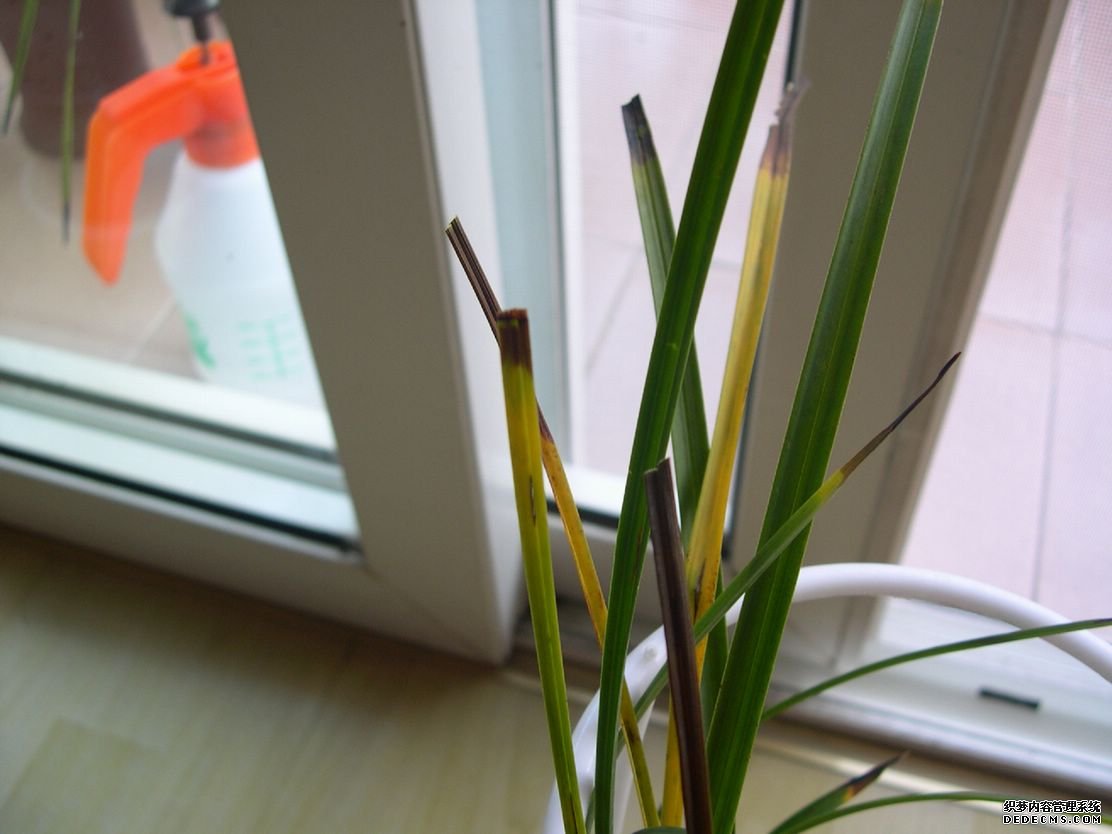
I am a beginner,growing orchidsfor only a bit more than 2 years, and I have taken many detours; even now there is still a lot I do not understand. Noworchidbooks are plentiful, teaching you what to do when there is too much water, what to do about fertilizer burn, what to do about pesticide damage? There are also many black spot disease, brown rust disease, brown spot disease, stem rot, root rot, southern blight, anthracnose, and so on. They make our eyes dazzle. Perhaps theorchiddid not have a very serious disease to begin with, but after a round of treatment, it may immediately collapse!
From my cultivation process I have collected some photos, hoping they will be of some help to beginners. If there is anything I have said incorrectly, I hope everyone will criticize and correct it! Because I am also a beginner, no matter whether today's article is right or wrong, I hope it can be a brick that draws out more jade. I hope to see more experts' experience and exchanges on the website.
This I think is fertilizer burn. Its characteristic is that new shoots grow relatively well, but old shoots begin to turn yellow from the roots. Especially when the roots were not strong to begin with, even more leaves will turn yellow.
This is also fertilizer burn. When this happens, if it is not serious, water less, and afterward grow it plainly for a period; if it is serious, change the potting medium.
This is likewise fertilizer burn. Among several diseases, fertilizer burn has a relatively small impact and rarely becomes serious enough to collapse the plant.
Drought damage. This photo is not well taken. I really could not find a photo of drought damage, because Shanghai's climate is relatively humid, and it is not easy to dry out. Basically, if the leaves turn yellow, become soft, bend outward, and have wrinkles on the leaves, that is it. Leaves with raised veins or peeling do not count. Just pay attention to watering. Long-term dryness will cause empty roots, and the roots will shrivel.
This is water damage, which is actually the roots not getting air. Beginners must absolutely not follow what books say about watering once every few days. Regions differ, and especially potting media differ, so watering frequency is absolutely different. Watering must be figured out by yourself. Here I water once a week to once every 2 weeks, and I still use coarse potting medium. Some people control aeration well and the potting medium is clean, so they can water every day, and it is fine if the flowerpot is wet every day. I suggest beginners prepare an empty pot filled with the same potting medium, pour it out every few days to check dryness and moisture, and after a few times they will have experience.
⟦16
Pesticide damage. Do not treat it as brown spot disease. The prevention and treatment method for pesticide damage is the same as for fertilizer burn.
⟦17
Water damage, fertilizer burn, and pesticide damage will all cause orchid
Phytotoxicity, do not mistake it for brown spot disease; the control methods for phytotoxicity are the same as those for fertilizer burn.
Water damage, fertilizer burn, and phytotoxicity can all cause orchidflowerdiscomfort, and resistance will decline. At this time, if other pathogens invade, brown spot disease, black spot disease, stem rot,soft rotdisease, and so on may then form. At this time, it is necessary to treat them differently according to different situations. Pay special attention that pathogens are divided into bacterial and fungal; absolutely do not use the wrong medicine. There are different medicines to treat these two kinds of pathogens. Many beginners find that after using medicine, the pathogens were not killed, but the orchid instead declined. This is one reason. Generally, streptomycin treats bacteria, and carbendazim and thiophanate-methyl treat fungi.
Finally, using medicine is not the kingly way. If you grow the orchid strong, it will naturally have resistance. Orchids are also full of vitality and have their own resistance. If you can avoid using medicine, it is best not to use it.