Detailed Explanation of Orchid Diseases and Their Control Methods
Orchid Diseases and Their Control
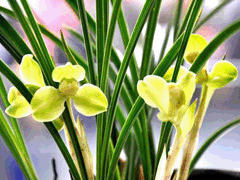 Orchids, ornamental plants of the Orchidaceae family, commonly suffer mainly from anthracnose and leaf spot disease.
1. Orchid anthracnose: It mainly damages the leaves. In the early stage of the disease, dark brown spots appear on the leaves, surrounded by a chlorotic halo. After the spots enlarge, they become oval or elongated. The edges are dark brown, the interior is yellow-brown, and the spots are slightly raised. In the later stage, black granular bodies appear on the spots. Under humid conditions, the black granular bodies exude a pink colloidal substance, namely the pathogen's acervuli and conidial masses. Anthracnose occurs over a long period, with the most severe incidence in July and August.
Control: (1) Pay attention to ventilation and light transmission. (2) Fertilize reasonably to improve disease resistance; control the application of nitrogen fertilizer during the growing period and apply more phosphorus and potassium fertilizer appropriately. (3) In the early stage of the disease, spray with a 500-800 times dilution of 50% carbendazim or 70% thiophanate-methyl wettable powder.
2. Orchid leaf spot disease: It is a fungal disease that damages leaves and can occur throughout the entire growing period. High temperature and high humidity, damage by scale insects, and poor ventilation all make leaf spot disease more likely to occur.
In the early stage of leaf spot disease, the spots are brown. After enlargement, the spots become long oval to elongated streaks, with red-brown edges and gray-brown interiors. In the later stage, black granular bodies are scattered on the spots.
Control: (1) Improve ventilation conditions and eliminate pests. (2) In the early stage of the disease, spray with a 1000 times dilution of 50% tebuconazole or a 800 times dilution of 65% zineb for control.