Control Methods and Technical Key Points for Calanthe Mosaic Virus Disease
Control of Calanthe Mosaic Virus Disease
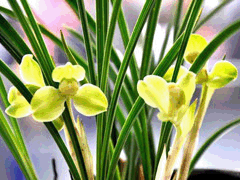 Symptoms: Clear mosaic patterns appear on the leaves, with yellow-green lesions developing along the leaf veins. No necrotic symptoms are visible on the leaves or flowers.
Pathogen: Calantheorchidmosaic virus (Calanthe mosaic virus, CalMV); its natural host is Calanthe. The virus particles are filamentous, 600-650 x 12-14 nm, and belong to the Carlavirus group.
Transmission route: The host range is extremely narrow; transmission occurs through contact with diseased Calanthe plants.
Diagnostic methods: Local lesions are produced on Chenopodium amaranticolor and C. quinoa in the Chenopodiaceae; observing filamentous virus particles 600-650 nm in length may also indicate this virus.
Control methods: Propagate by division from healthy plants. To prevent mechanical transmission, it is best to disinfect cutting tools. Carry out work on diseased plants last, and isolate them.