How to grow orchids? Improper care can easily cause them to wither and die
Improper orchid care can easily cause withering and death
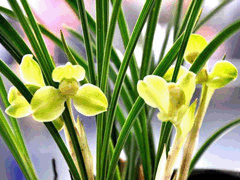 Orchidsare in a dormant or semi-dormant state in winter. If cared for improperly, they are prone to physiological disorders. In mild cases, the leaves turn yellow and withered but can still sprout again in spring; in severe cases, it can lead to death. The causes are:
1. Potting soil too dry or too wet. Although orchids should have their water greatly reduced in winter, they cannot go without watering, and the potting soil should not be allowed to dry out completely before watering. If the potting soil is too dry, and combined with the dry winter climate, the pseudobulbs are prone to shriveling, and the plant will grow poorly, with mild cases involving withered leaves and severe cases resulting in death. In winter, orchids are most averse to soggy potting soil; too much water and poor soil aeration can easily cause root rot and death.
2. Unsuitable water and soil. The water used for watering orchids is best to be rainwater or river water. If well water or fresh tap water is used, the potting soil tends to become alkaline, the soil quality deteriorates, the potting soil becomes compacted, water permeability is poor, and aeration is poor, making the potting soil prone to staying too wet in winter and greatly increasing the likelihood of root rot in the plant. Therefore, the potting soil for orchids should be a slightly acidic, loose soil, with a pH between 5 and 6.5 being suitable.
3. Improper watering method. Orchids should be watered in the morning or evening in other seasons, but in winter it is best to water in the midday sunlight, then place them in the sun for 1-2 hours after watering, and move them indoors only after the water at the base of the leaf clusters has dried. Because different orchid varieties have different water requirements, watering in winter should be handled differently. For example, autumn orchids should be watered thoroughly before the onset of winter, whileCymbidium goeringiishould be kept moist rather than thoroughly watered; during Major Snow, autumn orchids do not need watering, whileCymbidium goeringiiis best kept moist; from Winter Solstice to Minor Snow, autumn orchids andCymbidium goeringiimay go without watering or be kept at a level of eight parts dry and two parts moist.
4. Improper pot choice.For cultivatingorchids, clay pots are best. Clay pots have better aeration than glazed pots, are very suitable for orchid growth, and are less likely to cause prolonged excessive moisture, sopests and diseasesare also fewer. Using glazed pots, especially in winter, tends to easily cause root rot due to overly wet potting soil.