How to care for orchids so they sprout well? Practical care tips shared
How to get orchids to sprout well
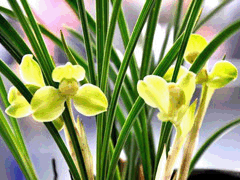 Gettingorchidsto sprout well isthe shared wish of orchidgrowers; here I will offer a few modest thoughts to invite discussion, and share some personal experience in exchange with fellow orchid enthusiasts.
(1) Sunlight. Sufficient light is the primary condition for orchids to sprout. Orchids lacking light not only sprout slowly, but their new shoots are thin, small and weak, and prone to disease. To create good light conditions: first, shading at the orchid nursery must be moderate; second, you can appropriately increase light for orchids in stages, commonly called "sunning the pots." Specifically, after the Spring Festival, when the temperature gradually warms, begin giving them more sunlight. Before the end of March, when the temperature is below 20°C, full sun can be given; after that,Cymbidium goeringiishould have one layer of shade netting when the temperature is above 20°C, and two layers of shade netting when above 30°C;Cymbidium faberican receive full sun until the end of May, with one layer of shade netting when the temperature reaches above 30°C, and two layers of shade netting when above 35°C. Throughout the year, adjust the shading degree according to the season and temperature, so that orchids receive the maximum amount of light and store up enough vitality.
(2) Temperature. The most suitable temperature for orchid growth is 20°C to 25°C; growth is slow below 8°C and above 30°C. Therefore, if we want orchids to sprout more and grow vigorously, we must find ways to avoid or shorten the space and time in which the temperature is unfavorable to orchid seedling growth. Those with the means can build a glass greenhouse and use air conditioning or water curtains to regulate room temperature, creating a small environment that keeps orchids away from both heat and cold. Those without such means can also raise the temperature with plastic film greenhouses, cool the temperature by irrigating or sprinkling water on the orchid yard ground, or install fans in the yard to regulate temperature.
If suitable temperature can be maintained, the orchid's new shoots of that yearin all four seasonswill grow normally, and the new seedlings of that year can even send out autumn shoots and grow into large seedlings in the same year.
(3) Water (humidity). Orchids have pseudobulbs that store water, so they are relatively drought-tolerant plants, but water is still very important for their growth. During the orchid'sFloralsprouting period, it is even more necessary to promptly supply sufficient but not excessive water to facilitate new shoot growth. Many beginner orchid growers wait until the potting soil dries out and turns pale and hard before watering, which is harmful and not helpfulto orchidsprouting. In my opinion, moderation should be the key: it is best to water promptly when the potting soil is slightly moist, dry on top and moist below, and not yet completely dried out. At the same time, the moisture in the air of the orchid nursery should be appropriately increased. During the orchid growth period, the relative humidity of the air should be 60% to 75%, and it can be increased in the small environment by spraying or sprinkling water. If an automatically electrically controlled humidifier can be installed, the effect will be even better.
The principles of watering orchids are: water more during the growth period and less during the dormancy period; water more for thin leaves and less for thick leaves; water more for vigorous growth and less for weak growth. Overall, it should still be noted that during the sprouting period the potting soil must remain moist, and the orchid pot should be avoided from becoming too dry.
(4) Aeration. Fresh air is very important for the healthy growth of orchids. Not only should the orchid room pay attention to air circulation, but the potting soil should also maintain good air permeability. It is best to use granular orchid soilmade by mixingSinningia soil, crushed bricks, weathered rock, etc., which is more conducive to orchid sprouting.
(5) Fertilization. In late autumn, orchids must be given sufficient base fertilizer. In early spring, appropriate topdressing should be applied. Before budding, applying a suitable amount of sprouting hormone can promote a high orchid sprouting rate. Commonly used preparations include sprouting hormone, Xiduolan, Shoushanghao, Huabao, Lanjunwang, etc.; just use them according to the instructions. Many orchid enthusiasts report that using Zhiquan diluted and sprayed on leaves in the first half of the year, and burying Zhixiang granules in the surface soil in the second half of the year, applying fertilizer along with watering, can both make orchid shoots emerge more and make orchid seedlings sturdy.