Detailed Explanation of Orchid Summer Management Techniques and Care Points
How to Manage Orchids Well in Summer
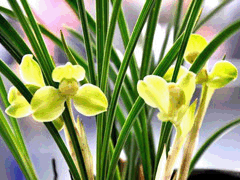 In summer, as temperatures rise, all kinds oforchidsenter their peak growth period. At this time, work onorchidsummering over with heat prevention and cooling, fertilizer and water management, and pest and disease control should be carried out effectively, so thatorchidspass the summer safely.
Shading. Entering summer, whether growingin the open fieldor keepingorchids indoors, shading must be done well to avoid strong light. A shade awning should be set up, such as bamboo blinds or reed blinds, opened in the morning and evening to receive the scattered light of dawn and sunset. In semi-openorchid-growingsites, all-day scattered light is needed; variegated orchids need 15% of full-day light. In order to speed up the growth of orchid shoots, they can be given 1 hour of weak light in the morning and evening; during extreme heat, shading and heat prevention and cooling need to be strengthened even more. Whether on the ground or on a balcony, it is best to sprinkle water frequently in the morning and evening to increase humidity and lower temperature.Orchid-growingsites should be well ventilated to ensure fresh air.
Watering. During the peak growth period of orchids, once water is lacking in summer, potted orchids grow poorly; orchids need eight parts dry and two parts wet. Watering should follow the principle of "water when dry, stop when wet, and keep appropriately on the dry side." When watering, water thoroughly, not halfway. The number of waterings can depend on the potting medium of the orchids. For hard, well-draining media such as volcanic stone, red brick granules, and pumice, watering can be done once a day; for strongly water-absorbing media such as pond mud and humus soil, watering can be done once every 2 to 3 days, generally in the early morning or evening. Never water at noon or pour water directly onto the crown. Clean, unpolluted, slightly acidic water (pH 5.5-6.5) is best. Orchid root rot, black spots on the leaves, rotting leaf buds, and other abnormal conditions are mostly related to improper watering.
Fertilizing. Generally speaking, green-leaf varieties should be given a fertilizer with balanced nitrogen, phosphorus, and potassium, while variegated orchids are better given only phosphorus and potassium fertilizer. In the early part of summer, apply liquid fertilizer once every 10 to 15 days; when the extreme heat raises the temperature above 30°C, all kinds of orchids should stop being fertilized.Four SeasonsOrchidIt is also not suitable to fertilize when the flower stalk emerges from the soil or during flowering. No matter what kind of organic fertilizer is used, it must be fully fermented and decomposed, and diluted with clean water before use. The best time to fertilize is in the evening, then spray clean water once again early the next morning. Yellow and thin leaves indicate a lack of fertilizer, so additional fertilizer should be applied; black leaf surfaces and scorched leaf tips indicate too much fertilizer, so fertilizing should be stopped. In summer, spray 0.1% monopotassium phosphate once about every 10 days for foliar feeding; within 1 to 2 hours after fertilizing, water the potted orchids thoroughly with clean water to remove residual fertilizer and avoid it gathering at the roots and causing the orchid roots to rot from fertilizer.
Pests and DiseasesPrevention and Control. In summer, with abundant rain and high air humidity, if the orchid cultivation site is too wet and the potting material turns acidic, all kinds of diseases are prone to breed. If black spot, southern blight, or anthracnose is found, the diseased plants and diseased leaves should be removed and cut off promptly, and ventilation and light transmission should be strengthened to reduce environmental humidity.
Southern blight is very likely to occur in summer. A 1:1:100 Bordeaux mixture can be used to drench the roots, or some plant ash or lime can be sprinkled at the roots; for black spot and anthracnose, a 500-800 times dilution of 50% carbendazim, or an 800 times dilution of 70% thiophanate-methyl, can be sprayed for control; after red spider mites, aphids, and scale insects appear, the infested branches and leaves should be cut off promptly to reduce the source of pests. A 1000 times dilution of 40% omethoate or 50% malathion can also be used for control, sprayed 3 times in succession, with good results.