How to care for orchids in winter? Detailed technical key points
Key technical points for winter care of orchids
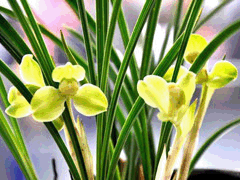 In winter, strengthening theorchid management is key to theorchid's lush growth andflowering in the coming year. The ancients'orchid-growing experience is "three parts planting, seven parts management." To manageorchids well in winter, different management methods should be adopted according to theorchid's different varieties. Based on my years oforchid-growing experience, to help orchids overwinter safely, it is especially important to strengthen care in four aspects: water, fertilizer, temperature and ventilation.
Water: grasp the principle of "not dry in summer and autumn, not wet in winter and spring." This is the valuable experience our predecessors summed up for growing orchids well. In winter, orchids enter dormancy and no longer grow, so watering once a week is sufficient. (Except for Cymbidium goeringii, Cymbidium kanran andCymbidium sinense.) Natural water or melted snow water is best; do not water directly with tap water. (If tap water is used, it should be placed in a water storage container for 24 hours before use.) When watering, pour along the edges of the flower pot so that it gradually penetrates toward the roots; do not pour onto the leaves.
Fertilizer: Orchids have no fibrous roots; their fleshy roots have symbiotic root fungi. Generally speaking, if orchids are repotted and the soil changed every year, and the soil contains enough nutrients, there is completely no need to fertilize. Even if repotting is done every 2 to 3 years, since they no longer grow during winter dormancy, there is even less need to fertilize. If fertilized in winter, orchid roots will turn black and may even rot (except for Cymbidium goeringii and Cymbidium sinense during their growth period).
Temperature: When winter arrives, orchids kept outdoors should be moved indoors or into an enclosed balcony. Orchids should often be moved outdoors (preferably around noon) so they can absorb fresh air and receive sunlight. Orchids placed on an enclosed balcony should also have the windows opened frequently to allow air circulation, and be moved back in the evening to prevent cold air from entering at night.