How to prevent and treat rot disease in orchids during hot and humid seasons
Preventing and treating orchid rot disease in hot and humid seasons
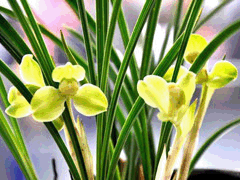 OrchidsRot disease: This disease mostly occurs in the humid, rainy summer and autumn seasons. Common types include black rot,soft rotand other diseases.
Black rot: Caused by fungi of the genus Phytophthora. It mostly occurs on leaves, roots and growing points. Semi-transparent spots first appear on the diseased parts, then the spots expand and the tissue turns black and rots.
Soft rot: Caused by bacteria of the genera Erwinia and Pseudomonas. In the early stage of the disease, tiny brown water-soaked spots appear on the leaves, which then expand into gray, moist patches. With slight pressure the epidermis ruptures and exudes foul-smelling bacterial ooze. Control methods: First, keep the plants well ventilated and reduce humidity. In the early stage of the disease, spray the leaf surface or apply to the diseased spots with 50% captan 500x solution, 50% Tuzet 1000x solution, or garlic water (crush garlic, soak in water, and take the filtrate). Orchid root rot: Although orchids like moisture, their fleshy root system is afraid of waterlogging. Excessive moisture or water accumulation from rain can easily cause root rot and easily trigger black spot disease. Therefore,growing orchidsthe potting soil should not be too wet normally. In winter, orchids are in a dormant or slow-growing stage, so the potting soil should be on the dry side; in spring and early summer, which is an important period for orchids to root and grow leaves, the potting soil should be on the moist side; but long-term excessive moisture can also easily cause root rot, causing leaves to turn yellow and even die. During the plum rain or heavy rain season, potted orchids must be protected from rain, because with prolonged rain and excessive moisture, black spots are most likely to appear on new leaves, and the flower buds often show a "rotten sheath" phenomenon, affecting flowering and ornamental value. However, if the potting soil is too dry, it easily causes the pseudobulbs to shrivel or other tissues to lose water and have their metabolism affected, which can also lead to weak tissues, poor plant growth, and even death. But in autumn it should be appropriately on the moist side, because autumn drought will have an adverse effect on leaf growth and flowering the following year. Therefore,orchid growersshould understand the trick of "not wet in winter, not dry in autumn." The above shows that orchids have different requirements for water (including humidity) at different times, so the amount of water given to orchids should be strictly controlled. Improper fertilization of orchids, such as applying too much or too concentrated fertilizer, or pouring liquid fertilizer into the leaf sheaths or splashing it onto the leaves, can also easily cause root rot. Therefore, when fertilizing, apply it along the edge of the pot.