How to care for clivia before and after the flowering period? Detailed explanation of care essentials
Care for clivia before and after the flowering period
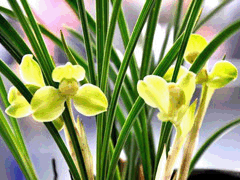 Clivia has a long growth cycle; it generally must be cultivated for four to five years and grow to 20 to 25 leaves before it can bloom. Well-cultivated plants can send up a scape and bloom in two to three years, and some even send up a scape and bloom in less than two years. Most clivias generally send up only one scape and bloom once a year, though some, when cultivated skillfully, will send up two or three scapes in a year. However, some clivias have been grown for six or seven years without sending up a scape or blooming, and others bloom once and then never bloom again. Clivia's flowering period is from February to April. After flowering, the flowering period can be extended by appropriately lowering the temperature, improving ventilation and reducing light. CliviacliviaThe length of the flowering period can indeed be controlled through people's cultivation techniques.
1. Before the flowering period, clivia should be given an extra application of bone meal, or well-fermented fish offal, soybean cake water, or superphosphate. This can make the flower color vivid, the flowers larger and the leaves thick and plump; otherwise, it easily leads to small flowers, few in number and pale flower color. In addition, care should be taken to avoid using too much nitrogen fertilizer and not enough phosphorus and potassium fertilizer, which would cause weak growth and leggy leaves, affecting bud formation and flowering.
2. Light: A certain amount of light should be provided to meet the requirements of photosynthesis and flowering for light. Under strong light, the flowering period is short and the flower color is vivid; under weak light, the flowering period is long, but the flower color is pale; too long or too strong light, or long-term shade, all affect the production and accumulation of nutrients and can cause failure to form buds and bloom.
3. Temperature has an obvious effect on how well flowering turns out. If the temperature is too high, root hairs exist for an extremely short time, and their ability to absorb water and fertilizer is greatly reduced, causing clivia to enter a semi-dormant state; temperatures below 10°C will also inhibit growth; during the growth period it should be kept at 15°C-25°C, and during the flowering period at 15°C-20°C. In this way, root hairs exist longer, the absorption of water and fertilizer is better, the leaves grow shorter and wider, and the flowering vigor is lush. It should also be noted that clivia needs to maintain a temperature difference of about 8°C between day and night, because the organic matter it produces under higher daytime temperatures needs to be stored and digested under lower nighttime temperatures.
4. Water: Clivia must not lack water throughout the plant's growth period, otherwise growth will be affected. Entering the flowering period, the water requirement is greater, and the growing humidity should be no less than 60% and at most no more than 80%.
5. Prevention of "stuck scape": Clivia often develops the stuck-scape phenomenon in which the scape cannot emerge. Regarding this, attention should be paid to the following points:
(1) When changing the soil, gently press the soil around the roots firmly; otherwise, too many gaps in the potting soil will often make it hard for water and nutrients to reach the roots, causing localized and frequent drying of the roots and resulting in a stuck scape.
(2) The temperature should not be lower than 20°C, or higher than 25°C, or in a constant-temperature state with no day-night temperature difference; there must be a temperature difference.
(3) Prevent a stuck scape caused by oxygen deficiency and malnutrition from compacted potting soil.
(4) In winter, indoor sunlight should be made as abundant as possible.
(5) Before flowering, select a famous cross-pollinated clivia variety as the male parent for artificial supplementary pollination 3 to 4 times, and try to avoid self-pollination; otherwise, not only is the seed-setting rate low, but it will also cause degeneration of the offspring varieties.
(6) After the flowers fade, the pot and soil need to be changed. During the operation, remove the decayed leaves and soil, be careful not to break the fleshy roots, and add hoof pieces as base fertilizer. Usually, attention should also be paid to preventingpests and diseases, to ensure normal growth of the plant.