Phalaenopsis Orchid Cultivation Methods and Key Technical Points
Phalaenopsis Orchid Cultivation
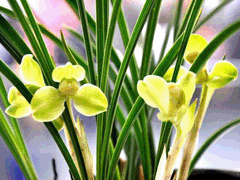 ButterflyOrchidDuring the flowering period, temperature must be strictly controlled, not allowed to be too high or too low. The optimum temperature is 15°C to 18°C at night and 23°C to 25°C during the day. A sustained low temperature below 14°C can cause bud growth to be impeded and development to be poor, and can even freeze the sepals, causing flowers to develop abnormally and completely lose their ornamental value. But too high a temperature (sustained high temperatures above 20°C at night and above 27°C during the day) will accelerate its metabolism, greatly shortening the flowering period.
Throughout the flowering period, the water requirement is lower than usual. On the premise of not affecting the plant's normal growth, a somewhat drier medium helps produce vivid flower colours. Humidity is about right when the medium feels moist on the fingers when pinched, and it must not be too dry or too wet. If the medium is too dry, the leaves will wilt, leading to "permanent wilting" that makes the leaves soft, wrinkled and lustreless, seriously reducing the overall ornamental value. Howevercultivationif the medium is excessively wet and waterlogged, the oxygen in the seedling bag is squeezed out by the water, and if this continues for a week, the plant's growth is checked and the leaves become wrinkled and wilted, which will seriously affect bud development; the flowers open small and lustreless, the petal edges turn scorched yellow, and the whole plant has no ornamental value.
The light intensity required by the plant during the flowering period is very different from that of the earlier stage. In the earlier stage, shade and shading are needed; in this period, the shading material must be removed. Strong light intensity helps the flowers spread out, keeps the internodes of the flower spike even, and produces vivid flower colours. At this time there is no need to increase light intensity, nor is there any need to follow a fixed, precise light intensity figure.
Phalaenopsis is native to places of high temperature and high humidity, and needs relatively high air humidity throughout its growth cycle, especially in the later stage, when the relative humidity should reach between 80% and 85%. Higher air humidity is favourable for vivid, well-spread flowers. The relative humidity should preferably not fall below 80%; if it is below 60%, the flowers shrivel and lose their vivid colour. From noon to afternoon each day, when the air is dry and the sunlight is strong, water should be sprinkled on open ground several times to help raise the air humidity and also help lower the temperature.
During this period, attention must be paid to indoor air circulation, allowing indoor air to exchange with fresh outdoor air, so as to provide the Phalaenopsis with enough fresh carbon dioxide. Within a given space, the more carbon dioxide there is, the longer the flowers stay open.
In the later stage, the Phalaenopsis plant has basically stopped growing, or its growth is very weak. In this period, fertiliser is basically not needed; too much fertiliser will cause root rot. But the author's comparisons in production proved that a small amount of fertiliser helps flowering and the flower quality is also good, whereas plants that were not fertilised showed spindly, hard and brittle flower spikes, overly long inflorescence internodes and overly large flowers. Apply dilute liquid fertiliser once every half day, with the fertiliser ratio weighted towards phosphorus and potassium fertilisers.