What to do when Cymbidium ensifolium leaves develop a disease
Leaf diseases of Cymbidium ensifolium
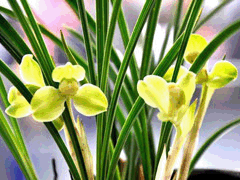 [Symptoms] Onorchidnew leaves, it causes mosaic or necrosis, or produces chlorotic stripe spots along the veins, and forms local necrosis on inoculated leaves of Cattleya; if co-infected with TMV-O, it causes brown necrosis in flower buds. It can cause mosaic in Dendrobium.
[Pathogen]Cymbidium ensifoliummosaic virus (Cymbidium mosaic Potexvirus, CymMV). It belongs to the genus Potexvirus. The virus particles are filamentous, 476 nm x 18 nm. The viral genome is 6227 nt. The nucleic acid RNA content is 6%. The sedimentation coefficient is 144S. The thermal inactivation point is 65-70 degrees C; the dilution end point is 60 ppm; the longevity in vitro at room temperature is 7-30 d.
[Disease development] Sap transmission. The green peach aphid can transmit the virus. The virus persists for a long time in the sap of diseased leaves; in some orchid varieties it takes 2 months before losing its infectivity. Virus-carrying orchid plants will remain virus-carrying for life, and the new shoots they sprout also all carry the virus. When healthy disease-free seedling plants are planted in clay pots and peat soil that were once used to grow virus-carrying orchids,flowersthe plants are prone to the disease.
[Control]
1. For some valuable virus-free orchids, they must be isolated from orchid production sitescultivation。
2. Prevent the spread of the virus during cultivation. For horticultural operations such as division and repotting, the fingers and tools must be disinfected again after planting each plant. They must not be washed in the same container; the roots should be washed with running water. For culturingorchidsthe media used, such as peat, moss and gravel, should be disinfected.
3. Control aphids. Commonly used insecticides include 50% malathion emulsifiable concentrate at 1000 times dilution, or 40% dimethoate emulsifiable concentrate at 1000-1500 times dilution, or compound fruit emulsifiable concentrate (dichlorvos 40%, omethoate 10%) at 2000-3000 times dilution, etc.