Detailed Explanation of Orchid Cultivation Methods and Technical Key Points
Orchid Cultivation
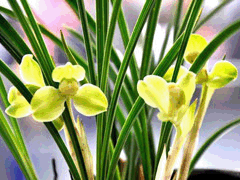 Orchidshave been one of China's most renowned ornamental flowers since ancient times. Their delicate and graceful leaves, elegant and pure blossoms, and distant, extraordinary fragrance make them a treasure among flowers.
There are about 500 genera and more than 10,000 species of Orchidaceae plants in China. The orchids commonly appreciated are terrestrial orchid varieties of the genus Cymbidium. According to their flowering period, they can be roughly divided intoCymbidium goeringii, summer orchids, autumn orchids,Cymbidium kanranandCymbidium sinense. Orchidshave many varieties, including pure-hearted (solid-colored), lotus-petal, plum-petal, narcissus-petal, and butterfly-petal types.
How should one appreciate orchids?
Whether upright, curved, or drooping, the leaves should all be emerald green and supple, sparse yet elegant. The ornamental value of orchid leaves has always been no less than that of the flowers. The ancients said, "Cherish the leaves as you would cherish a jade bracelet." If the leaf surface is wrinkled or adorned with yellow and white spots, the leaf tip is rounded and blunt, the leaf width is broad, and the basal leaves are short, all of these have great ornamental value. Orchid fragrance types include clear fragrance, cool fragrance, light fragrance, and strong fragrance. Those that are intense and impure are of inferior quality; those with a distant, clear fragrance are of the highest grade.
Orchids generally consist of six petals (one lip, two petals, three sepals). Precious orchid varieties may have as many as seven or eight petals. If the sepals on both sides spread out in a straight line, it is called "one-character shoulder," and the quality is superior; if they spread upward and backward, it is called "flying shoulder," and the quality is acceptable; if they droop downward, it is called "drooping shoulder," which is inferior. The two parallel petals and the lip below often also determine the grade of the orchid.
Orchids with entirely light green flowers are of the highest grade. Those with markings, spots, and color halos on the lip are called "meat petals." Those that are green, white, or pale yellow without spots are called "plain petals." Plain petals are more precious than meat petals. If a solid-colored heart appears among petal-form flowers, it is even more rare and precious. If there are color halos, spots, or stripes in the flower, as long as the color is pure, it is equally appealing. If stable inherited traits appear in parts such as leaves and flowers, becoming excellent varieties with high ornamental value, such as multi-lipped flowers, multi-petaled flowers, morphological variations, and color variations, they become treasures among orchids.
In addition, good orchids deserve good pots. Simple, elegant, and appropriate orchid pots will make the displayed orchids appear more beautiful, fresh, and extraordinary in quality.
Many people think thatgrowing orchidsis quite mysterious and difficult to do well. In fact, as long as you understand their growth habits, they can be grown successfully.
Orchids by nature prefer cleanliness. They cannot tolerate dust and grime. In warm, humid, semi-shaded areas facing south with relatively more sunlight, they grow especially vigorously.
Orchids are propagated by seeding and division.
Orchid seeds can be sown as soon as they are collected. Orchids have a unique characteristic: the orchid roots must form a symbiosis with orchid mycorrhizal fungi in order to survive. Therefore, when sowing, the seeds are often placed on the surface of the mother plant's pot, utilizing the mother plant's mycorrhizal fungi to germinate and grow. The seeds germinate after about half a year, and after growing in the mother pot for two months, they can be transferred to small pots for further cultivation.
The division method is the method commonly used at present. Because orchid species differ and their characteristics vary, opinions differ among expert growers as to the best time for division. Generally speaking, the more suitable times are spring before new shoots emerge and autumn when orchids gradually stop growing. At these times, new shoots are not easily bruised or broken, the temperature is relatively mild, and it is convenient for handling and for the plant to recover. Summer temperatures are high, which is the peak growing season for orchids, while winter is cold and the plant's resistance is weak, so division is mostly unfavorable during these times. Division can also be done after flowering. Generally, those that bloom in summer and autumn should be divided in early spring; those that bloom in early spring should be divided in late autumn. This way, flowering is not affected, and it stimulates the tillering of leaf buds, resulting in emerald leaves and brilliant flowers.
When dividing, remove the mother plant from the pot, shake off the soil, and use a knife to divide it into several clumps. Each clump should carry 3-4 pseudobulbs and new shoots, and dead leaves and rotten, shriveled roots should be trimmed away. If using wild orchids bought from the market, since the root system is often dehydrated and shriveled, they can first be soaked in clean water. After absorbing enough water, wash and clean the roots, and air-dry in the shade until the roots turn white before planting.
For planting orchids, black mountain soil, peat soil, garden soil, pine needle soil, moss, fern roots, bark chunks, etc. can be used. Cover the drainage hole at the bottom of the pot with a piece of tile, then spread a layer of crushed brick and stone granules with a thickness of one quarter of the pot depth to enhance air permeability and drainage, and then spread a layer of growing medium. Hold the orchid upright and plant it, fill in the growing medium, and cover the pseudobulbs. The soil should be compacted, leaving 2 cm from the pot rim unfilled for easy watering. After planting, water thoroughly and place in a cool, shaded area. After half a month, move to a sunny, well-ventilated environment for cultivation. To increase aesthetics and moisture retention, a layer of small crushed white stones can be spread on the pot surface.
There are four prohibitions in orchid growing: "Do not take them out in spring, do not expose them to direct sun in summer, do not let them dry out in autumn, and do not keep them wet in winter." In spring, temperatures are still unstable, and taking them out of the greenhouse too early makes them vulnerable to cold wind. It is relatively safe to take them out in early April. In summer, place them under a shade canopy, avoiding direct sunlight, and cultivate with diffused light. Autumn is the period when orchids sprout and send up flower spikes, so corresponding humidity should be maintained to avoid dryness. Orchid roots are fleshy, and during winter dormancy the water requirement is not high; keeping the potting soil slightly moist is sufficient. Do not water excessively, to avoid diseases of the roots and leaves.
Fertilizer should be dilute, not concentrated: During the growing period, apply decomposed soybean cake water or horse-hoof residue water once every half month. Adding an appropriate amount of potassium dihydrogen phosphate gives even better results. Do not fertilize in midsummer. When temperatures are too high (exceeding 32°C), in addition to daily watering, spray water several more times. Slightly acidic water is preferable. Frequently spray and wash the leaf surfaces with clean water, which not only improves the growing environment of the potted orchids but also keeps the leaves clean and reducespests and diseasesinfection opportunities.
Orchids are prone to scale insects, which can be controlled by spraying with a 1000-fold dilution of dichlorvos emulsifiable concentrate. When whiteflies cause damage, spray with a 2000-fold dilution of deltamethrin. Orchid roots have a sweet taste and easily attract ants, which can be eliminated by using meat bones as bait. Orchids are prone to anthracnose and black spot fungi. After disease occurs, promptly remove and burn diseased leaves, increase the spacing between pots, and improve ventilation and light conditions. Reduce water spraying, control humidity, and apply carbendazim for prevention and control.