How to Apply Plant Nutrition Principles to Fertilizing Orchids
The Relationship Between Plant Nutrition Principles and Orchid Fertilization
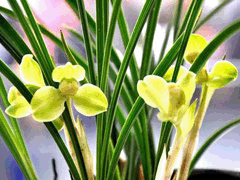 Orchid enthusiast discussionOrchidsCultivationIn the process of cultivation techniques, regardingorchidsthe following situations often arise with fertilization:
1. Being afraid to apply nitrogen fertilizer, fearing that after applying nitrogen fertilizer the plants will grow tall, the leaves will grow wide, and the leaves will lose their variegation.
2. Favoring phosphorus and potassium fertilizers, mainly applying monopotassium phosphate, believing that applying this fertilizer with phosphorus and potassium nutrients will make the plants grow well and the leaves will not lose their variegation. However, due to the lack of nitrogen, the orchid plants grow short and small, the leaves are yellow-green, stiff and straight, lacking luster, the new shoots do not grow either, the entire orchid plant has much cellulose, and aging phenomena appear.
3. Not weighing the fertilizer when applying it, not knowing how much fertilizer is being used, just grabbing a handful hastily, sprinkling compound fertilizer or potassium chloride fertilizer on the growing medium. After watering, because the fertilizer is too concentrated, the leaf sheaths of the orchid plants turn black, and the plants also stop growing. When pulling up the orchid plant by hand to observe, the roots have already turned black or become moldy and rotted.
From the above situations, it can be seen that all are due to insufficient understanding of the roles of several main fertilizers. For this reason, here we introduce the roles of several main plant nutrient elements - nitrogen, phosphorus, and potassium - on plant growth, for orchid enthusiasts to reference when fertilizing.
The role of nitrogen: Many important organic compounds in plants contain nitrogen. Nitrogen is an important component of proteins, and the nitrogen content in proteins accounts for 16-18%. The protoplasm in cells is mainly composed of proteins, and proteins exist in every living cell, being the material basis of life processes. Without nitrogen, proteins cannot be formed; without proteins, there is no protoplasm, and therefore no life.
Chlorophyll, enzymes, vitamins, and plant hormones (such as gibberellin) in plants all contain nitrogen. If there is no nitrogen or a deficiency of nitrogen, the formation of these compounds will be affected. As for the formation of chlorophyll, when plants lack nitrogen, the chlorophyll in the plant decreases or even cannot be formed, causing the leaves to turn yellow, the intensity of photosynthesis to weaken, and the formation of proteins to also be restricted. When nitrogen supply is sufficient, the leaves appear dark green, promoting the formation of chlorophyll, strengthening photosynthesis, and also promoting nitrogen assimilation and protein formation, making cells grow rapidly and stems and leaves flourish. When orchid nitrogen nutrition is sufficient, the pseudobulbs will also swell, thereby storing more nutrients, so orchids should also be appropriately fertilized with nitrogen fertilizer. However, if nitrogen is supplied in excess, the plants grow too luxuriantly, with only a small amount of carbohydrates forming cellulose, thus the plants show excessive vegetative growth, the leaf texture is soft, and they are susceptible topests and diseases。
Commonly used nitrogen fertilizers include: ammonium sulfate, urea, ammonium nitrate, ammonium phosphate, peanut meal, human and animal urine, etc.
The role of phosphorus: Phosphorus exists in plants in the form of organic and inorganic compounds. In normally growing plants, phosphorus is most abundant in meristematic tissues, used to form nucleoproteins and other phosphorus compounds. Both nitrogen and phosphorus are the most important compounds in protoplasm; they participate in various transformation processes of organic substances within cells, and participate in the cell division and reproduction processes. When protoplasm increases, cells divide, and organs grow, nucleoproteins and other phosphorus compounds (such as phospholipids) are formed.
Phosphorus also exists in many enzyme molecules. Phosphorus participates in the metabolism of carbohydrates in plants. Almost all the various compounds produced by photosynthesis contain phosphorus. The synthesis of starch and sucrose in plants requires the participation of phosphorus. Phosphorus also promotes the transport of carbohydrates within plants and promotes plant respiration. Phosphorus has a close relationship with the formation of amino acids and proteins in plants. Because phosphorus metabolism and nitrogen metabolism in plants have an inseparable relationship, when phosphorus is deficient, most of the phosphorus in old leaves is transferred to growing tissues (research using radioactive phosphorus has proven that phosphorus can be transferred at a fairly high speed, so phosphorus deficiency first manifests in old leaves). When phosphorus is deficient, the absorption of nitrogen compounds is also restricted, therefore when phosphorus is deficient, applying nitrogen fertilizer alone will not produce good results. If nitrogen fertilizer and phosphorus fertilizer are applied together, good results can be obtained.
Commonly used phosphorus fertilizers include: monopotassium phosphate, ammonium phosphate, superphosphate, bone meal, etc.
The role of potassium: Potassium is abundant in young and actively growing organs of plants, such as buds, young leaves, and root tips, and these organs also have high protein content. The distribution of potassium in plants is related to proteins. Unlike nitrogen and phosphorus, potassium does not participate in the composition of important organic substances in plants; most of it exists in plants in a free state, and this potassium can be extracted from plants with water. Potassium in senescent leaves of plant tissues can be transferred to young tissues, so old leaves contain very little potassium. When potassium supply is sufficient, more nitrogen enters the plant, and more proteins are formed. Potassium strengthens carbohydrate metabolism, can cause more amino acids to be formed, because potassium promotes protein synthesis by strengthening the activity of proteases. Potassium has a close relationship with the synthesis and transport of carbohydrates in plants as well as the conversion of monosaccharides to disaccharides and polysaccharides, storing synthesized or accumulated carbohydrates (such as the orchid storage organ, the pseudobulb), so storage organs are all rich in potassium content. Sufficient potassium supply can promote good development of mechanical tissues, increase cellulose in stems and leaves, make plants sturdy, and also give strong disease resistance. When potassium is deficient, monosaccharides accumulate in the leaves, thereby hindering the rate of photosynthesis, reducing the intensity of photosynthesis, and affecting the formation and transport of carbohydrates.
Potassium fertilizers used include: potassium sulfate, potassium nitrate, potassium chloride, monopotassium phosphate, plant ash, etc.
Plant physiology workers in Guangdong, in recent years, have conducted some physiological and biochemical research onCymbidium sinenseThey believe that the pseudobulb stores much water and nutrients. For nitrogen nutrition, applying a mixture of ammonium nitrogen and nitrate nitrogen is better than applying nitrate nitrogen alone. When phosphorus nutrition is sufficient, acid phosphatase activity decreases. After potassium nutrition levels increase, leaves grow well, disease incidence is low, and the number of flowers is also greater. At different potassium levels, phosphorus pyruvate esterase is positively correlated with potassium; and nitrate reductase also continuously increases, indicating that at increased potassium levels, nitrogen utilization also increases. From this it is shown that during the growth and development of orchids, the three main elements - nitrogen, phosphorus, and potassium - are all essential nutrient elements, just as for other plants.
The roles of calcium, magnesium, and some other trace elements: Calcium can stabilize the structure of biological membranes, maintain cell integrity, and promote cell elongation and root growth. Magnesium is an indispensable element for synthesizing chlorophyll; when chlorophyll increases, photosynthesis is strengthened. Boron does not participate in the composition of enzymes; no boron-containing enzymes have been discovered to date. Boron is relatively concentrated in the flower organs of plants such as the ovary and stigma, playing a major role in the formation of reproductive organs. Boron deficiency often causes death of meristematic tissues, which may be related to boron's participation in long-distance sugar transport. Boron deficiency causes cotton to drop flowers, peanuts to have "shells without kernels," and root growth points to stop growing and become necrotic. Several trace elements such as iron, molybdenum, zinc, manganese, and copper - their main nutritional function is as basic components or activators of enzymes in cells. For example, the rhizobia of leguminous plants can fix molecular nitrogen from the air into ammonia, and then synthesize organic nitrogen-containing compounds from ammonia. This function relies on the action of nitrogenase, and nitrogenase contains two trace elements, iron and molybdenum, which are needed to perform nitrogen fixation. Without iron and molybdenum elements, nitrogenase cannot fix nitrogen.
Commonly used trace elements for plant nutrition include: superphosphate, bone meal or lime, magnesium sulfate, boric acid or borax, ferrous sulfate, manganese sulfate, zinc sulfate, copper sulfate, molybdic acid or ammonium molybdate, etc.