Detailed Guide to Orchid Cultivation and Management Methods
Cultivation and Management of Orchids
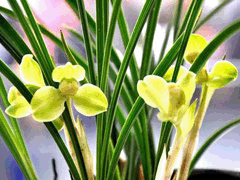 1.Growing OrchidsLocation:Orchidscan be grown indoors, on balconies, in courtyards, in greenhouses or in large-scale orchid nurseries.
2. Choosing orchid pots: Clay pots are theorchid'sfirst-choice pot, with strong water permeability and air permeability, not prone to waterlogging, easy to manage, and not prone to root rot.
3. Soil selection: Orchids like loose humus soil; soil from under trees in mountain forests, pond mud or peat soil is best. Crushed bricks, weathered granular material and specially made granular soil can also be used.
4. Repotting and dividing orchids: Generally, spring and autumn are the most suitable times for repotting and dividing. If repotting or dividing is done during high summer temperatures, it is very easy for the orchid roots to become infected, and the orchid leaves turn yellow and the plants are lost. In winterorchid plantsgo dormant, and if the temperature is too low when repotting or dividing,orchid plantsdo not easily grow new roots, and at the same time the young shoots that are to sprout the following year will also become infected. Before potting, check whether theorchid plantshave rotten roots or rotten leaves, and if so, prune them off. Before pruning, disinfect the scissors with alcohol; after pruning and disinfecting, dilute the pesticide in a basin or bucket, put the orchid roots in to soak for about 10 minutes, take them out, let them dry, and then pot them.
5. Light and ventilation: The growth of orchid plants, like that of other plants, cannot do without light, but strong light exposure is not suitable. In summer and autumn, when the light is strong, shade netting can be used for cover; if the temperature is too high, two layers of shade netting can be used. Ventilation and air permeability are the key to success or failure in growing orchids; it is required that orchid shelves and orchid cages be open to the air above and below, front and back. When growing orchids indoors, conditions for air convection should be provided on windless days; in summer, a fan can be used to exhaust air, and in winter, doors and windows should be opened regularly for ventilation and air exchange, but the temperature should be kept no lower than 0°C, so as not to freeze the flower buds and young shoots.
6. Watering management: The ancients said, "Dry orchids, wet chrysanthemums," which emphasizes that orchid plants should be kept on the dry side. Orchid plants cannot be watered on a fixed schedule; rather, water when they are dry. Orchid plants have fleshy roots, and too much water easily causes root rot, while too dry conditions cause the orchid roots to shrivel, dehydrate and die. The water supply needed by orchid plants comes, first, from absorption by the roots, transported through the vascular system to the whole plant; and second, from moisture in the air, inhaled into the body through the leaf stomata, so that the water needed for metabolism can be supplied. In summer and autumn, when temperatures are high and the air is dry, especially inbalcony orchid growing, some water should be sprayed on the ground to let it evaporate, creating artificial humidity in the space, and the leaf surfaces also need to be misted frequently.
7.Pests and diseasesprevention and control: Thepests and diseasesof orchids are mainly prevented first.
(1) Orchid insect pests mainly include scale insects, red spider mites and mites. These pests mainly occur under conditions of high temperature and high humidity and lack of ventilation and air permeability. To control scale insects, trichlorfon, etc. can be used, sprayed as a 1% diluted solution; during the pest outbreak period, apply once every 5 days, spraying three times in a row, and for prevention, once a month. To control red spider mites and mites, mainly use dicofol, acaricides, deltamethrin, etc., with the dilution ratio according to the pesticide's instructions.
(2) Orchid fungal diseases mainly include black spot, brown spot, anthracnose, leaf yellowing, etc. Mainly use fungicides such as carbendazim, thiophanate-methyl, chlorothalonil, anthracnose-ling, etc., with the dilution ratio according to the instructions.
(3) Viral diseases include stem rot, root rot, etc.; the main control drugs are potassium permanganate, copper sulfate, dexon, etc. There is also a devastating viral disease called Byras disease, with symptoms of irregular yellow-white blotches on the leaf surface, semi-transparent in appearance. The main drugs for controlling this disease are penicillin, banlangen, etc. If a plant is found to be infected with this disease, it should be isolated or burned as soon as possible.
8. Fertilization management: Root fertilization of orchid plants should generally be applied as little as possible; for organic fertilizer, a small amount of soybean cake, foul fishy water, yogurt, etc. can be used; for inorganic fertilizer, a small amount of compound fertilizer, monopotassium phosphate, etc. can be used, generally 3 to 4 times a month. For foliar fertilization of orchids, mainly use Gaole (high-potassium type), Gaohanling, Yemianbao, Aiduoshou, monopotassium phosphate, etc., generally twice a month, with the dilution ratio according to the product instructions.
9. Techniques for promoting flowering and propagation of orchids: The standards for growing orchids well are, first, orchid leaves growing dark, strong, green and glossy; second, increasing the number of new shoots; third, being able to bloom, and the flowers blooming well.
(1) To make orchid leaves grow dark, strong, green and glossy, the key lies in proper dry and wet moisture levels, frequently spraying foliar fertilizer, and preventing and controlling pests and diseases, etc.
(2) To make orchids send out more new shoots, the key lies in frequent repotting and dividing. For example, a pot of 5 to 6 orchid plants normally sends out 2 to 3 new shoots each year; if it is divided into three pots, and the orchid pseudobulbs in all three pots are twisted 180 degrees so that they remain connected as if the lotus root were broken but the fibers still joined, 6 to 9 new shoots can be sent out. Without dividing the pot, evenly twisting each pseudobulb of the whole pot of orchid plants about 180 degrees will also increase the sprouting rate.
(3) Being able to bloom and appreciate the flowers is the greatest spiritual enjoyment for orchid growers. To make orchids bloom in a timely and punctual manner, give them sufficient sunlight, suitable temperature and humidity during their growth process. The water should be on the acidic side; especially in the Shandong region, where the water is neutral to slightly alkaline, ferrous sulfate, oxalic acid, etc. can be used to improve it. The fertilizer should be potassium-leaning, and more plant regulators should be used. When potting, try to make the pseudobulbs expose above the soil surface, and control moisture mainly by keeping it on the dry side.