How to grow and care for white magnolia (Michelia alba) in northern China?
How to grow and care for white magnolia in northern China
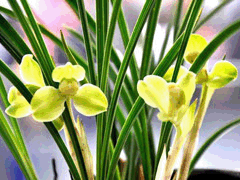 Whitemagnoliaalso known as huanggelan, is an evergreen broadleaf tree of the Magnoliaceae family, native to the tropical regions of Southeast Asia. In China it is commonly used as a garden tree in Fujian, Guangdong, Guangxi, Yunnan, Sichuan and other places, while in northern China it can only be grown in pots.magnoliafills the air with fragrance when in bloom? and is deeply loved by everyone? But many flower lovers in the north say whitemagnoliais not easy to look after, and if handled poorly the whole plant may even die, leaving them to do nothing but "gaze at the flowers and sigh." The author has grown several pots of white magnolia, and now shares the summarizedcultivationexperience below for reference.
I. Selection of potting soil
When choosing potting soil for whitemagnolia, two points should be noted: first, white magnolia has fleshy roots and prefers soil with good permeability; second, white magnolia is a southern flower and prefers acidic soil. In view of these two points, the author once used two groups of soil for a cultivation comparison. The first group used the plain surface sandy soil commonly used in northern China, and the second group used a cultivation soil made by mixing coarse river sand, sandy loam and leaf mold in a ratio of 1:1:1. Observation showed that, under the same conditions of plant condition, water, fertilizer, light and temperature, the second group grew better. It should be noted that northern soil is fairly alkaline, so when mixing the cultivation soil, an appropriate amount of ferrous sulfate or sulfur powder should be added to increase the acidity of the soil.
II. Water and fertilizer management
When growing white magnolia in northern China, watering is crucial. The essence of white magnolia's preference for a humid environment means high air humidity but soil moisture content that must not be too high. According to the author's experience, when watering white magnolia, in spring water thoroughly once a week, in summer water thoroughly once each morning and evening, in autumn water thoroughly once every 4 to 5 days, and in winter indoors water thoroughly about once every 10 days; on cloudy or rainy days in summer, water less or not at all. It must never be exposed to rain; if it does get rained on, promptly pour out the accumulated water in the pot and place it in a shaded, ventilated spot. After the potting soil dries slightly, loosen the soil to help moisture evaporate. In daily care, also note that no matter the season, as long as the surrounding temperature is above 10°C, the leaves should be misted: in winter once every 2 to 3 days, in spring and autumn once every 1 to 2 days, and in summer once each morning and afternoon every day. Water in the north is fairly alkaline, and long-term use easily makes the soil alkaline, so it is best to use rainwater, snow water or ferrous sulfate water. But rainwater and snow water are not easy to store; if tap water is used normally and ferrous sulfate water is applied regularly (about every 10 days), the plant will not develop chlorosis either.
When fertilizing white magnolia, two principles must be grasped: first, balanced nutrition; second, apply light fertilizer frequently. Balanced nutrition means applying different fertilizers at different stages according to the plant's different fertilizer needs. If this point is not grasped well, it is not conducive to plant growth and flowering. For example, some flower lovers apply nitrogen fertilizer during the summer flowering period, causing excessive growth of branches and leaves, and due to the lack of phosphorus, flower buds are difficult to form. When fertilizing white magnolia, in early spring nitrogen fertilizer should be the main type, while in summer and autumn phosphorus and potassium fertilizers should be the main type. In addition, when fertilizing, organic fertilizer and inorganic fertilizer should be used alternately, or they can be mixed. Long-term application of inorganic fertilizer easily compacts the potting soil and affects root respiration. For organic fertilizer, sesame paste residue, chicken manure, pigeon manure, and the commonly used base fertilizer horse hoof slices can be chosen. Applying light fertilizer frequently means that the amount applied at one time should not be too large; it should be applied in small amounts and often. According to the author's experience, for inorganic fertilizers such as urea, the amount per application is 5 g to 10 g; sesame paste residue, chicken manure and pigeon manure can be applied at 50 g per time; alum fertilizer water and horse hoof water should be diluted with clean water in a ratio of 1:1. It should be mentioned that organic fertilizer must be fully decomposed and fermented before use; raw fertilizer very easily causes root burn. As for the frequency of fertilization, generally speaking, once every 15 days in spring and autumn, once every 10 days in summer (flowering period), and generally no fertilization in late autumn and winter.
III. Light and temperature control
White magnolia is not strict about light, but too strong or insufficient light is not conducive to plant growth. Too strong light easily scorches the leaves, while insufficient light makes it difficult to form flower buds, and even if there are flowers, they are not fragrant. In spring, after the Mid-Autumn Festival, and in winter, it should be placed in a sunny spot to receive light. In summer and early autumn, it should be placed in a semi-shaded spot, with 50% of the light blocked, so that it receives sunlight before 9 a.m. and after 6 p.m., avoiding direct exposure to the strong midday sun.
White magnolia prefers a warm environment. When grown in northern China, it should be brought out of the shed in spring after the temperature stabilizes around Grain Rain. In summer, as long as there is no strong light and water can keep up, white magnolia is not afraid of high temperatures. After mid-October it should be brought into the shed in time, because white magnolia cannot tolerate low temperatures below 5°C. In winter the room temperature should be kept between 5°C and 15°C. Too low a temperature easily causes frost damage, while too high a temperature is not only unfavorable for the plant's dormancy but also affects flowering the following year, and easily exposes the plant to pests and diseases. Some flower lovers are so eager to care for their flowers that they fear the flowers will freeze to death and place them close to a heat source, only to get the opposite result: the new leaves that sprout easily drop due to insufficient light, water and fertilizer, which both consumes nutrients and prevents normal growth. If the indoor temperature cannot meet the overwintering requirements, the problem can be solved by covering the flowerpot with agricultural film, so that the plant overwinters safely.
IV. Repotting and pruning
White magnolia is generally repotted once every 2 years, and each repotting should use a pot one size larger. Repotting can be done in spring after the plant is brought out of the shed. New pots should be disinfected and tempered, and the bottom of the pot should be given a drainage layer of broken tiles. On the drainage layer spread about 3 cm of cultivation soil, then place 3 to 4 horse hoof slices as base fertilizer, then spread another layer of cultivation soil. Knock the plant out of the old pot, cut off dead and rotten roots, then place it into the new pot, fill in soil in layers and press firm, then immediately water thoroughly once.
White magnolia has poor sprouting ability, so vegetative branches are generally not pruned, but it is necessary to cut off dead branches and pest- or disease-infested branches. Properly removing some leaves during the bud stage helps flower bud formation, and can make the buds larger and the flowering period longer.
V.Pests and diseasescontrol
Common diseases of white magnolia include anthracnose, leaf spot and chlorosis, and the main pests include red spider mite, scale insects and aphids. In daily care, in addition to strengthening water and fertilizer management and improving the plant's disease resistance, attention should also be paid to ventilation. If pests occur, when the number is small they can be removed by hand; when the number is large, red spider mites can be killed by spraying with a 1000-fold dilution of 40% dicofol, and scale insects and aphids can be killed by spraying with a 1000-fold dilution of 40% omethoate emulsifiable concentrate. Anthracnose and leaf spot can be controlled with broad-spectrum fungicides such as chlorothalonil and carbendazim. Chlorosis can be controlled by spraying the leaves with ferrous sulfate water at 1/800.