Causes and Prevention Methods of Orchid Leaf Tip Scorch
Causes and Prevention of Orchid Leaf Tip Scorch
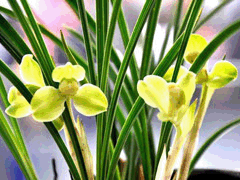 OrchidsLeaf tip scorch is one of the common and frequently occurring diseases. It damages the integrity of orchid leaves, affects their ornamental and economic value, and also severely affects the healthy growth of the orchid plant, and may even endanger the life of the plant. After years of practical exploration, it is believed thatorchidleaf tip scorch is caused by physiological diseases and infectious diseases. The vast majority are caused by physiological diseases. They are described separately as follows:
I. Poor growth of orchid roots
It can be said that wherever there is leaf tip scorch on orchid plants, there exists root deterioration to varying degrees. The causes of poor root growth are many-sided.
1. Waterlogging damage:
This is mainly due to the fine and dense texture of the orchid pot, slow water evaporation; the growing medium not being coarse enough, with poor drainage performance; and excessive watering. Orchids "like rain but fear waterlogging," and "like moisture but fear wetness." But never understand the word "moisture" as damp and soggy, and water the orchids until they become like mud in a paddy field. It is best to shelter them from continuous rain and heavy rain, and to water only two or three days after the pot surface soil has dried. For orchid pots, it is best to choose coarse-textured earthenware pots, and as far as possible use specially made tall cylindrical pots with feet, with many holes in the pot walls and a large hole in the bottom. If using fine-textured porcelain pots or purple clay pots, it is best to find a way to drill more holes; on the other hand, the bottom of the pot must never be blocked dead with tiles, and must be raised on supports. The growing medium must be as coarse as possible; local mountain soil should be mixed with crushed brick particles, burnt soil, or sterilized tree fern shavings, Chinese fir shavings and other coarse planting materials to enhance air permeability and drainage performance.
2. Freezing damage:
Orchids are shade plants and are not tolerant of low temperatures and frost. When the temperature is below zero degrees, most orchids suffer freezing damage to varying degrees. If the root tips are frostbitten, gradually dry and wrinkle, and lose the ability to absorb water and nutrients, then when the temperature rises in the following spring and light intensity increases, the leaf tips cannot receive nourishment and become scorched. Even the new shoots that sprout in late spring, because the plant cannot obtain nourishment and is unable to supply the consumption needed for new shoot development, cause the new shoots to grow roots very slowly, and leaf tip scorch also appears.
There is another situation: for simple warm sheds and plastic film covering on the ground for freeze protection, because moisture cannot be discharged and dampness cannot be absorbed, water vapor inside the film drips back onto the orchid leaves and freezes, as if they had been scalded by boiling water. If the freezing is slight, although they may recover, by late spring and early summer large areas of scorched leaf tips gradually appear. Therefore, for simple warm sheds and ground-covered film, cloth, blankets, burlap sacks, straw curtains, and similar moisture-absorbing materials should be hung inside the shed.
3. Fertilizer damage:
"Orchids like fertilizer but fear turbidity." When fertilizing orchids, not only should the concentration be low and the interval long, but the amount applied should also be small. Fertilizing too concentratedly and too frequently easily injures orchid roots and causes leaf tip scorch.
On the other hand, planting orchids generally does not require basal fertilizer; if it is to be applied, the proportion should be small, generally not exceeding one percent. Organic fertilizer that has not undergone fermentation, decomposition, and sterilization should not be used as basal fertilizer for planting orchids, to prevent it from fermenting in the pot and scalding the roots.
4. High temperature damage:
In the high-temperature seasons of midsummer and golden autumn, in greenhouses and plastic warm sheds, under the radiation of the blazing sun, the temperature reaches over 30 degrees, even over 40 degrees, and it is very stuffy and hot. The limited moisture in the site is consumed as soon as it rises and cannot reach the leaf tips, thus causing the leaf ends, leaf margins, and leaf tips to scorch.
There is another situation: for orchid plants grown in narrow cylindrical pots, their root tips are pressed tightly against the pot walls. When the temperature is high and the pot walls become hot, the root tips can also be scalded, causing leaf tip scorch. Therefore, in high-temperature seasons, shade, ventilation, and mist spraying for cooling should be conscientiously strengthened, and the pot walls also need to be sprayed wet.
5. Acid damage:
For media that have not been repotted for more than two years, due to factors such as frequent application of acidic chemical fertilizers, the medium becomes too acidic, which can also cause root deterioration. The solutions are:
① Remove the seedlings and replace with new medium;
② Apply once a 3000-fold solution of white alkali water to neutralize it.
6. Hormone damage:
Some people, in order to dwarf orchid plants, apply dwarfing agents such as "Duoxiao Li." Because its toxicity is too great and its residual effect period is long, it causes black rot of the roots, resulting in loss of root function. The leaves cannot receive sufficient nourishment and develop scorched tips, until the entire plant dies.
7. Nutrient deficiency damage:
Some people, in order to make leaves dark green and produce more shoots, often increase the proportion of nitrogen fertilizer, causing the three essential elements of fertilizer to lose relative balance. The most common is the appearance of potassium deficiency symptoms, with scorching at the leaf ends, leaf margins, and leaf tips. Therefore, when using fertilizer, do not be too biased toward nitrogen. Pay attention to supplementing potassium dihydrogen phosphate outside the roots, and also scatter some "reed grass ash" on the pot surface.
8. Diseases:
The most common root ailments are root rot, black rot,soft rotdisease, bacterial wilt, and others that affect the roots, causing the roots to lose function, leading to successive leaf tip scorch, and then death of the entire plant. Therefore, whenever new shoots develop slowly or leaves lose their vitality, the roots should be examined. If problems are found, the seedlings should be removed, washed clean, disinfected, and replanted.
For this disease, prevention is important. Generally, the growing medium should not be too wet; strive for it to be on the dry side, and do not be biased toward nitrogen fertilizer. After spring warms and the temperature rises, use an 800-1000 fold solution of "Dikesong" to water the roots, once every ten days, for two consecutive times, and thereafter once each season. This can mostly effectively prevent trouble before it occurs.
II. Abnormal leaf growth
1. Physiologically, there are cases caused by biased application of nitrogen, making leaves too numerous and tender and reducing stress resistance; cases of fertilizer and pesticide damage caused by spraying medicine or fertilizer at too high a concentration and too large an amount, accumulating at the leaf tips; cases of dry scorch caused by air humidity being too low; cases of freezing injury caused by winter heat preservation, with water vapor accumulating at the leaf tips and freezing at too low a temperature; cases of damage caused by leaf tips being in contact with pot walls and growing medium for a long time; and cases of scorched tips caused by potassium deficiency. These should be avoided according to their causes. After spraying medicine or foliar fertilizer for eight hours, it is best to spray clean water again to wash off the medicine and fertilizer, which is more thorough.
2. Infectious diseases:
① Leaf tip blight: Its disease characteristics are: after infection, round or irregular brown spots appear, slightly sunken, and gradually turn coin-brown and withered.
② Rust disease: Its disease characteristics are: in the early stage of onset, many iron-brown raised bodies about the size of sesame seeds bulge on the leaf back surface. When the spot granules rupture, their spores drift with the wind and spread in all directions.
③ Iron cannon disease: Its disease characteristics are: disease spots mostly first appear at the leaf ends and leaf margins; their shape goes from small to large until they densely connect into patches; their color changes from yellow to brown, and finally becomes dark brown.
The prevention and control methods are: avoid biased application of nitrogen fertilizer; do not over-plant too densely, and do not display orchid pots too crowdedly; once disease occurs, promptly cut off the infected parts (cutting an extra one or two cm), and burn them in a centralized manner; for chemical control, pay attention to spraying the leaf backs, and require spraying once every other day for three consecutive times, which can relatively completely control the disease. Effective agents for its control include "Yili" 1000-fold solution; "Yipudan" 500-fold solution; "Dasheng 45" 500-fold solution; "Haosujing" 800-fold solution; "Shadufan" 500-fold solution.
III. How to distinguish physiological diseases from infectious diseases
In physiological diseases, the scorched parts have a uniform color, with no dotted or patchy spots, and the spotted areas on the leaf backs do not release mold-like substances under moist conditions; infectious diseases first have dotted spots, which gradually expand and connect into patches, causing the entire section to scorch. The spot color goes from light to dark, finally turning black, and under moist conditions, mist-like substances are released.