What to Do When Orchid Seedlings Have Root Rot? Find the Cause and Treat It Accordingly
What to do when orchid seedlings have root rot?
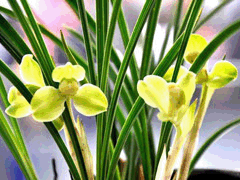 OrchidSeedling "root rot" is caused by black rot disease, and the pathogen is Pythium. "Root rot" disease emphasizes prevention, and the main measures are as follows. Rain protection: When the new leaves of orchid seedlings are soaked by acid rain, heavy rain, or drizzle, it will lead to "root rot." After the new shoots open their leaves, improper watering methods may also cause "root rot." Therefore, pay attention to rain protection, and as much as possible use the soaking method or water from the side of the seedlings to prevent water from flowing into the leaf hearts of the seedlings. Pest control: Pests such as scale insects, red spiders, thrips, aphids, slugs, and snails like to suck the leaf juice of seedlings. After biting the leaf hearts, the leaf hearts of the seedlings are very susceptible to Pythium infection, causing "root rot." Quinalphos, omethoate, copper hydroxide, thiophanate-methyl, carbendazim, and others can be used for pest control, and sterilizing agents can be sprayed regularly for preventive control. Thin fertilizer: Excessive use of hormones, overdose use of chemical fertilizers, "Lan Jun Wang" and other fertilizers causesorchidgrowth requirements for nitrogen, phosphorus, and potassium to be imbalanced, and trace elements to be deficient, making the seedlings grow excessively and the leaf stalks become soft and limp. In mild cases, the leaf base and foot sheaths are scorched; in severe cases, tissue necrosis occurs in the leaf heart area of the seedlings, turning brown and black. Therefore, fertilizer should be used according to standards, and thin fertilizer should be applied frequently. Watering: The leaf hearts of seedlings are very tender. If the temperature difference between the water used for watering orchids and theorchidleaf surface temperature is too large, it can easily "scald" the leaf hearts of the seedlings and cause "root rot." Therefore, the water used for watering orchids should be left standing for a period of time, and watering should be done when the water temperature is close to the orchid leaf temperature; in hot seasons, water as much as possible in the morning and evening, and never water directly with tap water when the temperature is high in the afternoon. Air permeability: In hot seasons with high temperature and high humidity, if ventilation and air permeability are poor, the base of the seedlings will not be breathable, and "root rot" disease is very easily induced. Therefore, when the temperature in the orchid garden exceeds 30°C, shading and cooling must be provided, indoor and outdoor air circulation must be maintained, and humidity should be controlled at about 75%.CultivationThe soil should be loose and breathable, and the base of the seedlings must never be buried too deep; it is advisable for the pseudobulb area of the seedlings to be slightly exposed.