Autumn Dendrobium orchids are long-lasting bloomers, with a long flowering period for more enduring beauty
Autumn Dendrobium orchids are long-lasting bloomers
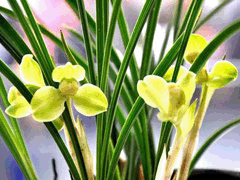 Autumn Dendrobium orchids are beautiful and long-lasting in bloom, with large-flowered and small-flowered varieties. The large-flowered ones resemble Phalaenopsis in form.
Their flowering habit differs slightly from that of the deciduous types of spring Dendrobium. If you want abundant and brilliantly colored flowers, pay attention to the following key points:
1. Light affects flower bud differentiation -- According to my own research, spring Dendrobium requires low-temperature weather before flower buds will differentiate (vernalization). Autumn Dendrobium, however, is different: whether it blooms or not is most affected by the length of light exposure and the amount of light.
As long as it is a "short-day" condition, autumn Dendrobium will form flower buds regardless of whether temperatures are high or low.
What is a "short-day" condition? It means no more than twelve hours of light per day, with light intensity at only about sixty percent of sunlight -- that is, filtered light (indirect light, diffused light) is preferable.
If light exceeds twelve hours per day, the flower bud differentiation process is inhibited, which may result in no flowers.
When the "cane" (pseudobulb) of the autumn Dendrobium matures, flower bud differentiation begins. Its daily "dark period" must exceed twelve hours. Even a brief flash of light (any light), if it breaks the continuity of the "dark period" for just five minutes, will prevent flowering.
Therefore, the best light period is from 8 a.m. to around 5 p.m., and the remaining time should be kept dark; then it will bloom very easily.
2. Use unglazed clay pots and osmunda fiber for planting -- A narrow unglazed clay pot and osmunda fiber can both retain moisture and drain well, making root rot unlikely; add charcoal chunks at the bottom of the pot if desired, and add moist sphagnum moss on the surface in summer. Only by keeping the roots strong and their absorptive capacity good will it be easy to induce flowers.
3. Fertilizer should be dilute, not too concentrated -- Applying concentrated fertilizer will cause root rot, making it impossible to absorb "flower fertilizer." When it warms up in spring, after forcing one or two applications of dilute liquid balanced chemical fertilizer, apply a phosphorus-potassium fertilizer once every two weeks; diluting 2000-3000 times is preferable.
4. Air circulation -- Autumn Dendrobium fears stuffy, poorly ventilated conditions, which will affect flower induction; it also dislikes low temperatures with excessive water and high temperatures with dryness -- these are allfatal toflower induction. In daily care, spray water mist frequently on the leaf surfaces and surroundings.