Detailed Explanation of the Cultivation Techniques and Methods for Dendrobium (Dendrobium Orchid)
Cultivation Techniques for Dendrobium (Dendrobium Orchid)
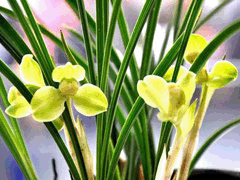 Dendrobium is also called Shilan, Diaolanorchid, and Jinchai Dendrobium. Below is a brief introduction to the growth habits and cultivation methods of Dendrobium.
Origin and distribution: Distributed in Japan, Korea, and the provinces of South China, Southwest China, and the Taiwan region of China. It is now cultivated in greenhousescultivationin various places. It has certain application prospects.
Morphological characteristics: Perennial herb. Stems erect, clustered, slightly flattened, plant height 50-80 cm, yellow-green. Leaves nearly leathery, oblong. Racemose inflorescence, flowers large, white, with light purple at the tip, natural flowering period March-June. There are now many hybrids and varieties with brightly colored flowers.
Ecological habits: Prefers a warm climate and humid environment. Avoids direct sunlight and scorching; grows well in bright semi-shade. Requires good drainage and a ventilated environment.
Propagation methods: Propagated by division and tissue culture. The division method can be carried out in autumn when the plant enters dormancy. Use a sharp knife to divide a large clump into clumps each with 2-4 old stems, which can then be directly planted.
Cultivation techniques:
(1) Dendrobium orchid roots prefer breathable and ventilated conditions. The growing medium is commonly made from peat, moss, pine bark, coarse yellow sand, perlite, etc. It can be grown in pots or in planting beds.
(2) The planting density is generally 30-45 plants per square meter. After planting, ensure sufficient water supply during the vigorous growth season, and reduce water supply in winter.
(3) For cut flower production of Dendrobium orchid, base fertilizer is generally not used, only topdressing. Topdressing is prepared as a solution and applied together with irrigation; foliar spraying can also be used for fertilization.
(4) The cultivation site should be equipped with shade netting to provide shade when sunlight is too strong. However, in winter, the plants should receive direct sunlight for an appropriate period, which will make the plants grow more vigorously after spring.
(5) Control the temperature between 15-25°C. Keeping the overwintering temperature at around 10°C can promote flower bud differentiation. The cultivation environment should be properly ventilated, but excessive airflow will cause scorched edges on flowers and dried tips on leaves. The cultivation site should be equipped with spraying equipment.
(6) Attention should be paid to the prevention and control of yellow spot disease,soft rotdisease, and mosaic disease.