How to Fertilize Orchids? A Detailed Explanation of Several Common Methods
Several Methods of Fertilizing Orchids
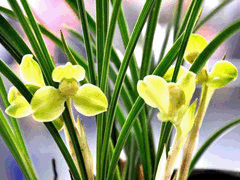 Householdcultivationoforchidswhether they grow well or poorly, fertilization is one of the main factors.
In southern regions the climate is relatively warm, so fertilization can begin right after the Spring Festival; in northern regions, because the climate is cold, it is best to do so from the third month of spring to early April. Flower lovers with experience in growing orchids use rotted dry cow dung, mix in 10 times the amount of potting soil, and add a small amount of phosphate fertilizer, applying the base fertilizer mixed together with the potting soil. Flower lovers living in cities who find it hard to obtain rotted dry cow dung can instead add to the potting soil various cake meal scraps fermented in water, such as soybean cake, rapeseed cake, cottonseed cake, sesame cake, etc.; shavings made from cattle and sheep hooves and horns can also serve as base fertilizer. Bury one of these organic fertilizers into the soil at the edge of the pot. Note that it should not come into direct contact with the roots, because roots that stick to the fertilizer will rot. During the growing period, liquid fertilizer can also be applied: ferment various cake meals with water, then dilute with 5-10 times the amount of clean water to make a fertilizer solution, and apply it about once every half month. The simplest method is to use a chemical fertilizer with a relatively complete content of nitrogen, phosphorus and potassium, controlling the concentration at 0.025% to 0.1%, that is, a dosage of 1/3-1/4 of that for ordinary herbaceous flowers is more suitable. In addition, when spraying pesticides, a small amount of chemical fertilizer can also be added at the same time and applied to the leaves, which also has a certain effect.
Orchids are most afraid of excessive fertilization. Beginners can apply extremely dilute organic fertilizer, so as to avoid "lovingly planting flowers that never bloom."