How to care for and propagate Phalaenopsis orchids after blooming? Explained clearly in one article
Post-bloom care and propagation of Phalaenopsis orchids
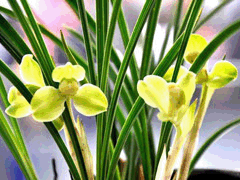 Once the Phalaenopsis has basically finished blooming, first cut off the spent flower stalk, gently take the orchid plant out of the pot, remove the surrounding old potting medium without damaging its tender fleshy roots, use scissors to cut off old roots, rotten roots and yellow leaves, let it air dry slightly, then wrap the roots with soaked fresh sphagnum moss and repot it. Note that the roots should be separated evenly and not several roots pressed together. Its optimum growing temperature is 25°C to 28°C during the day and 18°C to 20°C at night; growth stops above 32°C in summer and below 10°C in winter. High temperatures above 32°C are very unfavorable for Phalaenopsis, prompting it to enter a semi-dormant state and affecting flower bud differentiation in autumn. Normal flower bud differentiation can only proceed smoothly below 18°C. It should be placed in a location with 70% shading in summer and 50% shading in spring and autumn, with relative air humidity maintained at around 70%. Water once every 1 to 2 days in summer and once a week in winter; watering is best done in the morning during the day so that the moisture can dry completely before night, and the leaves and leaf stalks do not carry stagnant water overnight, so as to avoid disease. Right after repotting, keepCultivationthe medium relatively slightly dry and control watering, which can promote the sprouting of new roots and prevent old roots from rotting.
During the bud and flowering stages, more water is needed; as long as the room temperature is not too low, when the surface of the growing medium turns white and dry, supplementary watering should be given. In summer, place it in a well-ventilated location, put crushed stone on the ground and spray water frequently to increase air humidity. Forfloweredmature plants, after the flowers fade each year, apply supplementary fertilizer balanced in the three major elements, and in autumn apply phosphorus and potassium fertilizer; it is best to use fertilizer specially formulated for orchids. To prevent leaf diseases in Phalaenopsis, spray captan 500 times dilution once every 10 days to prevent the occurrence and spread of anthracnose and brown spot disease.
Home propagation of Phalaenopsis is relatively simple; the division method can be used, and some varieties can sprout and root on the flower stalk, which can be cut off and planted separately. Some larger plants will grow many aerial roots; you can cut off the upper part with 2 to 3 aerial roots and plant it in another pot, and the remaining stem base can, after a period of time, grow new shoots to form a new plant. After the new plant has grown several more aerial roots, division planting can be carried out again in spring.