Detailed Explanation of Orchid Cultivation Techniques and Fresh-Keeping, Storage and Transport Methods
Orchid Cultivation and Fresh-Keeping, Storage and Transport
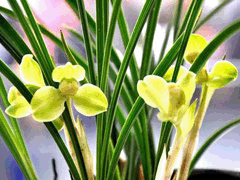 CultivationOrchids' growing medium turns acidic very easily. How can this be overcome?
When sphagnum moss is used to grow orchids, after a few days the sphagnum moss becomes contaminated by organic-acid-producing bacteria and turns acidic, and then the orchid root zone tends to develop black head symptoms (Fusarium infection).
When growing orchids,the growing medium is boiled in water or sterilized at high temperature in an autoclave, so why can the problem of orchid black head not be completely overcome?
Some orchid nurseries boil sphagnum moss or sterilize it at high temperature before growing orchids. Although this can temporarily kill bacteria and insect eggs, after planting, the sphagnum moss still turns acidic, causing the orchid root zone to easily develop black head symptoms. This is because after the orchids are planted, they are still contaminated by organic-acid-producing bacteria.
How can the black head problem be reduced when growing orchids?
The black head symptoms in the orchid root zone are mainly caused by the growing medium, such as sphagnum moss, being contaminated by organic-acid-producing bacteria, which causes the medium to turn acidic and causes Fusarium to multiply in large numbers (Fusarium grows best at around pH 4). Therefore, increasing the pH of the growing medium can reduce Fusarium infection.
How can black head symptoms be effectively reduced?
Applying small-molecule water-soluble chitin and actinomycetes diluted 2000 times with water to irrigate orchids can effectively reduce black head symptoms in orchids. Growing media such as sphagnum moss can be soaked for 1-5 minutes in small-molecule water-soluble chitin and actinomycetes diluted 1000 times, then drained before planting.
What is small-molecule water-soluble chitin? What benefits does it have for orchids?
Chitin is extremely widely distributed in nature. For example, the shells of crustaceans (shrimp, crabs, etc.), the shells of insects (cockroaches, butterflies), and the shells (clams, oysters) and internal skeletons (squid) of mollusks all contain chitin. After acid and alkali treatment to remove calcium and protein, chitin is obtained. After chitin is treated with high temperature and strong alkali for deacetylation, chitosan is obtained. Chitin and chitosan are collectively called chitin.
Advantages of using chitin on orchids:
1. Enables continuous cropping of the medium ┈┈ Chitin can increase beneficial microorganisms in the medium, such as actinomycetes, reduce harmful bacteria such as Fusarium, and can eliminate root-knot nematodes, reducing the problems of continuous cropping obstacles in the medium.
2. Promotes healing and development of root wounds, increases root hairs, and increases nutrient absorption capacity. Promotes plant growth.
3. Induces the production of phytoalexin, improves crop disease resistance and antibacterial ability, thereby reducing the amount of pesticides used.
4. Increases the calcium content of orchids, which can increase stem firmness.
5. Enhances the absorption of trace elements, thereby increasing the reducing sugar content of leaves, advancing harvest, improving quality, and extending the fresh-keeping period.
Actinomycetes are Gram-positive bacteria that are extremely common in soil in nature. More than four hundred species are known. Because most have the ability to produce antibiotics, their application in crop disease control has continued for more than half a century since the earliest report by Waksman in 1943. Most similar successful development cases have focused on the production of antibiotic preparations. The best known is streptomycin, used for the control of bacterial diseases in many vegetables, fruits and flowers. In addition, actinomycetes can decompose organic matter and produce extracellular enzymes to break down proteins, cellulose, lignin and chitin, so this property can be used against microorganisms with chitin cell walls. For example, adding chitin to soil can control Fusarium, mainly because the chitinase secreted by actinomycetes can cause lysis of pathogenic hyphae.
What are the benefits for orchids of using small-molecule water-soluble chitin and actinomycetes at the same time?
When chitin and actinomycetes are used together to irrigate orchids, chitin has an antibacterial effect and can promote the growth of actinomycetes, inhibit the growth of Fusarium, and promote wound healing. For example, it is very effective against anthracnose, which causes black leaf spots.
What effect does ethylene have on orchids?
Orchids are quite sensitive to ethylene. Just 0.01 ppm of ethylene can cause Vanda flowers to wilt. Next in sensitivity are those of Southeast Asia. Dendrobium, Phalaenopsis and Paphiopedilum are next. Oncidium is not sensitive to ethylene. Phalaenopsis produced in the province, when treated with 0.09 ppm ethylene, can be induced to age, producing symptoms such as flower drop and dehydration wilt. Ethylene causes the tips of orchid sepals to wither and the lip to turn red. The early symptoms of aging are transparency of the sepals and petals, followed by prominent veins and formation of an abscission layer, leading to floret drop.
In addition, as flowers mature or after dehydration, high temperature, disease, etc., their sensitivity to ethylene increases.
Why do bud-bearing potted orchids turn yellow and drop buds during storage and transport?
Long-distance transport of bud-bearing potted orchids causes yellow leaves and bud drop mainly because of the effects of excessively high ethylene concentration and bacterial infection.
How can yellowing leaves and bud drop be avoided?
Place a small packet of ethylene absorbent at the geometric center of the cardboard box or where it is most sensitive to ethylene, to absorb the ethylene produced by the flowers in the cardboard box. Or use 1-methylcyclopropene (MCP) ethylbloc fumigation treatment for 4 hours. Do not keep them in the same room as fruits that produce large amounts of ethylene.
What effects and benefits does using ethylene absorbent have?
1. Ethylene absorbent can absorb the ethylene released by fresh fruits, vegetables and flowers, inhibiting the phenomena of continued aging, softening, yellowing, wilting and flower drop in plants.
2. Improves product quality — if ethylene absorbent is used properly, it can absorb most of the ethylene, so flowers with a higher degree of maturity, that is, more vividly colored flowers, can be harvested, and therefore the products transported to market will be in better condition.
3. Reduces costs for long-distance transport — it can withstand long-distance transport and more economical transport methods, or air transport can be abandoned in favor of sea transport.
When does ethylene absorbent need to be replaced?
Fresh ethylene absorbent is purplish red. After the ethylene absorbent oxidizes, its appearance changes to brownish black, gradually extending to the center of the ethylene absorbent.
Packaging methods and applicable scope of ethylene absorbent
Ethylene absorbent has different packaging methods. It can be placed in the air passage of a storage room (using a wave type), so that airflow surrounds the product, or mini small packets can be placed in packaging boxes or bags to enable the absorbent to control harmful ethylene gas and extend the storage and transport period of fresh products.
In winter greenhouses that are tightly closed, flowers easily develop black spots and easily show prominent veins and formation of an abscission layer, leading to drop of small buds. How can this be avoided?
Especially in North China, winter greenhouses are tightly closed and humidity is extremely high. Flowers easily develop black spots (gray mold) and easily show prominent veins and formation of an abscission layer, leading to floret drop. Yongxin antibacterial agent can be diluted 1000 times and sprayed on the flowers, and a wave-type ethylene absorbent can be hung in a place with air circulation.
How should orchids with buds be handled during transport?
Use Yongxin orchid bagging, with one side non-woven fabric (breathable) and one side PP film (transparent), and place a mini small packet of ethylene absorbent (6 mg/packet) together in the cardboard packaging box.