How to cultivate orchids? These technical key points must be mastered
Key technical points for cultivating orchids
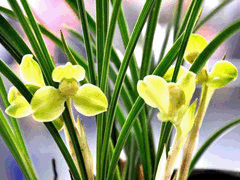 Orchidsare a perennial evergreen epiphytic flower. They have a unique flower shape and graceful flower posture, and their price is relatively high, which makes them a flower variety cherished by people.
Cutting off the stems to promote sprouting: For various orchids, especiallyCymbidium sinense(the New Year orchid), the stems should be cut off as early as possible after the flowers fade. Do not let them set fruit, so as to avoid consuming nutrients and affecting the sprouting of axillary buds. After the flower stems are cut off, use soft gauze or a cotton ball dipped in 0.1% omethoate or dichlorvos solution to gently wipe the orchidflower'sleaf surfaces and undersides, so as to remove insect eggs, dust, and stains, and welcome the arrival of the new growth period.
Division and potting: Before dividing and potting various orchids, watering should be stopped for 3-5 days. When the potting medium is about 70-80% dry, carefully tip the orchid plant and potting soil out, making every effort not to break the orchid roots. After removing rotten roots, divide Cymbidium sinense into parent and child shoots per plant; for autumn orchids andCymbidium kanran, summer cymbidiums, andCymbidium goeringii, divide each group into about 5 shoots. First wash them clean with disinfectant water or clean water. The orchid roots and wounds can be dotted with sulfur powder, then dried. Wait until the orchid roots become soft and whitish before potting. For the potting soil, use fertile, sterile new medium, and ensure that the medium protects the roots and that the roots cling to the medium. Place new plants facing outward and old plants facing inward, with the depth such that 1/3 of the orchid crown is exposed above the soil surface. After the plants are potted, place them in a shade shed, and in the morning and evening spray a little mist on the leaf surfaces. After 24 hours, once the wounds have healed, water thoroughly to settle the roots. After 15 days in the pot, they can be transferred to normal management.
Light regulation: Although orchids like a cool and ventilated environment, they also need necessary sunlight. If potted orchids are placed in shaded areas all year round, the leaves will grow excessively, flowering will be sparse, the various organs of the orchid plant will become weak, and they will be prone topests and diseases. Therefore, light needs to be reasonably regulated to facilitate their robust growth. Generally speaking, green-leaf varieties, unusual-flower varieties, and dwarf types need 60% of full sunlight in spring, and thereafter 50%; variegated orchids need 50% of full sunlight in spring, and thereafter 30%. To regulate light well, professional flower producers can use greenhouses for cultivation. Families with the means can build an orchid shed for growing them. Those using balcony-style flower growing can set up a movable plastic frame on it, pulling it open when needed and folding it closed when not needed, so as to ensure the normal growth of orchids.
Fertilizer supply: When orchid plants are in a dormant or semi-dormant state or have just been divided and potted, applied fertilizer cannot be absorbed; in seasons with cloudy and rainy weather and high air humidity, applying too much fertilizer solution will add a relatively heavy burden to the orchid roots, and in severe cases can damage the roots and leaves, or even cause death. To ensure safety, orchids generally should not be fertilized during the dormant period, and root fertilization is also unsuitable just after division and potting. If fertilizer needs to be given, a 0.1% potassium dihydrogen phosphate solution can be sprayed on the leaf surfaces on a sunny afternoon, once every 7 days. While spraying fertilizer, 0.1% dimethoate or dichlorvos can be mixed in to also control pests.
Sterilization and pest elimination: For cultivatingorchids, the surroundings of the site and the potted orchids can be sprayed once every 7 days with sterilizing and disinfecting agents (such as virus-clearing agents, chlorothalonil, sterilization spirit, thiophanate-methyl, etc., diluted according to the instructions and used alternately), and once every 10 days with insecticides (such as omethoate, dichlorvos, trichlorfon, etc., diluted according to the instructions and used alternately). It should be noted that 2 hours after the insecticidal agents are applied, the orchid leaf surfaces should be rinsed once with clean water to avoid phytotoxicity.