Detailed Guide to Cymbidium goeringii Cultivation Methods and Care Techniques
Cultivation of Cymbidium goeringii
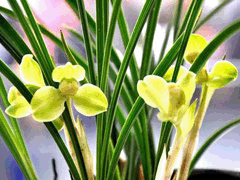 Through long-term practice in growing orchids, the ancients of our country summed up for us a set oforchid growing"four abstentions" experience. That is, "not out in spring, no sun in summer, not dry in autumn, not wet in winter." The so-called not out in spring:orchidslike humidity, and spring is windy and dry with relatively low temperatures. To avoid damage from cold wind, in springorchidsshould not be taken out of the room and can be kept indoors in a semi-light location. ButCymbidium goeringiiandCymbidium faberineed to be placed in a sunny spot near the windowsill. The so-called no sun in summer:orchidsby nature like shade and coolness, and avoid direct sunlight, especially fearing exposure to the scorching sun. Therefore in summer they need to be kept in a cool, well-ventilated semi-shaded place. Among orchids, the shade tolerance ofCymbidium sinenseis the greatest,Cymbidium ensifoliumis next, whileCymbidium goeringiiandCymbidium faberineed more sunlight. The so-called not dry in autumn: orchids, especiallyCymbidium ensifolium, are in the bud-forming stage in autumn and most like a humid, cool environment. If the potting soil or air is dry, it is unfavorable for their growth and development, the leaves easily turn yellow and dry, and at the same time flower buds will drop, affecting flowering the following year. Therefore in autumn the amount of watering should be appropriately increased, and the leaves should often be misted. Around the Autumn Equinox, some well-rotted dilute liquid fertilizer should also be appropriately applied more. During the flowering period, some wood ash water can be applied to the roots, which is very helpful for promoting the development of orchid roots, stems,and flowers. The so-called not wet in winter: in winter orchids are in a dormant state and watering must be controlled, generally keeping the potting soil at a state of alternating dry and wet. If too much water is given, the roots easily rot. OnlyCymbidium sinenseblooms in winter, so the amount of watering should be greater. Orchidcultivationshould note:
(1) Pot selection and soil: Cymbidium goeringii is best cultivated in late autumn. Before planting, it is best to choose a new clay pot that has been soaked and washed in clean water for several hours. If a purple clay pot or plastic pot is used, attention must be paid to drainage. The size of the pot should be such that the flower roots can spread out inside the pot. For the growing medium, orchid mud is most ideal, or use leaf mold (that is, coniferous soil is the most ideal humus soil) mixed evenly with sandy loam. Absolutely avoid alkaline soil.
(2) Potting: First place tile pieces over the drainage holes at the bottom of the pot (preferably with 3 drainage holes), then add crushed stones, small pieces of wood, and similar materials, accounting for about 1/5 of the pot. On top of this spread a layer of coarse sand, then put in the growing medium. Finally place the orchid seedling into the pot, straighten the roots, and let them spread naturally. When the soil is filled to half, gently lift the orchid seedling while shaking the pot so that the orchid roots and potting soil are tightly combined. Continue filling with soil up to the pot surface and press firmly, leaving about 3 cm from the rim to allow for fertilizing and watering.
(3) Shading: After potting, water thoroughly and place in a shaded spot. In early spring and winter, keep indoors; at other times place under an outdoor shade frame (best under trees). In summer, shade from 8 a.m. to 6 p.m. In summer, the shading degree for Cymbidium goeringii should be about 90%; in spring and autumn, about 70% to 80% is sufficient.
(4) Watering: Orchid leaves have a relatively thick cuticle and sunken stomata, and are fairly drought-tolerant, so they do not need much water. It is best to keep the orchid soil often at "seven parts dry, three parts wet." In spring, water once every 2 to 3 days; after flowering it is best to keep the potting soil slightly dry. In summer when temperatures are high, water once a day; in autumn, water when dry and withhold when wet; in winter, water less.
After flowering, Cymbidium goeringii is best kept with the potting soil slightly dry. But it must not be too wet either. In dry and hot seasons, mist the ground around the flower pot in the evening to increase air humidity.
(5) Fertilizing: Generally from April until the Beginning of Autumn, apply fully rotted dilute cake fertilizer water once every 15 to 20 days.
The experience of predecessors in growing orchids includes: "Receive the morning sun, avoid the setting sun, like southern warmth, fear northern cold, avoid coal smoke."
When black spots appear on orchid leaves, a dilute edible vinegar solution can be sprayed.