Initial success with rapid propagation techniques for Cymbidium goeringii
Rapid propagation of Cymbidium goeringii has already shown initial success
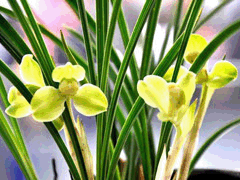 Since the 1970s, research institutes have used bioengineering techniques to propagate orchidsOrchidsThere have been reports, and their results cannot be matched by traditional methods, but due to various reasons this advanced technique has not yet been promoted. With the question of whether this work can be carried out in a home environment, after two years of attempts, the author has obtained a small batch ofCymbidium goeringiitest-tube seedlings. The specific methods are introduced below for the reference of fellow orchid growers.
1. Establish a small home tissue culture room, making equipment by simple local methods. As is well known, this work must be carried out under sterile conditions. For this purpose, a well-sealed glass inoculation box and an air purification device were developed. After adopting various technical measures, the contamination rate during subculturing dropped greatly. According to statistics, from 1994.6.26 to 1994.8.26 the contamination rate was 44.8%. After switching to alcohol spraying to reduce dust, from 1994.10.4 to 1994.11.26 the success rate rose to 92%. This won time for screening the best culture medium formula and laid a good foundation.
2. How can sterile operation be achieved in a home environment? The author focused on the following aspects.
1. All vessels that contact the culture medium are treated by dry heat (140°C to 150°C) if they can withstand high temperatures; for tools that cannot withstand high temperatures, chemical sterilization and disinfection methods are used.
2. To solve the problem of needing to work over a flame during inoculation (because there is almost no air in the box), a 300W electric furnace was added, but because high temperature easily burns the explants, an air-ventilation cooling facility was also added.
3. In order to reduce the problem of secondary contamination of the cutting tools in the environment, after high-temperature sterilization they are placed in a tube closed at one end, while purified air is continuously blown in to cool them, ensuring that the explants enter the nutrient medium bottles safely.
4. All items entering the box must be disinfected with alcohol before being placed inside. Anything carrying bacteria is not allowed into the box. The box disinfection procedure is alcohol spraying plus ultraviolet disinfection, and regularly fumigating with formaldehyde plus potassium permanganate...
3. Select suitable culture medium formulas. Induction, differentiation and rooting all use M?S basal medium plus naphthalene acetic acid and cytokinin (6BA). However, adjustments to the composition are still needed at different growth stages. In particular, during rooting, because orchids root somewhat more difficultly than other flower varieties, the method of soaking in high-concentration NAA for several seconds is used, with good results.
4. Collection and disinfection of explants. For explants, rooted seedlings (with unexpanded leaves) are best, preferably inoculated immediately after collection, giving a relatively high survival rate (the best inoculation period is from October to February). For explant disinfection, the author adopted the method of repeated disinfection with 0.1 mercuric chloride plus 1% concentrated hydrochloric acid, which gives a better sterilization effect.
5. Culture environment. Light 1000 to 2000 Lux, 10 to 16 hours; culture temperature 26°C ± 2 for growth; air humidity should be controlled at a relatively low level (70% to 80%), otherwise contamination very easily occurs again.
A few points of experience:
1. Establishing a small tissue culture room at home is feasible, and its investment is low (full use can be made of household conditions). From preparation to conducting experiments with the equipment, the author spent only several hundred yuan. This experimental equipment can also be used to carry out research work on other varieties such as woody plants and medicinal plants.
2. Sterile operation must be taken seriously in one's thinking and carried out cautiously in practice. Otherwise, losses will be heavy and the consequences unimaginable.
3. At present, because there is no entity microscope on hand, only bud-to-bud experiments can be done. It is planned to adopt measures such as cutting samples in stages and using liquid medium with a rotating bed. This is a way to obtain large quantities of protocorm-like bodies, and the propagation speed will make a great breakthrough.