When is the best time to plant Cymbidium goeringii? Late autumn is just right
Late autumn is a good time to plant Cymbidium goeringii
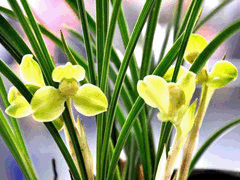 According to my several years of growingorchidsand practical experience, I believe that potting Cymbidium goeringii in late autumnCymbidium goeringiiis good.
1. Cleaning, disinfecting and trimming the orchid plant
Soak Cymbidium goeringii plants that have been left for a long time in a basin of clean water for 4 to 8 hours; once the orchid roots have plumped up as before, take the plants out, let them dry slightly, and prune the withered, diseased, damaged, broken and rotted orchid roots. After trimming the plant's withered, yellow and dry leaves, put it into a potassium permanganate aqueous solution to disinfect for half an hour, then take it out and let it dry, ready for planting.
2. PottingCultivation
First place a piece of tile over the hole at the bottom of the pot, then spread a layer of coarse sand grains or coarse coal cinder grains to facilitate drainage and aeration. On top of that spread a layer of potting soil, then place the Cymbidium goeringii plant on the potting soil, straighten the roots and spread them out naturally; when the soil is filled to half, gently lift the orchid plant while gently shaking the pot so that the orchid roots and potting soil are closely combined, then continue filling with soil up to the rim of the pot, gently press the potting soil, and leave a 3 cm watering space above the pot rim, so that when applying liquid fertilizer and watering, nothing flows out of the pot.
3. Care
After potting, first water thoroughly once, and place it in a semi-shaded, slightly sunny and warm spot to recover; after about half a month of care it will regain its vitality. By then the weather turns cold, so the pot can be moved to a spot indoors that often gets sunlight for care and management. Throughout the whole winter and early spring it stays indoors to be protected from the cold and overwinter. During the winter, the indoor temperature should not be too high; as long as the room temperature stays at 0 to 10°C, it can grow vigorously and normally form buds and bloom.
4. Appropriate watering and fertilizing
After the first thorough watering following planting of Cymbidium goeringii, according to how dry or moist the potting soil is, generally the principle of "water when dry, withhold when moist" should be followed; in winter water less, and ordinarily keeping the potting soil slightly moist is best. Only when the potting soil is rather dry should you water thoroughly once. Water around midday, and the water temperature should be the same as or close to room temperature; pour slowly along the edge of the pot, and do not splash water on the leaf surface and leaf center, so as to avoid rotting the flower center. Orchids ordinarily should not be given strong fertilizer. Especially for newly planted orchids, generally no fertilizing within one year; only after 1 to 2 years of cultivation, when new roots are dense and strong and the plant grows vigorously, may a thin liquid fertilizer be applied. Fertilizing is best done in the evening, and the fertilizer water should also be poured along the edge of the pot into the potting soil, without soiling the orchid leaves. After fertilizing, water once with clean water early the next morning to aid the absorption of nutrients.